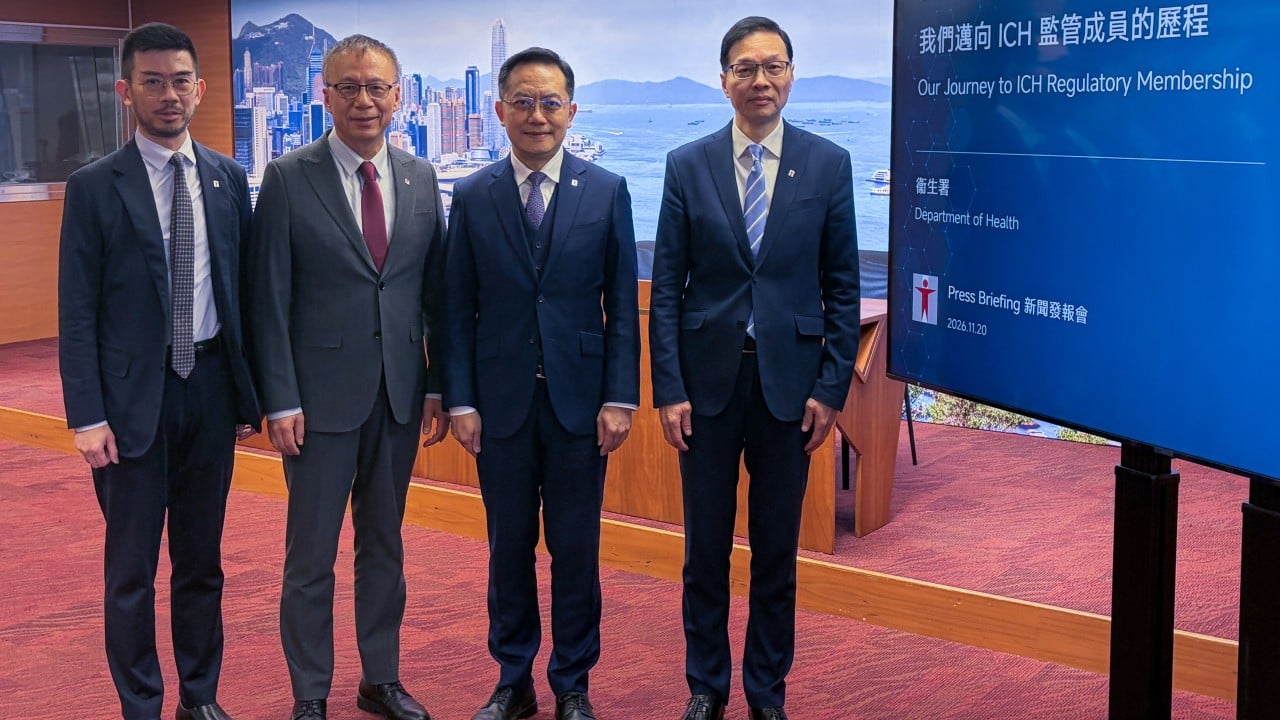
Accelerating entry into the International Council for Harmonisation of Technical Requirements for Pharmaceuticals for Human Use (ICH) shifts Hong Kong from a secondary dependency model to a primary evaluation jurisdiction. For decades, pharmaceutical market entry in the territory operated on a secondary review mechanism, requiring drug developers to secure prior approval from at least two reference regulatory authorities—such as the U.S. Food and Drug Administration (FDA) or the European Medicines Agency (EMA)—before submitting dossiers to the Pharmacy and Poisons Board of Hong Kong (PPBHK). Achieving ICH membership ahead of schedule dismantles this structural bottleneck, initiating the transition toward the Hong Kong Centre for Medical Products Regulation (CMPR) and establishing an independent primary approval pathway capable of evaluating novel chemical entities and biologics directly from raw clinical trial data.
The Architecture of Regulatory Asymmetry
To understand the operational shift triggered by ICH accession, one must examine the mechanics of global pharmaceutical licensing. Regulatory bodies globally divide into two functional tiers: primary evaluators and reliance-based agencies. Recently making waves recently: When the Safety Net Fails in the North of Scotland.
Primary evaluators possess the internal technical infrastructure, biostatistical teams, and clinical pharmacology expertise required to audit Phase I through Phase III clinical trial datasets, verify Good Manufacturing Practice (GMP) compliance at the facility level, and independently assess risk-benefit profiles. Reliance-based agencies lack this granular auditing capacity, instead outsourcing the scientific validation to established primary authorities and focusing their domestic resources on administrative verification, local labeling, and pharmacovigilance.
Hong Kong historically operated within a rigid reliance framework known as the "two-certificate" system. Under this regime, a novel therapeutic could not reach patients in Hong Kong until two stringent regulatory authorities had completed their independent review cycles. The cost function of this model manifested in three distinct inefficiencies: Additional information into this topic are covered by Mayo Clinic.
- Sequential Latency: Because global pharmaceutical sponsors typically stagger submissions—prioritizing the FDA first, the EMA second, and regional markets third—Hong Kong experienced a built-in delay of 18 to 36 months between global launch and local availability.
- Clinical Trial Disincentives: Multinational sponsors select Phase III trial sites based on speed to market and regulatory predictability. Jurisdictions unable to grant primary approval offer lower strategic return on investment for early-stage clinical deployment, limiting local research institutions to narrow, late-stage cohorts.
- Intellectual Property Erosion: In pharmaceutical economics, patent life begins ticking at the point of filing, not at market authorization. Every month lost to secondary regulatory queuing directly compresses the commercial exclusivity window available to recover research and development expenditures.
The introduction of the "1+" mechanism in late 2023 served as a transitional bridge, reducing the requirement from two reference approvals to one for life-threatening or severely debilitating diseases, provided the sponsor supplied local clinical data and expert verification. Early ICH accession signals the planned obsolescence of even this modified reliance model. By aligning local statutory requirements with ICH technical guidelines—specifically across Quality (Q), Safety (S), Efficacy (E), and Multidisciplinary (M) standards—Hong Kong is building the institutional plumbing required to evaluate Common Technical Document (CTD) dossiers independently.
The Four Operational Pillars of the CMPR Transition
Joining the ICH is not an automatic grant of primary approval authority; it is an alignment of technical standards that enables the construction of a primary regulator. Moving from observer status to full ICH membership ahead of schedule compresses the timeline for establishing the Hong Kong Centre for Medical Products Regulation (CMPR). Executing this transition requires synchronized execution across four operational pillars.
1. Technical Harmonization and Dossier Standardization
ICH membership mandates strict adherence to the Electronic Common Technical Document (eCTD) format and standardized terminologies such as MedDRA (Medical Dictionary for Regulatory Activities). For sponsors, this eliminates the friction of reformatting clinical study reports, toxicology summaries, and Chemistry, Manufacturing, and Controls (CMC) modules for regional submission. When a regulatory authority speaks the exact technical language of the FDA, EMA, and Japan's Pharmaceuticals and Medical Devices Agency (PMDA), multinational corporations can execute simultaneous global filings rather than sequential regional rollouts.
2. Biostatistical and Clinical Assessment Capacity
A primary approval agency cannot function on administrative checklists. The CMPR must recruit, train, and retain specialized reviewers capable of replicating biostatistical analyses from raw patient-level datasets, evaluating pharmacokinetic/pharmacodynamic (PK/PD) modeling, and auditing bioequivalence studies. Without an internal cadre of clinical pharmacologists and toxicologists, a primary approval mandate creates a severe review backlog, replacing external reliance delays with internal processing paralysis.
3. Good Clinical Practice (GCP) and GMP Inspection Infrastructure
Primary evaluation requires independent verification of data integrity. The regulator must deploy field inspectors capable of auditing clinical trial sites for GCP compliance and inspecting active pharmaceutical ingredient (API) and finished-dosage manufacturing facilities globally for GMP adherence. ICH membership integrates Hong Kong into international inspection-sharing networks, allowing the territory to participate in mutual recognition agreements while deploying its own auditors to verify manufacturing quality across the Greater Bay Area and international supply chains.
4. Post-Market Pharmacovigilance and Signal Detection
Accelerating pre-market approval increases reliance on post-market surveillance. A primary regulator must operate active pharmacovigilance databases capable of ingesting Individual Case Safety Reports (ICSRs), identifying adverse drug reaction signals in real time, and enforcing Risk Evaluation and Mitigation Strategies (REMS). Aligning with ICH E2 guidelines ensures that safety data collected in Hong Kong integrates directly into global safety repositories, enabling rapid label updates or market withdrawals when rare toxicities emerge post-launch.
The Greater Bay Area Arbitrage Mechanism
The strategic value of Hong Kong's ICH accession extends far beyond its domestic population of 7.5 million. The move alters the cross-border healthcare calculus within the Guangdong-Hong Kong-Macao Greater Bay Area (GBA), a market exceeding 86 million residents.
Currently, the "Hong Kong and Macao Medicine and Equipment Connect" policy allows designated healthcare institutions in mainland GBA cities to import and use innovative drugs and medical devices already approved in Hong Kong, bypassing the lengthy timeline required for full National Medical Products Administration (NMPA) registration in Beijing. Under the historical reliance model, this cross-border pipeline remained constrained by Hong Kong's dependency on Western approvals.
By accelerating ICH alignment and moving toward primary evaluation, Hong Kong creates a dual-entry valve for global biopharmaceutical companies:
- Inbound Clinical and Commercial Gateway: Foreign biopharma firms can submit dossiers to Hong Kong's primary regulator using ICH-compliant datasets, secure rapid market authorization, and immediately supply patients across designated GBA hospitals while simultaneously collecting real-world evidence (RWE) on ethnic Chinese populations. That RWE can subsequently support full NMPA registration for mainland China's broader 1.4 billion population.
- Outbound Launchpad for Chinese Biotech: Domestic Chinese biopharmaceutical developers increasingly generate novel assets—particularly in oncology, cell and gene therapies, and bispecific antibodies—that require international validation. Securing approval from an ICH-member primary regulator in Hong Kong provides these firms with a recognized regulatory benchmark, facilitating out-licensing deals and subsequent filings in Southeast Asia, the Middle East, and Western markets.
Structural Constraints and Execution Risks
While early ICH accession establishes the regulatory architecture for primary approval, several structural constraints limit the immediate realization of these ambitions. Treating ICH membership as an instant cure for market-access friction ignores fundamental operational realities.
The primary constraint is human capital scarcity. Clinical pharmacology, regulatory toxicology, and biostatistical review require years of specialized post-doctoral training and hands-on dossier evaluation experience. Hong Kong competes directly with private-sector pharmaceutical firms, contract research organizations (CROs), and established regulatory agencies in Singapore, Mainland China, and the West for this exact talent pool. If the CMPR cannot offer competitive compensation and clear career progression, review timelines will inevitably stretch, eroding the speed advantage that primary approval is designed to create.
The second limitation involves clinical trial patient recruitment volume. While Hong Kong possesses internationally accredited academic medical centers—such as those affiliated with the University of Hong Kong and the Chinese University of Hong Kong—its small population restricts the speed at which large-scale Phase III randomized controlled trials can enroll patients, particularly for rare diseases or precision oncology biomarkers. Hong Kong's primary evaluation model cannot rely solely on locally generated pivotal trials; it must maintain flexible frameworks that accept multi-regional clinical trial (MRCT) data where East Asian cohorts represent a statistically valid subgroup.
The third risk lies in pricing and reimbursement decoupling. Regulatory approval grants permission to market a drug; it does not guarantee commercial uptake. In Hong Kong, the Hospital Authority Drug Formulary governs public-sector procurement, applying stringent cost-effectiveness thresholds before subsidizing novel therapies. If the CMPR accelerates primary regulatory approval without parallel reform in Health Technology Assessment (HTA) and public reimbursement pathways, innovative therapies will simply shift from waiting in a regulatory queue to waiting in a reimbursement queue.
Strategic Positioning for Pharmaceutical Operations
Biopharmaceutical executives, regulatory affairs directors, and clinical development teams must recalibrate their Asia-Pacific operating models to account for Hong Kong's transition from a passive reliance market to an active ICH-aligned jurisdiction.
- Re-sequence Regional Regulatory Filings: Remove Hong Kong from Tier-2 or Tier-3 post-approval submission schedules. For novel therapeutics targeting oncology, rare genetic disorders, or metabolic diseases prevalent in Asian populations, position Hong Kong for parallel submission alongside primary Western or Asian filings as the CMPR operationalizes its independent evaluation tracks.
- Design Multi-Regional Clinical Trials with GBA Integration: Structure Phase II and Phase III protocols to include Hong Kong academic sites as anchor hubs linked to mainland GBA clinical networks. Use ICH-compliant data standards across both jurisdictions to ensure seamless dataset pooling for primary dossier submission in Hong Kong and subsequent NMPA bridging studies.
- Establish Early Scientific Advice Engagement: As the CMPR builds its internal review divisions, regulatory ambiguity regarding acceptable clinical endpoints and subgroup analyses will remain high. Initiate pre-IND (Investigational New Drug) and pre-NDA (New Drug Application) consultations early to lock in agreement on trial design, surrogate endpoints, and real-world evidence requirements before committing capital to pivotal studies.
- Synchronize Regulatory and Market-Access Workflows: Initiate Health Technology Assessment dossiers and value-based pricing models for the Hospital Authority simultaneously with regulatory submission, preventing post-approval commercial stagnation once primary marketing authorization is granted.