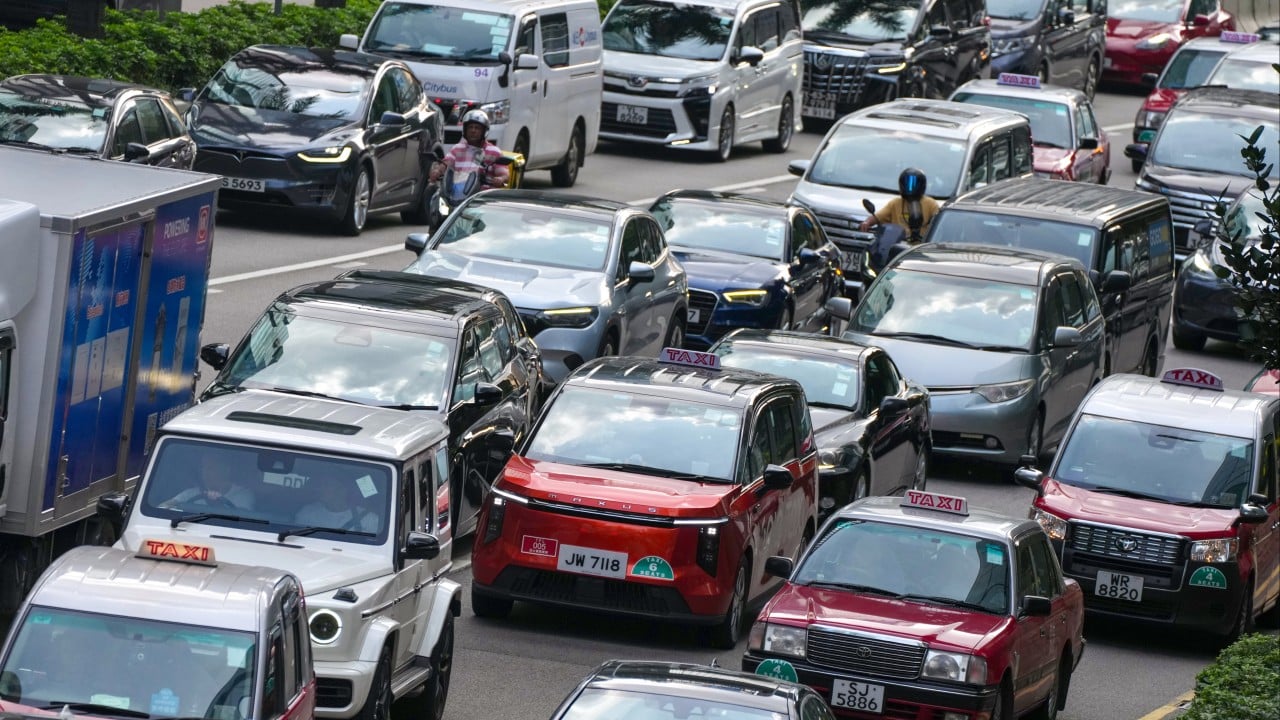
Hong Kong’s decade-long experiment in regulatory ambiguity is finally over, and passengers are about to pay the bill. Under the Road Traffic (Amendment) (Ride-hailing Service) Ordinance 2025 and its subsidiary rules enacted through 2026, the city is replacing a sprawling, gray-market network with a strict, capped licensing regime. For commuters, the immediate reality is straightforward. Legalizing ride-hailing does not mean cheaper fares or faster pickups. Instead, a hard ceiling of 10,000 vehicle permits, mandatory commercial insurance, and strict owner-driver rules will shrink active supply, extend wait times, and push app-based trip prices noticeably higher.
For over ten years, Hong Kong’s point-to-point transport market ran on an unspoken truce. Platforms like Uber operated in a legal twilight zone where private drivers without elusive Hire Car Permits risked arrest, fines, and license suspension every time they picked up a fare. Yet tens of thousands of part-time drivers logged on anyway because demand was insatiable and enforcement remained sporadic. By late 2026, with platform license applications closed and vehicle permit rollouts underway ahead of full enforcement in August 2027, the government has drawn a hard line. The gray market is closing. What replaces it is a tightly rationed system engineered to protect road space and keep the traditional taxi sector from total financial collapse.
The Arithmetic Behind the 10,000-Permit Squeeze
To understand why your next ride will cost more, look at the Transport Department’s own numbers. Surveys of personalized point-to-point travel in Hong Kong put total daily demand at roughly 880,000 passenger journeys. Traditional red, green, and blue taxis handle about 690,000 of those trips, or 78 percent. App-based ride-hailing absorbs the remaining 190,000 daily trips, accounting for 22 percent of the market.
Everyone in the Transport and Logistics Bureau, the taxi unions, and the tech giants agrees on those figures. The collision happens in the conversion. Authorities decided that 190,000 daily ride-hailing journeys must be served by a maximum of 10,000 licensed private vehicles.
Do the math. Serving 190,000 trips with 10,000 cars requires every single permitted vehicle to complete 19 trips a day, seven days a week, without fail. That is a utilization rate closer to a double-shift commercial cab than a private car. Historically, Hong Kong’s ride-hailing supply relied heavily on weekend warriors and after-work commuters who drove for two or three hours during peak demand. Uber has stated publicly that a 10,000-vehicle cap cuts its active driver pool by more than two-thirds. Even with the Transport Department building a waitlist and replacement mechanism to keep all 10,000 slots active, removing tens of thousands of flexible part-time cars from the grid creates an instant supply shock.
Why Part-Time Drivers Are Walking Away
The cap is only half the story. The regulatory architecture built around those 10,000 permits systematically prices out the casual driver. To qualify for a ride-hailing vehicle permit, an applicant must satisfy a gauntlet of requirements:
- Strict owner-driver mandates. The permit holder must be the registered owner of the vehicle, and the car must be less than 12 years old. Fleet operators cannot buy up permits and rent cars out by the shift the way taxi owners do.
- Upfront testing and training. Drivers must pass a combined taxi and ride-hailing written exam covering routes and user guidelines, complete a 12-hour modular pre-service course, and pay HK$2,100 for a permit valid beyond 12 months.
- Commercial insurance spikes. Standard private car policies do not cover paid passenger carriage. Platforms and industry surveys warn that mandatory commercial hire-and-reward insurance premiums are steep enough to push roughly 70 percent of existing part-time drivers off the apps entirely.
Consider a hypothetical example to see how the economics break down. Suppose an office worker in Kowloon drives their personal sedan for eight hours every Saturday to supplement their income. Under the old gray market, their marginal cost was fuel, maintenance, and the platform’s commission. Under the new law, that same driver must pay thousands of dollars extra per year in commercial insurance, sit through a 12-hour course, pass a route exam, and meet minimum trip quotas so their permit is not revoked for underutilization. For a full-time driver logging 50 hours a week, those fixed costs spread out across hundreds of fares. For the Saturday driver, the math fails completely.
The Hidden Crisis Driving the Crackdown
Critics often frame Hong Kong’s transport policy as simple protectionism, a favor to an entrenched lobby that refuses to modernize. That reading misses the systemic financial risk sitting on the balance sheets of Hong Kong’s banks.
For decades, Hong Kong taxi licenses were treated less like transit permits and more like tradeable real estate assets. Capped at 18,163 licenses since the 1990s, urban taxi medallions peaked at over HK$7 million each in 2015. Owners mortgaged those licenses to fund businesses, buy property, and secure commercial loans. As ride-hailing apps eroded driver earnings and rail lines expanded, taxi license values plunged by more than half, triggering severe negative equity and looming bank repossession risks.
If the government had legalized ride-hailing without a strict vehicle cap, taxi license values would have cratered toward zero overnight, creating a localized credit crunch for mid-tier lenders exposed to transport medallions. The 10,000-permit ceiling is a deliberate shock absorber. It gives the taxi industry breathing room to transition into five government-licensed commercial taxi fleets, which began rolling out in 2025 with mandates for e-payment systems, premium vehicles, and wheelchair-accessible cabs.
The Enforcement Hammer Drops Early
Authorities did not wait until the August 2027 full-compliance deadline to squeeze unlicensed supply. Starting in August 2026, tougher penalties took effect for carrying passengers for hire or reward without a valid permit. First-time offenders now face steep fines, vehicle license suspension, and driving license disqualification for up to three years.
The impact on street-level availability was immediate. On the morning the heightened penalties went live, passengers across Hong Kong Island and Kowloon reported empty maps and vanished drivers. Many drivers simply logged off rather than risk a three-year driving ban before the new vehicle permits were even distributed. That preview offered a stark warning of what happens when enforcement tightens faster than legal supply can come online.
Platform Wars in a Fixed-Size Market
With platform applications closed at the end of October 2026 and the first batch of approved operators slated for announcement by year-end, the competitive dynamic among tech companies is shifting. Each licensed platform must pay an annual service license fee of HK$1.2 million and submit real-time operational data to the Transport Department’s new monitoring system.
Uber, which has fought to survive in Hong Kong since 2014, is no longer fighting alone. Mainland giants Didi and Amap have aggressively targeted the territory, leveraging seamless integration with mainland payment apps to capture the surge of cross-border visitors. Meanwhile, Uber has moved to insulate itself from the private-car cap by acquiring local taxi-hailing app FlyTaxi, rolling out cross-border Hong Kong-Macau rides, and leaning heavily into Uber Taxi.
Normally, three well-capitalized platforms fighting for market share triggers a subsidy war that lowers prices for riders. Hong Kong’s quota turns that economic rule upside down. Because private ride-hailing cars are capped at 10,000, platforms cannot manufacture new private supply through driver sign-up bonuses. Instead, Uber, Didi, and Amap must bid against each other for the exact same pool of 10,000 permitted owner-drivers and 18,163 licensed taxis.
To keep permitted drivers loyal to their app, platforms will have to offer lower commission takes or guaranteed hourly minimums. Platforms do not absorb those costs out of charity; they pass them directly to the passenger through higher base fares and more aggressive dynamic surge pricing during rainstorms, shift changes, and Friday nights.
What Passengers Should Expect on the Street
For everyday commuters, the legalized era brings clear trade-offs. Accountability improves dramatically, while convenience and affordability take a hit.
| Feature | Pre-2026 Gray Market | Post-2026 Regulated Regime |
|---|---|---|
| Private Car Supply | Uncapped, driven by 30,000+ part-time and full-time cars | Hard cap of 10,000 permitted owner-driver vehicles |
| Passenger Insurance | Legal gray area; third-party coverage often voided during trips | Mandatory, verified commercial passenger insurance |
| Driver Vetting | Basic background check and standard private license | Combined written exam, 12-hour course, and formal permit |
| Peak-Hour Pricing | Moderate surge cushioned by elastic part-time supply | Steep surge pricing due to rigid supply ceiling |
| Taxi Integration | Fragmented across independent apps and street hails | Five formal fleets, mandatory e-payments, unified app dispatch |
The biggest win for riders is safety and recourse. In the gray-market era, getting into an unlicensed private car meant trusting that the platform’s umbrella insurance would hold up in court after a severe crash. Now, every permitted ride-hailing vehicle must display clear external identification markings, carry valid commercial insurance, and operate under a driver who passed government vetting. If a driver refuses a cross-harbor trip or overcharges, the Transport Department has real-time trip logs and statutory power to revoke their permit.
At the same time, the traditional taxi experience is finally being dragged into the twenty-first century. Since April 2026, every taxi driver in Hong Kong has been legally required to accept at least two forms of electronic payment, ending the decades-old excuse of a broken cash register or a lack of change. Passengers can also book across all five newly licensed taxi fleets simultaneously through mainstream payment apps like Octopus, or use fixed-fare upfront pricing on Uber Taxi and Didi.
The Unresolved Flaw in the Rules
Even the most carefully drafted legislation leaves loopholes, and Hong Kong’s ride-hailing framework has two glaring pressure points. First is the taxi trade’s ongoing demand for a statutory price floor that prevents ride-hailing platforms from undercutting metered taxi fares. If regulators cave to that pressure, platforms will be legally barred from offering promotional discounts, locking in higher baseline fares across the board.
Second is the enforcement gap around cross-border vehicles and unlicensed private charter vans. While local sedan drivers face three-year license bans, enforcement officers still struggle to police point-to-point bookings arranged through encrypted messaging groups or mainland social media channels that bypass licensed platforms altogether. If legal permits prove too expensive and scarce, a smaller, harder-to-trace underground market will inevitably persist at the margins.
Hong Kong has traded a cheap, lawless convenience for a compliant, expensive oligopoly. Passengers will no longer worry about invalid insurance or cash-only cabbies refusing to cross Victoria Harbour, but when the rain starts falling at 6 PM in Central, those 10,000 permits will disappear in seconds—and the surge multiplier will remind you exactly who paid for the peace.