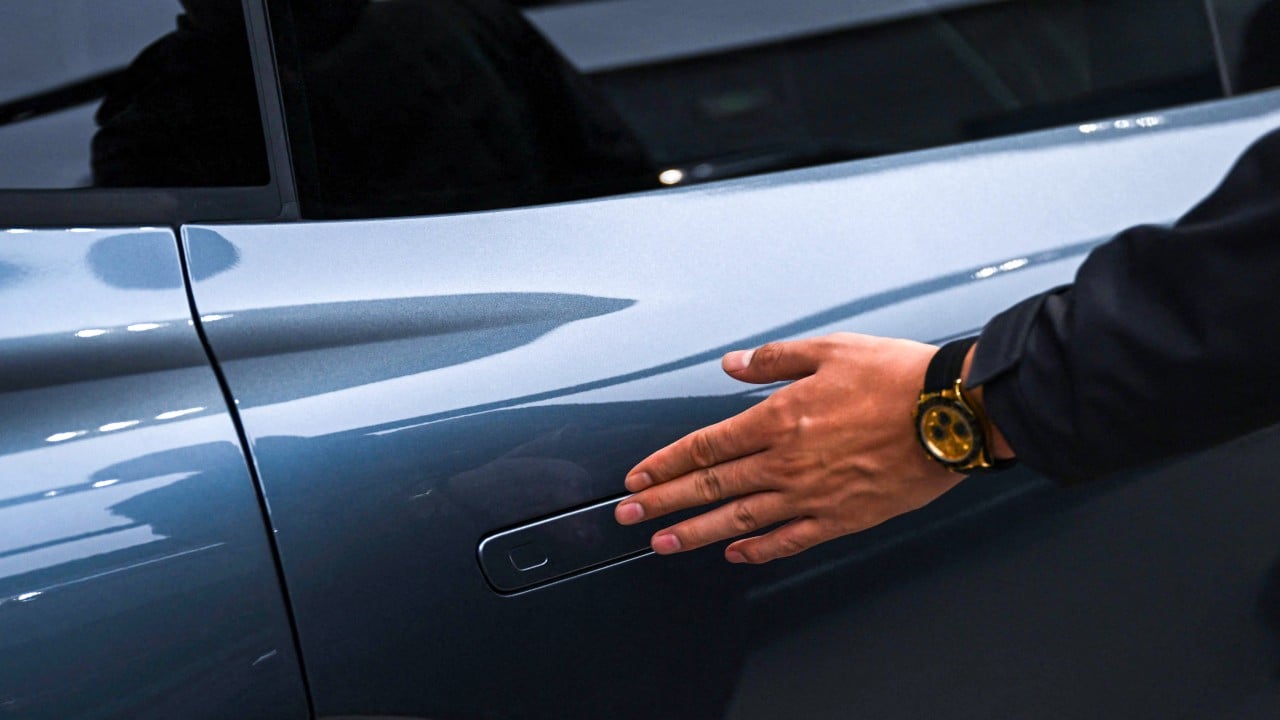
The headlines are buzzing with a sense of righteous victory. Hong Kong’s transport authorities are moving to ban new electric vehicles equipped only with electronic door handles. The logic seems airtight: in a crash, if the 12V battery dies or the software glitches, passengers are trapped in a high-voltage cage. Regulators are patting themselves on the back for "forcing" manual overrides.
They are missing the point.
This isn't about safety. It’s about a desperate attempt to apply 19th-century mechanical intuition to 21st-century software-defined machines. If you think a physical lever is the thin line between life and death in a modern EV, you haven’t been paying attention to how these cars actually fail.
We are obsessing over the handle while the entire house is made of glass.
The Mechanical Fallacy
The "lazy consensus" among regulators and automotive journalists is that mechanical linkages are inherently more reliable than electronic ones. It feels true. You pull a wire; the latch moves. Physics.
But I’ve spent enough time in teardown labs to know that "mechanical" is often a marketing term for "cheaper materials hidden behind a plastic shroud." Modern mechanical door releases are frequently linked via bowden cables—thin steel wires that can snap, fray, or become unseated during the violent kinetic energy of a side-impact collision.
If a crash is severe enough to warp the door frame, your "reliable" mechanical handle is just as useless as a dead electronic one. The frame pinches the latch. The door is jammed. It doesn’t matter if the trigger was a solenoid or a finger.
Hong Kong is mandating a backup for a system that isn't the primary point of failure. It’s security theater for the automotive age.
The Real Killer is the Battery Chemistry, Not the Handle
Let’s talk about the scenario everyone is actually afraid of: the thermal runaway.
When a lithium-ion pack is compromised, you don’t have minutes to fiddle with a door handle. You have seconds. The heat generated in a runaway event can exceed 1,000°C. In that environment, a mechanical handle made of plastic and zinc alloy is going to deform or melt just as quickly as the wiring harness for an electronic pop-out handle.
By focusing on the door handle, regulators are ignoring the elephant in the room: Battery Management System (BMS) isolation.
The real danger isn't that the door won't open; it's that the car's logic doesn't automatically vent the cabin and unlock all points of entry the millisecond a cell-to-cell propagation event is detected. We should be mandating fire-suppression logic and structural venting, not debating the aesthetics of a flush-mounted handle.
Why Manufacturers Chose Electronics (And it’s Not Just for Looks)
Critics love to claim that Tesla, NIO, and BYD moved to electronic handles purely for vanity or a 0.01% gain in aerodynamic efficiency. That’s a surface-level take.
The transition to electronic latches is part of the broader "Zone Architecture" in modern vehicles. By removing heavy mechanical linkages, engineers can:
- Reduce Mass: Every gram saved in the door is a gram that can be used for structural reinforcement elsewhere.
- Simplify Assembly: Fewer moving parts mean fewer points of failure during the manufacturing process.
- Enhance Anti-Theft: Electronic latches are significantly harder to "jimmy" than traditional mechanical locks.
When Hong Kong mandates a manual override, they are forcing engineers to re-introduce complexity. You now need the electronic actuator and a mechanical bypass. In engineering, complexity is the enemy of reliability. You’ve just doubled the number of things that can go wrong.
The Cognitive Load of Emergency Overrides
Here is the brutal truth: even if you have a manual override, you probably won't use it.
In a high-stress, life-threatening situation, human beings revert to "Type 1" thinking—instinctive, fast, and repetitive. If you have spent three years opening your door by pressing a button, your brain will keep pressing that button when the smoke starts filling the cabin.
Most "manual overrides" in current EVs are hidden. They are under floor mats, inside center consoles, or require a specific "double-pull" motion that is never practiced.
The Illusion of Choice
- Tesla Model 3/Y: Manual release is a lever in front of the window switches. People use it daily by accident, which actually wears out the window seals.
- Tesla Model S/X (Rear Doors): You have to pull back the carpet and find a mechanical cable. In the dark. While the car is on fire.
- High-End Euros: Often use a "soft-close" motor that acts as a physical barrier to the latch if the power is cut mid-cycle.
If regulators actually cared about safety, they wouldn't just mandate a "manual handle." They would mandate that the manual handle be the primary interface. But they won't do that, because consumers want the "cool" flush handles. So we get this halfway-house of safety: a hidden lever that no one knows how to use until it's too late.
The Cost of the "Safety" Tax
Regulations like Hong Kong’s don’t come cheap.
When a government mandates a specific mechanical design, it halts innovation in that sector. Why would a startup spend $50 million developing a revolutionary solid-state latching system that fails-open if it doesn't meet a specific, rigid "manual handle" requirement written by a bureaucrat?
This move will likely lead to "regional variants" of cars. Manufacturers will slap a clunky, poorly integrated lever onto the Hong Kong spec of the car to satisfy the law. These "afterthought" designs are almost always less reliable than a system designed from the ground up to be cohesive.
We Are Asking the Wrong Questions
The "People Also Ask" section of the internet is obsessed with: "How do I get out of a Tesla with no power?"
The better question is: "Why are we building cars that require a 12V lead-acid battery to trigger a safety-critical door latch?"
The industry-wide reliance on a legacy 12V architecture to power 800V vehicles is the true absurdity. If the 12V rail dies, the car becomes a brick. Instead of mandating a metal stick to pull, regulators should be mandating redundant power paths for safety-critical systems.
Give me a supercapacitor backup for the door latches that holds enough charge for 50 cycles even if the main battery is severed. That is a 21st-century solution. A manual handle is a 1920s solution to a 2026 problem.
The Liability Shift
Make no mistake, this regulation is a gift to insurance companies and a shield for the government.
By mandating a manual handle, the Transport Department shifts the "failure of escape" liability from the manufacturer (system failure) to the passenger (failure to use the provided manual override).
"The car didn't trap you," the lawyers will say. "You simply failed to locate the manual release lever located behind the speaker grille."
It is a cynical move that prioritizes the appearance of safety over the reality of human behavior in a crisis.
Stop Worshiping the Lever
We have a romanticized view of mechanical systems because we think we understand them. We don't. We just find their failures more "honest."
If your EV door doesn't open, it’s not because the handle is "electronic." It’s because the system architecture is flawed, the power redundancy is non-existent, and the emergency protocols were an afterthought.
Hong Kong's ban is a superficial fix for a deep-seated architectural laziness in the EV industry. We don't need more handles. We need better engineering.
If you're buying a car based on whether it has a physical pull-tab, you're not buying safety—you're buying a placebo. And in a real emergency, placebos don't open doors.
Stop asking for a handle to pull. Start demanding a car that doesn't need one.