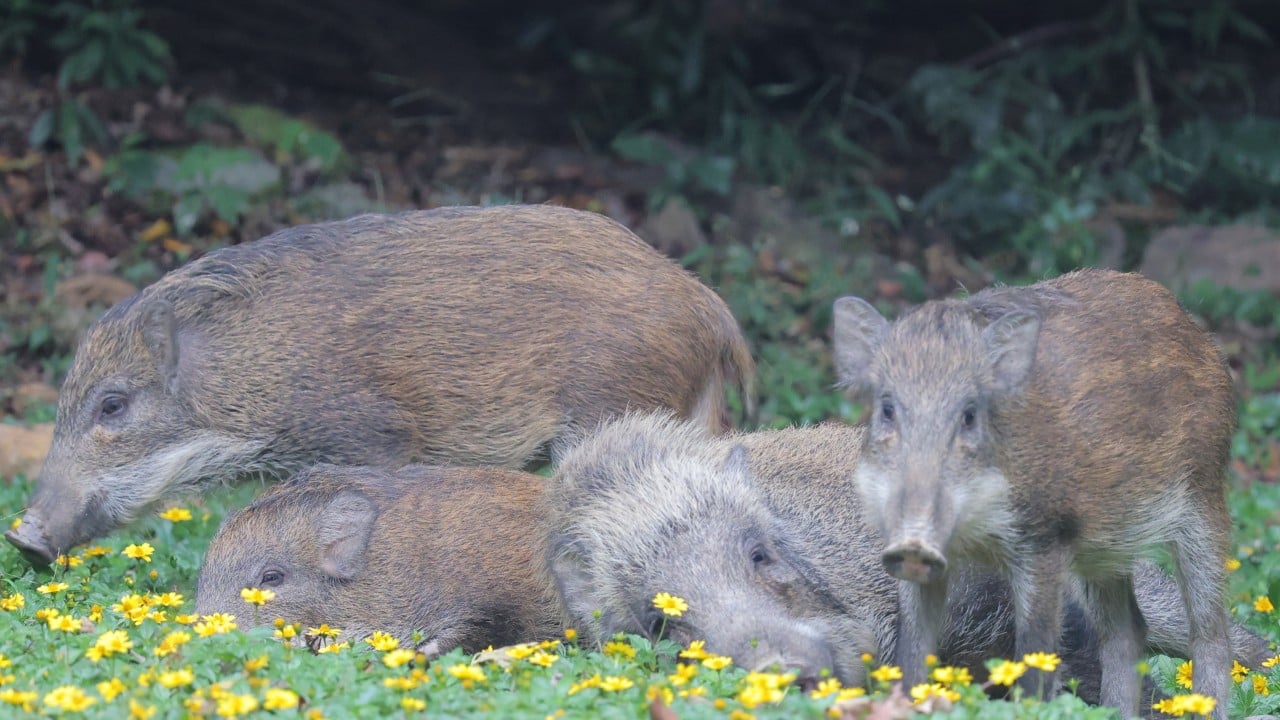
Hong Kong has drastically reduced its urban wild boar population by roughly half through a controversial capture-and-kill strategy implemented after years of relying on contraception and relocation. This aggressive pivot marks a fundamental shift in wildlife management for the territory, trading an ethos of coexistence for a hardline policy of culling. The numbers dropped sharply following government intervention, but the underlying ecological and social friction remains entirely unresolved.
For decades, urban residents shared winding hillside trails and concrete staircases with Sus scrofa. The animals ambled down from country parks, drawn by open refuse bins and deliberate hand-feeding by sympathetic locals. A tipping point arrived when encounters escalated from passive sightings to aggressive lunges for food. Authorities faced mounting pressure to act. The government abandoned its decades-long contraceptive program, citing slow results and the persistent danger posed by habituated animals.
The Anatomy of a Policy Shift
Management strategies do not transform overnight. They evolve through administrative fatigue.
The previous approach relied heavily on contraceptive inoculation and relocation. Field teams spent hours tracking sounders, administering darts, and moving captured animals deep into remote country parks. It was expensive. It was labor-intensive. Most importantly, it failed to produce immediate reductions in street-level sightings. The public wanted instant safety. Officials wanted a permanent metric of success.
When the administration authorized the Agriculture, Fisheries and Conservation Department to dispatch captured wild boars via lethal injection, public opinion fractured. Animal welfare advocates marched with placards. Urban residents who lived near wooded slopes breathed a cautious sigh of relief.
Why Relocation Failed
Critics of the old system point to basic animal behavior. Wild boars possess exceptional homing instincts and high intelligence.
- Animals moved miles away routinely navigated back to their urban foraging grounds.
- Relocated boars often disrupted established ecological dynamics in remote parks by competing with native species for scarce resources.
- Supplemental feeding by humans ensured that urban fringes remained far more attractive than deep forest habitats.
Contraception required sustained funding and multi-year tracking of specific sounders. When budgets tightened or political priorities shifted, the program lost momentum. Lethal culling offered a blunt instrument. It yielded immediate headcounts.
Concrete Realities on the Ground
Data tells one story. Concrete experience tells another.
Walking the steep inclines of Mid-Levels or Pok Fu Lam reveals the lingering scars of this transition. Metal refuse bins now feature heavy locking mechanisms. Warning signs blare in multiple languages against the dangers of feeding wildlife. Yet, the ecosystem has not simply reset itself to zero.
Nature abhors a vacuum. When a resident sounder is removed from a specific territory, the vacant niche does not remain empty for long. Neighboring sounders smell the food waste and expand their ranges. The culling operation becomes a perpetual cycle rather than a permanent solution.
The Human Element
Wildlife management is rarely about managing wildlife. It is about managing people.
The primary driver of the wild boar crisis was never an explosion in total animal births. It was human behavior. For years, tourists and residents treated wild animals like stray dogs. They offered bread, vegetables, and leftover takeaway meals. Wild boars learned to associate human voices and car engines with free calories.
- Behavioral conditioning turned cautious forest dwellers into aggressive beggars.
- Enforcement gaps meant illegal feeders faced minor fines that failed to deter repeat offenses.
- Urban sprawl pushed concrete buildings further into the natural buffer zones between city and country park.
By focusing entirely on the terminal end of the problem—the animal itself—authorities sidestepped the politically painful task of policing human residents. Handing out fines to elderly citizens who insist on feeding "the poor piggies" is an optical nightmare. Lethal removal quietly bypassed that community friction, even if it generated broader moral outrage.
The Broader Ecological Fallout
Ecosystems operate on feedback loops. Removing a keystone species or a prominent mammal triggers unintended consequences across the broader landscape.
Wild boars act as landscape engineers. Their rooting behavior turns the soil, burying seeds, aerating earth, and controlling dense undergrowth. Without them, certain plant species see altered germination rates. Predators, though sparse in Hong Kong, face shifts in prey availability.
[Image of forest ecosystem biodiversity]
More pressingly, the ethical framework of the territory has shifted. Hong Kong prides itself on being a cosmopolitan hub balancing dense modernity with lush country parks. Forty percent of the territory consists of protected green space. Living alongside nature was once framed as a unique civic privilege. Now, it is treated as a hazard to be mitigated through force.
Examining the Alternatives
Is a binary choice between total protection and mass culling the only path forward? Analysts and conservationists argue otherwise, pointing to structural fixes that bypass the false choice of safety versus sentimentality.
- Hardened Infrastructure: Upgrading every public waste receptacle across urban fringes to animal-proof standards neutralizes the food magnet.
- Strict Legal Enforcement: Mandatory jail time for repeat illegal feeders rather than nominal monetary fines alters the cost-benefit analysis for citizens.
- Habitat Management: Creating dense buffer zones of unpalatable native vegetation between high-density housing and forest edges discourages incursions.
None of these solutions provide the instant political optics of a headline announcing a halved population. All of them address the root causes rather than the visible symptoms.
The half-empty hillsides of Hong Kong stand as a monument to administrative impatience. When convenience dictates environmental policy, the response defaults to the bullet and the injection. The wild boars are gone from the streets, but the systemic vulnerabilities that brought them there remain completely intact, waiting for the next generation to test the boundaries of concrete and green.