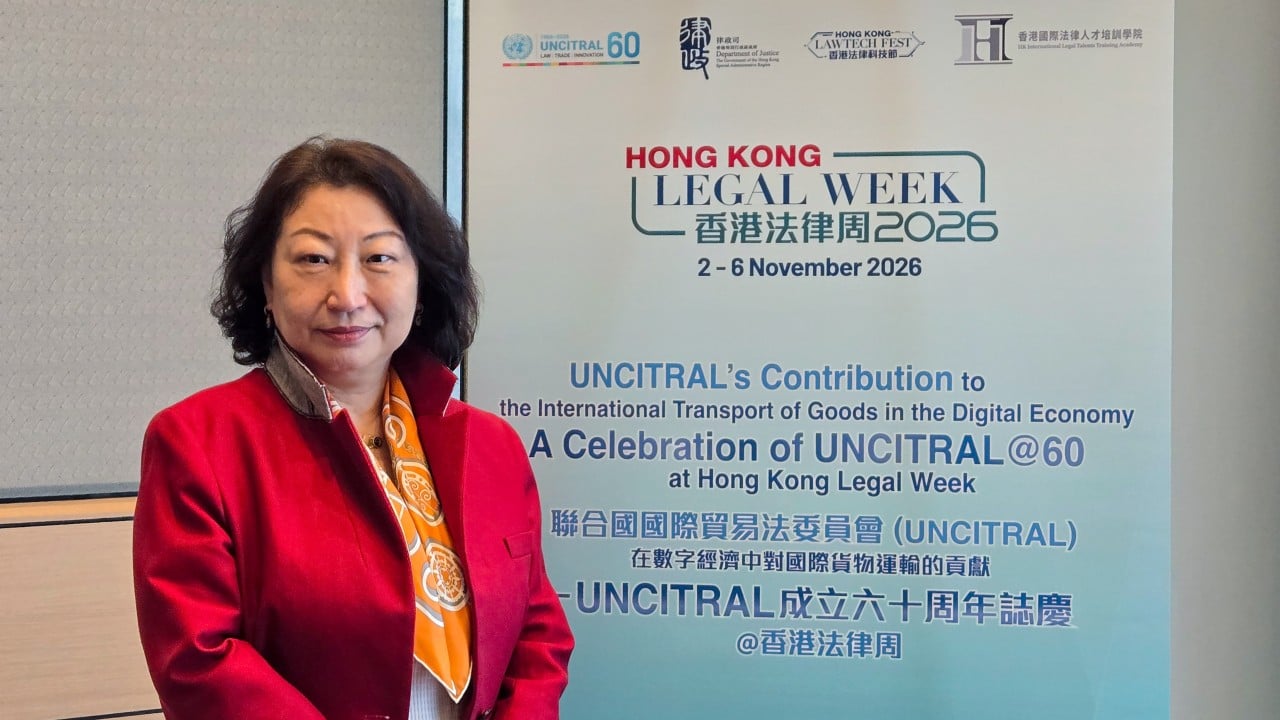
The opening of a new physical office for an international legal body in Hong Kong is far more than a routine ribbon-cutting ceremony. It is a calculated geopolitical and commercial play designed to cement the city’s status as the premier legal exchange hub connecting mainland China with the rest of the world. While former officials praise the move as a natural evolution of the city’s service economy, the real story lies in the fierce regional competition for cross-border dispute resolution, shifting global supply chains, and the quiet battle over where multinational corporations choose to settle their most expensive disagreements.
For decades, Hong Kong thrived as the undisputed middleman of Asian finance. Money flowed in from Western institutional investors, passed through the city’s banks and law firms, and funded manufacturing and infrastructure across mainland China. That traditional pipeline has faced immense pressure in recent years from shifting trade policies, regulatory tightening, and aggressive rival financial centers. By anchoring major international legal institutions directly within its borders, Hong Kong is betting that cross-border legal infrastructure will prove even stickier—and more lucrative—than capital flows alone.
Why Physical Presence Still Matters in Modern Law
Skeptics often ask why brick-and-mortar offices matter when international arbitration and mediation routinely happen over encrypted video calls. The answer comes down to institutional gravity and jurisdictional trust.
When a multinational conglomerate in Europe signs a joint venture agreement with a state-owned enterprise in Shenzhen, both sides need an exit strategy before the ink dries. Nobody enters a billion-dollar partnership planning to sue, yet every corporate general counsel insists on a dispute resolution clause that dictates where and how a fight will be adjudicated. Choosing a neutral venue is rarely about convenience. It is about predictability, enforceability, and access to specialized legal talent.
Establishing a permanent local headquarters signals long-term institutional commitment. It creates a physical ecosystem where arbitrators, mediators, forensic accountants, and corporate counsel cross paths daily. Over time, that proximity generates a self-reinforcing network effect. Law firms expand their local headcount to service the cases handled by the resident legal body. Junior associates train under veteran practitioners, building a deep bench of talent fluent in both common law traditions and mainland commercial realities.
Once a city becomes the default venue written into standard commercial contracts, dislodging it takes decades. Contracts signed today govern disputes that will not erupt for five, ten, or fifteen years. A new office opened this year is essentially planting flags in the commercial litigation of the 2030s.
The Common Law Advantage Under One Country Two Systems
To understand why international legal bodies view Hong Kong as an attractive base, you have to look at the structural anomaly that defines its legal architecture. Hong Kong remains the only jurisdiction in the world that operates a bilingual common law system while maintaining seamless institutional links to mainland China’s civil law framework.
International investors largely distrust unfamiliar legal systems when massive capital is at stake. Common law, rooted in judicial precedent and predictability, is the lingua franca of global commerce. From New York to London to Singapore, corporate lawyers understand how common law courts interpret contractual obligations, calculate damages, and enforce commercial awards.
Hong Kong offers that familiar common law predictability alongside unique bilateral arrangements with Beijing that no rival city can replicate. Under reciprocal enforcement mechanisms negotiated between Hong Kong and the mainland, parties arbitrating in Hong Kong can apply directly to mainland courts for interim relief measures—such as freezing a counterparty’s assets or preserving critical evidence—before a final award is even issued.
Try getting a mainland court to freeze corporate assets on the orders of an arbitration panel sitting in London or Zurich. In most cases, it is legally impossible or practically futile. By the time a foreign judgment winds its way through diplomatic channels, the disputed funds have vanished. Hong Kong’s legal bridge eliminates that vulnerability, giving international businesses a powerful enforcement mechanism right on the mainland’s doorstep.
The Quiet Turf War With Singapore
No serious analysis of Hong Kong’s ambitions as an exchange hub can ignore the elephant in the room. Singapore has spent the last twenty years aggressively courting the exact same cross-border legal business.
Backed by massive state investment and relentless international marketing, Singapore positioned itself as the neutral, stable alternative for Asian dispute resolution. When Western companies grew nervous about geopolitical tensions between Washington and Beijing, many reflexively shifted their default arbitration clauses from Hong Kong to Singapore. The city-state capitalized on every ounce of hesitation, expanding its own international commercial courts and mediation centers at breakneck speed.
Hong Kong’s current push to host new international legal offices is a direct counter-offensive. Rather than conceding the regional market, policymakers and legal veterans are doubling down on what Singapore cannot offer: direct, institutionalized integration with the Greater Bay Area and the broader Chinese economy.
Consider a hypothetical scenario involving a Southeast Asian logistics firm and a Guangdong-based battery manufacturer. If their supply contract goes sour over defective components, the Southeast Asian firm wants a neutral, English-speaking forum governed by familiar common law rules. Meanwhile, the manufacturer’s factories, bank accounts, and intellectual property all sit inside mainland China. If the dispute is handled through a Hong Kong-based legal body, the proceedings satisfy the foreign firm’s demand for common law neutrality while preserving the ability to enforce rulings directly against the manufacturer’s mainland assets.
Singapore simply cannot match that dual capability. For businesses whose supply chains run through southern China, Hong Kong’s geographic and legal proximity remains an undeniable structural edge.
Inside the Economics of a Legal Exchange Hub
When former ministers and industry boosters talk about boosting Hong Kong’s role as an exchange hub, they are looking at a massive economic multiplier. Legal services do not exist in a vacuum. High-stakes international disputes bring an entire entourage of high-spending professionals into the city.
A single complex commercial arbitration can easily run for two years and generate millions of dollars in fees. Those fees do not just go to senior barristers. They flow into local hotels, airlines, translation agencies, court reporting services, e-discovery tech vendors, and financial advisory firms. Every major hearing brings dozens of executives, expert witnesses, and legal teams into the city for weeks at a time.
More importantly, legal hubs anchor corporate headquarters. Multinational firms prefer to locate their regional decision-makers near the legal and financial infrastructure that protects their investments. When a company’s general counsel, tax advisors, and external litigators are all concentrated in one square mile of Central, moving the regional office elsewhere becomes a logistical headache.
This is why governments across Asia subsidize rent, offer tax concessions, and streamline visa rules to attract international legal organizations. The return on investment is measured not in the rent paid by a single legal body, but in the billions of dollars of ancillary commercial activity that orbit around it.
Navigating Geopolitical Skepticism and Perception Gaps
Despite the structural advantages, Hong Kong’s path to cementing its status as a premier legal exchange hub is far from guaranteed. The biggest obstacle is not technical or legal—it is perceptual.
In boardrooms across North America and Europe, risk committees scrutinize Hong Kong differently than they did a decade ago. Questions about judicial independence, national security legislation, and shifting regulatory boundaries regularly surface during contract negotiations. Even when legal experts point out that commercial law remains insulated from political cases, corporate decision-makers often err on the side of caution.
Perception lags reality in both directions. Foreign executives who have not visited the city in years often rely on outdated headlines rather than examining how commercial courts actually function on the ground. Conversely, local boosters sometimes underestimate how deeply geopolitical anxiety influences where Western general counsels feel comfortable placing their companies’ legal exposure.
To overcome this gap, Hong Kong’s legal sector cannot rely solely on government endorsements or speeches from former officials. Credibility in the international legal market is earned case by case, ruling by ruling. International legal bodies operating in the city must demonstrate complete procedural autonomy, attract respected foreign arbitrators to their panels, and maintain transparent, predictable outcomes that withstand global scrutiny.
The Shift From Litigation to Mediation and Belt and Road Disputes
Another critical factor driving the expansion of legal offices in Hong Kong is the changing nature of international disputes themselves. Traditional courtroom litigation is slow, brutally expensive, and destroys commercial relationships. Increasingly, Asian businesses favor structured mediation and hybrid dispute resolution models that preserve working partnerships while resolving financial deadlocks.
Hong Kong has positioned itself at the forefront of this shift, particularly in relation to infrastructure and trade projects spanning Asia, the Middle East, and Africa. As Chinese enterprises expand their footprint across emerging markets, cross-border commercial friction has surged. Construction delays, currency fluctuations, sovereign regulatory changes, and supply chain bottlenecks generate endless contractual disagreements.
Many of these emerging-market counterparties are wary of litigating in Western capitals, viewing London or Paris as prohibitively expensive and culturally distant. At the same time, they want a venue with stronger international credentials than a local domestic court. Hong Kong’s newly established legal offices are specifically tailored to capture this middle ground—offering internationally recognized mediation frameworks designed for cross-cultural commercial disputes.
By training mediators fluent in multiple languages and familiar with both Western commercial norms and Asian business practices, Hong Kong is carving out a specialized niche that neither London nor New York can easily replicate.
What General Counsels and Investors Should Watch Next
For corporate leaders, investors, and legal practitioners watching Hong Kong’s evolution, the opening of new institutional offices serves as an early indicator of where cross-border commerce is heading. The real test over the next five years will not be how many organizations lease office space in the city, but how many international contracts explicitly name those institutions in their dispute resolution clauses.
Watch the caseload numbers closely. Look at the nationality of the parties filing claims, the enforcement track record of Hong Kong awards in mainland courts, and the willingness of top-tier international law firms to expand their local arbitration teams. If multinational corporations from outside Greater China increasingly choose Hong Kong to resolve disputes with each other—not just with Chinese counterparties—then the city’s transformation into a true global legal exchange hub will be undeniable.
Until those numbers prove themselves on the open market, every new office remains an ambitious bet on the enduring power of geography, common law pragmatism, and commercial necessity.