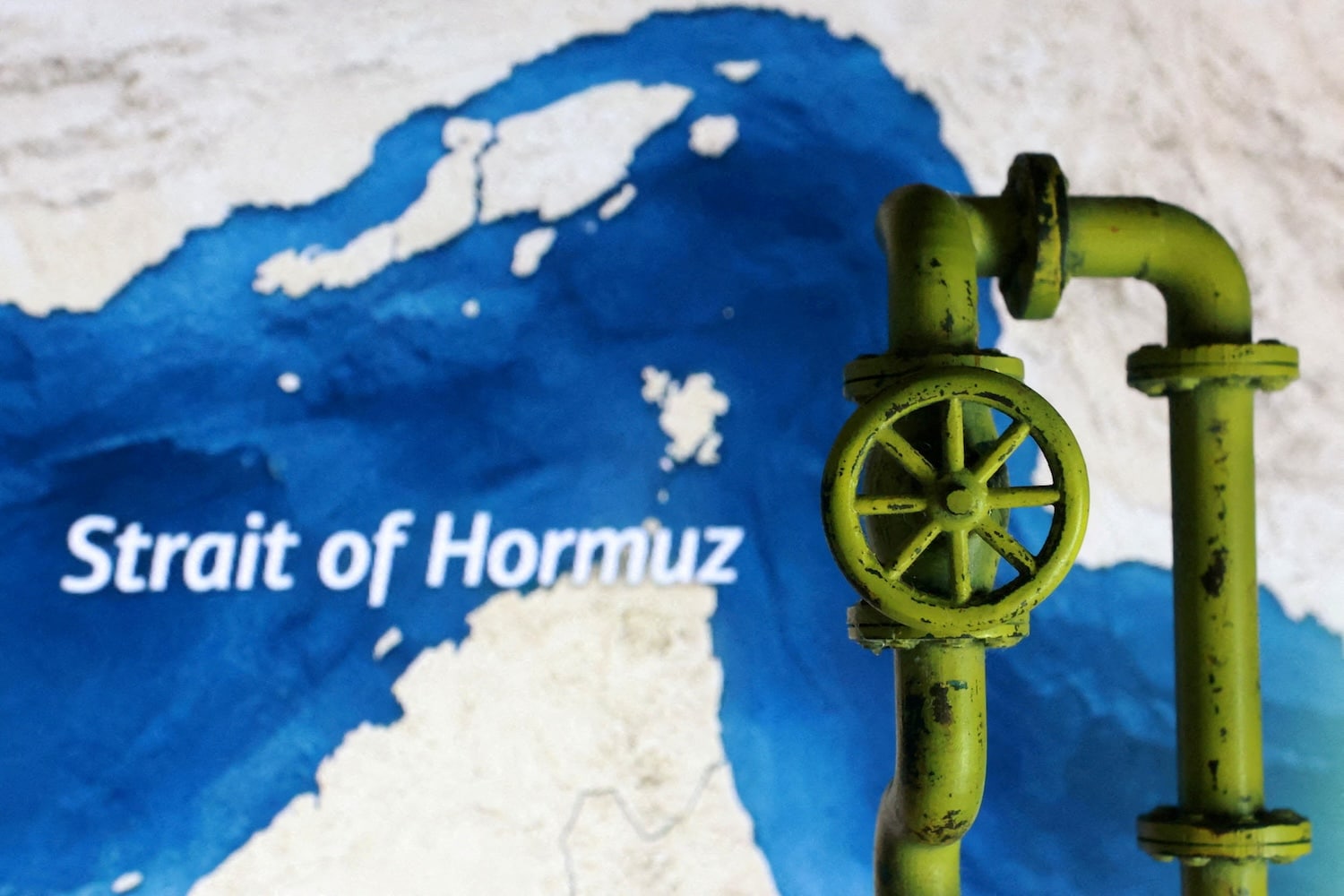
The chattering class is terrified of a ghost. They look at a map of the Strait of Hormuz, see a twenty-one-mile-wide choke point, and immediately begin hyperventilating about the "end of the global economy." They claim a Trump-led blockade would cripple Beijing and ignite a terminal conflict.
They are wrong. Also making headlines in this space: Turning the Goliath.
The conventional wisdom—the lazy consensus found in every panicked op-ed from D.C. to London—assumes China is a fragile energy importer that would buckle under pressure. This view is twenty years out of date. It ignores the fundamental shift in how power is projected in the 21st century.
A blockade of the Strait of Hormuz wouldn't destroy China. It would be the catalytic event that cements their dominance for the next century. Further insights regarding the matter are explored by CNBC.
The Myth of the Energy Stranglehold
Mainstream analysts love to cite the statistic that roughly 20% of the world’s liquid petroleum passes through Hormuz. They argue that because China is the world’s largest oil importer, closing the tap means the lights go out in Shanghai.
This is a linear solution to a non-linear problem.
I have spent years watching trade flows shift in real-time, and here is the reality: China has spent the last decade prepares for exactly this scenario. They aren't just sitting on 90 days of strategic reserves; they have rebuilt the entire architecture of Eurasian energy.
- The Russian Pivot: The Power of Siberia pipeline isn't a "nice to have" project. It is a strategic bypass. Russia’s oil and gas exports to China have surged, and they don't need a single tanker to cross a single blue-water ocean to get there.
- The Overland Obsession: The Belt and Road Initiative (BRI) is frequently mocked as a debt trap. It’s actually a series of hard-wired energy corridors. Look at the China-Pakistan Economic Corridor (CPEC). The goal is to offload Gulf oil at Gwadar and pipe it directly to Xinjiang.
- The Strategic Petroleum Reserve (SPR): While the U.S. has been draining its SPR to manage gas prices for election cycles, Beijing has been quietly filling underground salt caverns.
If Trump blocks the Strait, he isn't cutting off China's oxygen. He’s just forcing them to switch to a tank they already own.
The Dollar is the Real Casualty
The biggest mistake the "Locker-style" analysis makes is focusing on barrels of oil instead of units of currency.
The Strait of Hormuz is the beating heart of the petrodollar. Since the 1970s, the global requirement to buy oil in U.S. dollars has been the primary reason the Treasury can print money with impunity.
If the U.S. uses its military might to block the Strait, it effectively tells every major economy—India, Japan, South Korea—that their access to energy is subject to the whims of a single man in the Oval Office.
What happens next?
- Instant De-dollarization: The "Petroyuan" moves from a theoretical threat to an overnight necessity.
- Alternative Payment Systems: The mBridge project and other central bank digital currency (CBDC) initiatives will see a 1,000% spike in adoption.
- The Loss of Sanctions Power: Once the world moves its energy trade off the SWIFT system, the U.S. loses its most potent non-kinetic weapon.
By weaponizing the Strait, the U.S. would be performing a controlled demolition of its own financial hegemony. China doesn't need to win a naval battle in the Persian Gulf to win this war. They just need to be the only ones still buying oil in a currency they control while the rest of the world scrambles.
The Green Transition Acceleration
Here is the most counter-intuitive truth of all: A sustained spike in oil prices caused by a blockade is a massive subsidy for China’s industrial base.
China controls the supply chain for 80% of the world’s solar panels and over 70% of the world’s lithium-ion batteries. While an oil shock would send the U.S. and Europe into a recessionary spiral of high pump prices and logistics costs, it would vindicate Beijing’s massive bet on electrification.
Imagine a scenario where oil hits $250 a barrel.
Internal combustion engines become paperweights. The demand for EVs and renewable infrastructure goes vertical. Who benefits? The country that has spent twenty years cornering the market on every mineral required to build that world.
A blockade doesn't stop the Chinese economy; it accelerates the death of the Western internal combustion industry. It turns the "Green New Deal" from a political debate into an immediate survival requirement—and China is the only one selling the life jackets.
The Naval Fallacy
The Pentagon's strategy is built on the idea of "Command of the Seas." We assume that because we have the biggest carriers, we control the outcomes.
But Hormuz is a bathtub.
In a conflict, China doesn't need to send its fleet to the Middle East. They just need to enable their proxies and partners. Iran’s "Anti-Access/Area Denial" (A2/AD) capabilities—thousands of smart mines, swarming fast-attack boats, and shore-based ASCMs (Anti-Ship Cruise Missiles)—are more than enough to turn the Strait into a graveyard.
The cost-exchange ratio is devastatingly lopsided. A $20,000 Shahed-style drone or a $500,000 missile can disable a $13 billion aircraft carrier. The U.S. navy is not designed for a high-attrition conflict in a narrow waterway.
If Trump pushes for a blockade, he is betting that the U.S. Navy can maintain a perfect record. China only needs to be lucky once. The moment a U.S. carrier is hit, the psychological era of American naval invincibility is over.
The Wrong Question
People ask: "Will a blockade stop China?"
They should be asking: "Why are we handing China the keys to the post-oil world?"
A blockade is a 20th-century tool being used in a 21st-century game. It assumes that physical control of a geography is the same as economic control of a system.
It isn't.
China wants to be the center of a new, land-based Eurasian trade bloc that is immune to sea-power. By blocking the Strait, the U.S. doesn't isolate China; it isolates itself from the global energy market while forcing its allies to choose between American "security" and Chinese "stability."
History shows that people usually choose the lights staying on.
Stop thinking about Hormuz as a kill-switch for Beijing. It’s a starting gun. The moment that waterway closes, the race to replace the U.S. dollar and the U.S. Navy begins in earnest. And China has already been running for twenty years.
The Strait is not a cage for the dragon. It is the gate the dragon has been waiting for us to open.
Go ahead. Lock the gate. See who is really trapped inside.