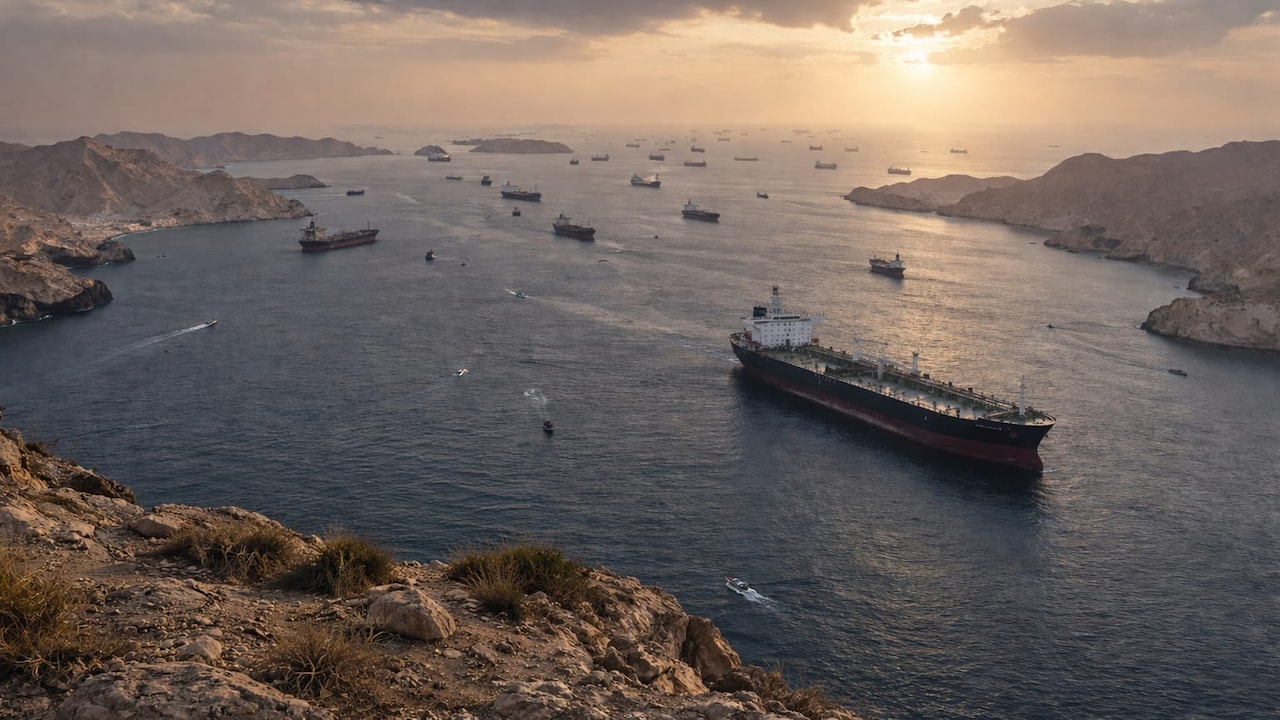
Tension in the Persian Gulf just spiked. A commercial vessel transiting the vital Hormuz Strait recently took a direct hit from an unidentified projectile, triggering a fierce onboard fire and sending shockwaves through international maritime supply chains. Whenever trouble brews in this narrow chokepoint, the entire world feels the economic pressure within hours.
You might think regional maritime skirmishes are just isolated local problems. They aren't. Over twenty percent of the world's petroleum passes through this exact waterway every single day. When a ship gets struck by an unknown explosive projectile, insurance rates skyrocket, crews panic, and cargo routes shift overnight. Let's break down what actually happened, why this specific shipping lane remains an absolute geopolitical powder keg, and what this means for international trade moving forward. For an alternative look, see: this related article.
The Anatomy of the Hormuz Strait Incident
Details emerging from maritime security agencies paint a tense picture. The vessel was cruising through international waters near the narrowest section of the strait when the strike occurred. A loud blast shattered the calm, followed immediately by heavy smoke billowing from the superstructure.
The crew reacted fast. They fought the blaze while issuing distress signals to regional naval patrols. Fortunately, preliminary reports indicate no catastrophic loss of life, but the vessel sustained structural damage that required immediate towing and emergency dry-docking. Similar reporting on this trend has been published by Associated Press.
Who fired the projectile? Right now, nobody has claimed responsibility, and official investigations are ongoing. That ambiguity is terrifying. When you don't know who is launching missiles or drones at commercial shipping, deterrence becomes nearly impossible. Captains and vessel owners are left guessing whether they are targets of state-sponsored harassment, proxy warfare, or random collateral damage.
Why This Chokepoint Controls Your Grocery Bill
Geography makes the Hormuz Strait uniquely vulnerable. At its narrowest point, the shipping channel is only about twenty-one miles wide, with inbound and outbound lanes separated by a tiny two-mile buffer zone. Ships have very little room to maneuver.
When an incident like this happens, the economic fallout is immediate.
- Marine insurance premiums for the Persian Gulf jump exponentially overnight.
- Charter rates for oil tankers and container ships spike because operators demand hazard pay.
- Supply chains freeze as cautious shipping companies temporarily pause transits to assess safety.
You pay for every single one of those disruptions. When it costs more to insure and move crude oil or manufactured goods through a war zone, those costs get passed directly down to the consumer at the gas pump and the retail counter. Global
Why an Unknown Projectile in the Hormuz Strait Changes Everything
news
A sudden flash of light cut across the night sky, and then smoke billowed from a commercial vessel navigating one of the most volatile maritime choke points on earth. Another unknown projectile had just struck a ship in the Hormuz Strait, sparking an immediate fire on board and sending fresh shockwaves through global energy markets.
People panic when shipping lanes freeze. Markets react instantly. Insurance premiums for regional cargo carriers skyrocket within hours of an incident.
If you think this is just an isolated local skirmish, you're missing the bigger picture.
The Reality of the Hormuz Choke Point
Roughly a fifth of the world's petroleum passes through this narrow maritime corridor. When a commercial vessel takes a direct hit from an unidentified object, the ripple effects hit international supply chains immediately. Crews face unprecedented risks. Ship owners scramble to alter routes, and energy traders recalculate risk metrics overnight.
Maritime security experts have warned about these vulnerabilities for years. Radar can track traditional threats, but low-profile projectiles and unmanned systems operating in congested traffic lanes create a nightmare for defense mechanisms.
You can't just armor every oil tanker. Tankers are massive, slow-moving steel targets designed for cargo capacity, not combat operations.
What Happens When Safety Protocols Fail
When a fire breaks out mid-ocean, the immediate priority shifts to crew survival and damage control. Fire suppression systems on commercial ships are designed for mechanical malfunctions, not ballistic impacts or explosive breaches.
Consider what happens next:
- Emergency distress signals go out to regional coalition forces.
- Nearby vessels alter course to assist with rescue operations.
- Salvage tugs deploy to secure drifting hulls before environmental disasters occur.
Crew members live in a state of high anxiety. They aren't soldiers. They're engineers, navigators, and deckhands who signed up to move goods, not dodge airborne hazards.
Navigating the Fallout
Shipping companies are currently rewriting their operational playbooks. Standard transit schedules no longer apply when a routine voyage can turn into a combat zone in seconds.
Vessel operators are investing heavily in real-time threat detection and tracking software. They're upgrading internal communication protocols and conducting emergency drills that would have seemed paranoid a decade ago.
You need to watch the underlying indicators. Keep an eye on Lloyd's List marine insurance adjustments and regional naval deployment updates. Those metrics tell the real story long before the mainstream media catches up.
Risk management isn't a desk job anymore. It's a frontline defense. Stay informed, track the maritime advisory notices, and prepare for a volatile shipping landscape that won't calm down anytime soon.