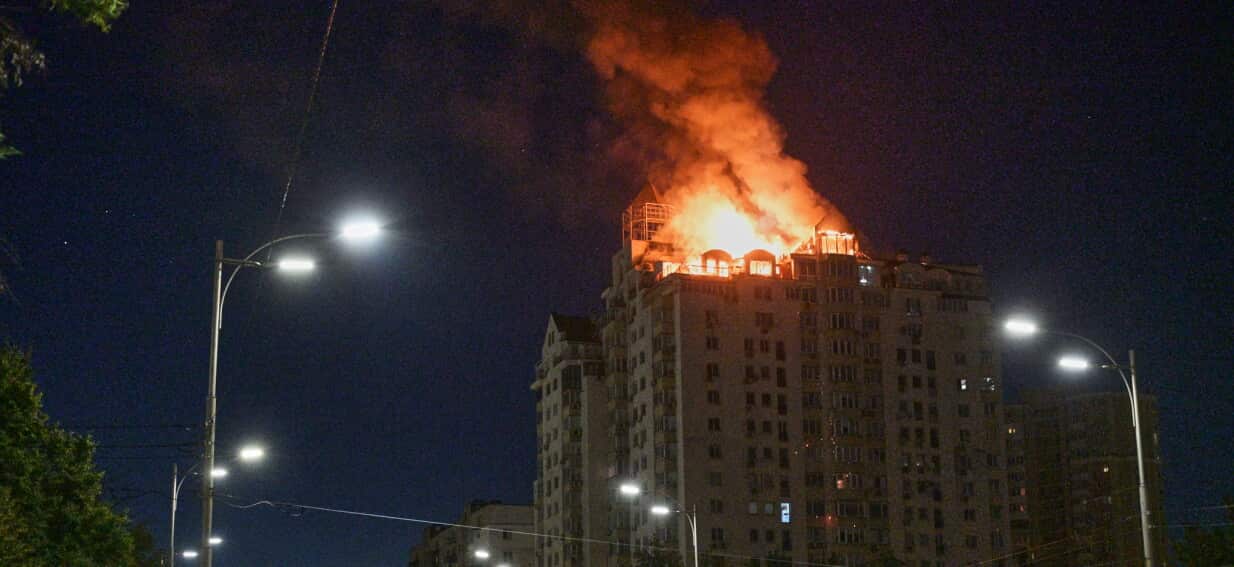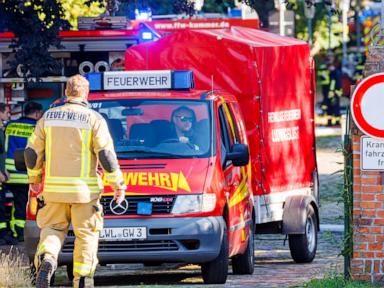
Two people are dead after a fire tore through a hospital in Uelzen, northern Germany. The mainstream media is already spinning its predictable, lazy narrative. They will call for more alarms. They will demand more smoke detectors. They will insist on stricter compliance checklists and heavier bureaucratic oversight.
They are entirely wrong. You might also find this related coverage insightful: Why Enforced Disappearances in Balochistan Are Hitting a Horrific New Low.
The tragic reality of modern healthcare infrastructure is something nobody wants to admit. Our obsessive, checkbox-driven approach to hospital fire safety creates a false sense of security while actively compounding the danger during a real crisis. We have built architectural fortresses of compliance that forget one fundamental variable: the human element.
When a fire breaks out in a standard corporate office, the directive is simple. You run. You evacuate. In a hospital ward full of non-ambulatory patients, intubated individuals, and heavily medicated seniors, evacuation is a logistical nightmare that frequently kills people faster than smoke inhalation. By focusing our safety paradigms on structural containment rather than rapid, localized suppression and cognitive human engineering, we are failing the very people we claim to protect. As discussed in detailed articles by Associated Press, the results are worth noting.
The Compliance Illusion and the Death of Common Sense
I have spent years auditing high-stakes operational environments. I have watched institutions spend millions of dollars to meet hyper-specific regulatory codes, only to watch their staff freeze during a basic drill.
The current framework relies on structural compartmentalization. The theory is that heavy fire doors and reinforced walls will contain a blaze to a specific zone for 30 to 90 minutes.
Here is the flaw in that logic.
Compartmentalization assumes a static environment. It ignores the chaotic nature of a live hospital ward.
- The Prop-Open Problem: Staff routinely prop fire doors open with trash cans or wedges because they need to move heavy equipment quickly. A door that is propped open is a zero-minute barrier, not a 90-minute barrier.
- The Airflow Traps: Modern HVAC systems are supposed to shut down or reverse during a fire to prevent smoke migration. In practice, legacy systems and poorly maintained dampers often end up funneling toxic carbon monoxide directly into adjacent patient rooms.
- The Alarm Fatigue Paradox: Hospitals are noisy. Monitors beep constantly. Alarms blare for minor non-emergencies. When a real fire alarm sounds, the human brain’s default response in a high-alarm environment is habituation. Staff don't react with urgency; they check to see if it's another false positive.
When you judge safety by the thickness of the paperwork rather than the reflexive capability of the team on the floor, casualties are inevitable.
Stop Trying to Evacuate the Un-evacuable
Every standard fire safety manual tells you that evacuation is the goal. That premise is fundamentally broken in a healthcare setting.
Moving a single patient on life support requires a team of clinicians, mobile power supplies, and manual ventilation equipment. Now imagine trying to move twenty of them down a darkened, smoke-filled stairwell because the elevators are automatically recalled to the ground floor.
It is a statistical fantasy.
The industry relies on a strategy called "defend in place." It sounds noble. It means you keep patients in their rooms and trust the architecture to save them while firefighters arrive. But defending in place only works if the source of the fire is external to the patient zone. When a fire originates inside a patient room—often due to faulty medical equipment, contraband smoking, or electrical failures in legacy infrastructure—defending in place becomes a death sentence for everyone on that corridor.
We need to shift our focus entirely away from evacuation and toward aggressive, hyper-localized suppression.
Traditional Strategy: Alarm -> Containment -> Delayed Evacuation -> High Casualty Risk
Superior Strategy: Instant Local Suppression -> Isolation -> Zero-Movement Stabilization
Every single patient room in a modern facility should feature high-pressure water mist systems rather than traditional high-volume sprinklers. Traditional sprinklers ruin millions of dollars of lifesaving electrical gear and cause massive structural flooding, making adjacent wards unusable. High-pressure mist uses a fraction of the water, suffocates the fire instantly by displacing oxygen at the flame level, and cools the room down fast enough to prevent flashover without drowning the patient or shorting out their life support.
The Brutal Truth About the Cost of Compliance
Am I saying we should scrap safety regulations? No. I am saying we need to scrap the wrong regulations.
The downside to the contrarian approach I advocate is clear: it requires an immense, upfront capital expenditure to retrofit older facilities with advanced mist suppression and independent, room-by-room ventilation isolation. It is far cheaper for a hospital executive to buy a thousand fire-rated doors, hand out a 10-page PDF to staff, and call it a day.
But compliance does not equal safety. Compliance is a legal shield for management. Safety is an operational reality for the patient.
If we want to stop reading headlines about tragedies in northern Germany or anywhere else, we have to stop designing hospitals as if they are standard office buildings with beds. We must recognize that a hospital is a collection of immobile human beings dependent on a fragile web of electricity and oxygen.
Fix the suppression at the source. Automate the isolation of toxic air. Stop training staff to fill out checklists and start training them to handle localized, chaotic triage. Anything less is just waiting for the next alarm to ring.