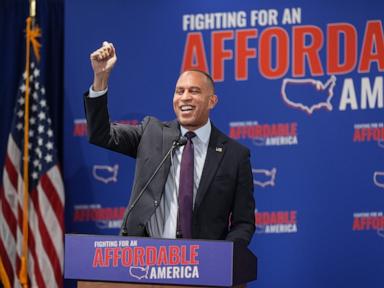
Conventional political wisdom suggests that a newly seated House majority focused on lowering healthcare costs and winding down Middle East conflict holds an unbeatable hand. According to political analysts and legislative strategists covering Capitol Hill, pairing domestic pocketbook relief with foreign policy restraint is the textbook formula for governing momentum.
That consensus misses the structural mechanics of how power actually operates in Washington. Also making waves lately: What Most People Get Wrong About Nithya Raman Taking Charge in Los Angeles.
When a party leads with a dual-track agenda—simultaneously attempting to overhaul healthcare financing while constraining executive war powers—it triggers two distinct institutional bottlenecks. Rather than projecting strength, this approach risks stalling both initiatives before the legislative calendar even reaches its midpoint.
The Legislative Reality of Healthcare Reform
Mainstream coverage frequently treats healthcare legislation as a straightforward contest between consumer advocacy and industry lobbying. Supporters of aggressive House action argue that passing bills to expand coverage or cap prescription drug costs creates undeniable political leverage, even if those measures face resistance in the Senate or at the White House. Additional details into this topic are explored by Associated Press.
In practice, messaging bills carry diminishing returns when voters experience no immediate relief at the pharmacy counter or in their monthly premiums.
- The Budget Reconciliation Trap: Meaningful changes to Medicare, Medicaid, or Affordable Care Act subsidies require budget reconciliation to bypass a Senate filibuster. Reconciliation is a blunt instrument constrained by the Byrd Rule, which strips out policy provisions that do not have a direct, non-incidental impact on the federal budget.
- The Cost-Shifting Illusion: Legislation that caps out-of-pocket costs without addressing underlying provider consolidation or pharmaceutical pricing structures often results in insurers raising baseline premiums to protect margins. Voters notice premium hikes faster than they appreciate statutory caps.
- Committee Bandwidth: The House Energy and Commerce Committee and the Ways and Means Committee cannot simultaneously conduct exhaustive oversight of the executive branch and draft complex, scoreable healthcare legislation without fracturing staff focus.
Critics of incrementalism argue that bold proposals shift the Overton window. Yet, seasoned legislative directors point out that unpassable bills often harden industry opposition, making smaller, bipartisan regulatory fixes—such as pharmacy benefit manager (PBM) transparency or site-neutral payment reforms—nearly impossible to pass later in the session.
The Constitutional Friction of Ending Overseas Conflicts
The second pillar of this strategy—using the House majority to terminate U.S. military involvement in Iran—runs directly into the constitutional separation of powers and the historical limitations of the War Powers Resolution of 1973.
Proponents of assertive congressional intervention contend that Congress holds the ultimate trump card: the power of the purse. By attaching funding restrictions to defense appropriations bills, the House can theoretically force an administrative withdrawal.
Foreign policy scholars and defense budget experts note several severe flaws in relying on appropriations riders to halt active military operations:
- The Veto Override Threshold: Any defense spending bill that strips operational funding for ongoing deployments faces an almost guaranteed presidential veto. Overcoming that veto requires a two-thirds majority in both chambers—a mathematical near-impossibility in a polarized Congress.
- Transfer Authority: Even when specific accounts are restricted, the Department of Defense retains statutory transfer authority under Title 10 of the U.S. Code, allowing the Pentagon to reprogram funds across accounts to sustain operational readiness and force protection.
- The Escalation Paradox: Publicly telegraphed legislative deadlines for withdrawal can inadvertently alter the calculus of regional adversaries. Diplomatic historians observe that adversaries frequently delay negotiations when they believe domestic political pressure in Washington will deliver concessions without requiring compromises at the bargaining table.
What Voters Are Actually Asking
Public polling consistently shows strong support for both lower medical bills and avoiding prolonged foreign wars. However, analysts who examine voter behavior beyond topline poll numbers point out that these two issues operate on entirely different timelines and accountability metrics.
When constituents ask how Congress will fix healthcare, they are looking for tangible, near-term reductions in household expenses. When they ask about foreign conflict, their primary concern is stability and avoiding open-ended entanglement—not necessarily the specific legislative mechanism used to achieve it.
By bundling these two massive, structurally distinct priorities into a single opening offensive, House leadership creates a binary pass-fail test for their majority. If the Senate blocks the healthcare package and the White House circumvents war powers restrictions, the majority risks appearing ineffective on both fronts, regardless of how many floor votes they hold.
Alternative Paths That Actually Move the Needle
Rather than launching broad, high-friction legislative offensives that stall in the upper chamber, institutional strategists suggest targeting narrow, high-leverage points where a single chamber holds genuine unilateral power.
- Subpoena and Oversight Leverage on Healthcare: Instead of waiting on Senate action, House committees can use investigative authority to expose anti-competitive hospital mergers, insurer prior-authorization denial rates, and opaque PBM rebate structures. Publicizing internal corporate pricing data frequently forces market adjustments and regulatory action from the executive branch without a single new law being signed.
- Targeted Authorization Repeals: Rather than sweeping appropriations cutoffs that invite vetoes on must-pass defense bills, Congress can systematically repeal outdated Authorizations for Use of Military Force (AUMFs) and enforce strict reporting requirements under the Case-Zablocki Act to strip away the legal pretexts used to justify unapproved hostilities.
- Bipartisan Regulatory Riders: Attaching targeted, consensus-backed measures—like generic drug approval acceleration or hospital price transparency enforcement—to must-pass funding extensions yields immediate, verifiable results that survive the legislative process.
The Trade-Off of Tactical Restraint
Adopting a narrower, oversight-heavy approach carries its own political risks. Grassroots activists and base voters often view targeted regulatory fixes and committee investigations as overly cautious compared to sweeping floor votes. Leadership faces intense internal pressure to deliver immediate, high-profile symbolic victories to satisfy energized constituencies.
Yet governing majorities are rarely judged at the end of a term by the ambition of their opening press conferences. They are judged by what actually becomes law and what tangibly changes on the ground. Chasing two massive, veto-prone targets simultaneously guarantees maximum friction for minimum output.