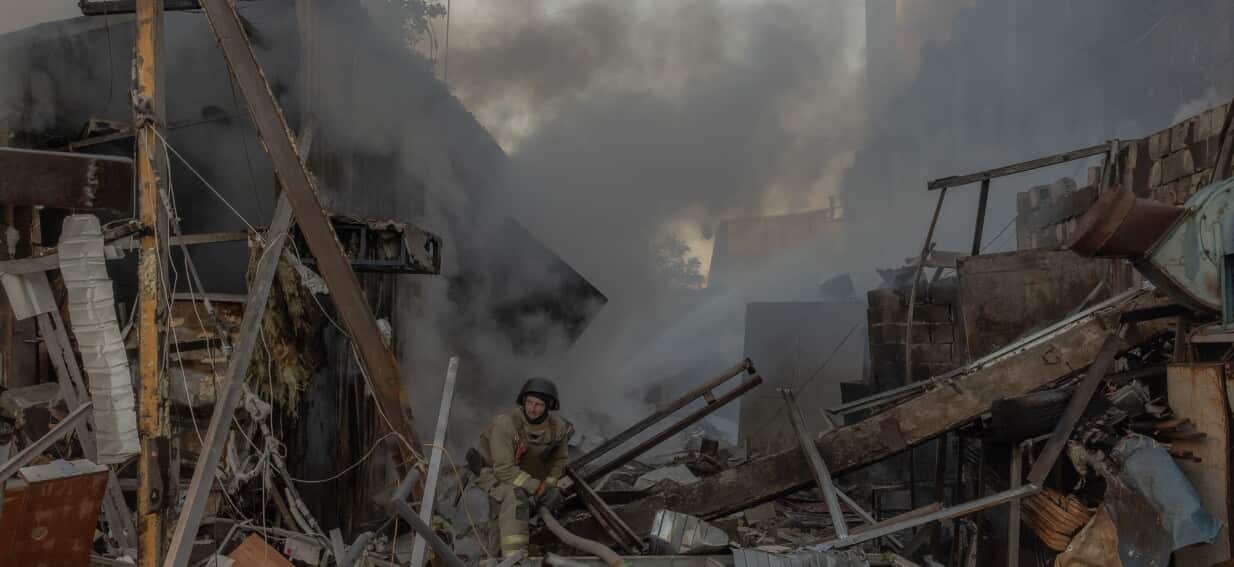
Russia just launched another massive wave of strikes across Ukraine. Eleven people are dead. Dozens more are wounded. This latest round of violence comes right on the heels of intense information warfare regarding a dormitory strike that Ukraine flatly denies ever happened.
If you are trying to make sense of the conflicting headlines, you are not alone. The fog of war is thick right now. Kremlin state media pushes one narrative, Kyiv pushes back with geotagged evidence, and civilian infrastructure gets pulverized in the middle of it all. This is not just a story about missiles. It is a story about how disinformation directly precedes mass casualties on the ground.
To understand why this specific escalation happened today, we have to look at the timeline. Moscow needed a justification for its domestic audience. They claimed they wiped out a major Ukrainian military asset housed in a civilian dormitory. Ukraine proved the building was empty and untouched. Hours later, the real rockets started falling on residential blocks in cities far from the front lines.
The Anatomy of the Russia Bombardment of Ukraine
This was not a precision military operation. The Kremlin deployed a mix of Iranian-designed Shahed loitering munitions, Kh-101 cruise missiles, and ballistic trajectories aimed directly at the Ukrainian energy grid and residential hubs.
The strategy is brutal but simple. They overwhelm air defense systems by launching slow drones first. Once Ukrainian forces spend their ammunition intercepting the drones, the faster, heavier cruise missiles slip through the net.
Data from local emergency services paints a grim picture of the immediate impact.
- Kyiv Oblast: Three dead, including a teenager, after an apartment block took a direct hit from a cruise missile fragment.
- Kharkiv: Four civilians killed when a glide bomb struck a crowded civilian market during morning shopping hours.
- Zaporizhzhia: Four infrastructure workers killed while attempting to repair a power substation damaged in a previous raid.
The strikes triggered immediate emergency blackouts. More than 200,000 people lost power within an hour of the first explosions. Water pressure dropped across multiple districts in the capital. This is deliberate strategy, not collateral damage.
The Dormitory Disinformation Trap
Look closely at the timing of this assault. Before the first missile took off, Russian state channels spent 24 hours hyping up a supposed precision strike on a dormitory in eastern Ukraine. They claimed hundreds of foreign fighters and Ukrainian officers were eliminated.
Ukraine took the unusual step of sending journalists directly to the coordinates provided by Russian war bloggers. The result? The building was standing, completely intact, with local residents baffled by the claims.
Why build up a fake victory? Military analysts at the Institute for the Study of War note that Moscow frequently invents massive Ukrainian losses to satisfy hardline domestic commentators. When the lie falls apart publicly, the Russian military often responds with a real, indiscriminate barrage to shift the news cycle. That is exactly what we saw play out here.
Fabricated successes create a psychological need for real violence. Ukraine denied the dormitory strike, proved it was a hoax, and Moscow answered with enough real firepower to dominate the headlines with actual body counts.
Western Air Defenses are Stretched to the Limit
This attack exposes a critical vulnerability that Western allies don't want to talk about openly. Ukraine's air defense is incredibly capable, but it is running on fumes.
During this latest raid, Ukrainian Patriots and NASAMS units intercepted roughly 75% of the incoming targets. In the world of air defense, that is a phenomenal success rate. But the remaining 25% is what kills people. When twenty missiles get through, entire neighborhoods disappear.
The issue isn't the technology. It's the inventory. A single Patriot interceptor missile costs millions of dollars and takes months to manufacture. Russia is churning out cheap drones and basic missiles at a wartime production pace, effectively burning through Ukraine's expensive Western stockpiles through sheer volume.
Without a massive, continuous influx of interceptor missiles from NATO partners, these coverage gaps will widen. The tragedy in Kharkiv shows what happens when a city lacks a dense, multi-layered defense shield. Glide bombs can be dropped from dozens of miles away, well outside the range of short-range defense systems, leaving local populations entirely unprotected.
What Happens Next on the Ground
The immediate focus for local authorities is stabilization. Utility crews are already working in freezing mud to patch up transformers and restore basic heating to affected high-rises.
For the international community, this attack will likely trigger another round of urgent diplomatic meetings. Expect Ukrainian officials to renew their pressure on Washington and European capitals for permission to strike deeper into Russian territory. Kyiv argues that the only way to stop these bombardments is to hit the bombers and missile silos while they are still sitting on airfields inside Russia.
Keep an eye on the upcoming security summits. The rhetoric from Western leaders will undoubtedly sharpen, but the real metric to watch is the delivery schedule for heavy air defense hardware. Statements of solidarity don't stop cruise missiles. Only iron clad logistics chains can do that.
Stay verified by cross-referencing field reports from independent observers like Human Rights Watch and the United Nations Monitoring Mission in Ukraine. Avoid sharing unverified video clips from Telegram channels in the immediate aftermath of strikes, as these are frequently repurposed footage from earlier years designed to spread panic. Bookmark official state emergency services pages for real-time updates on humanitarian corridors and power restoration timelines.