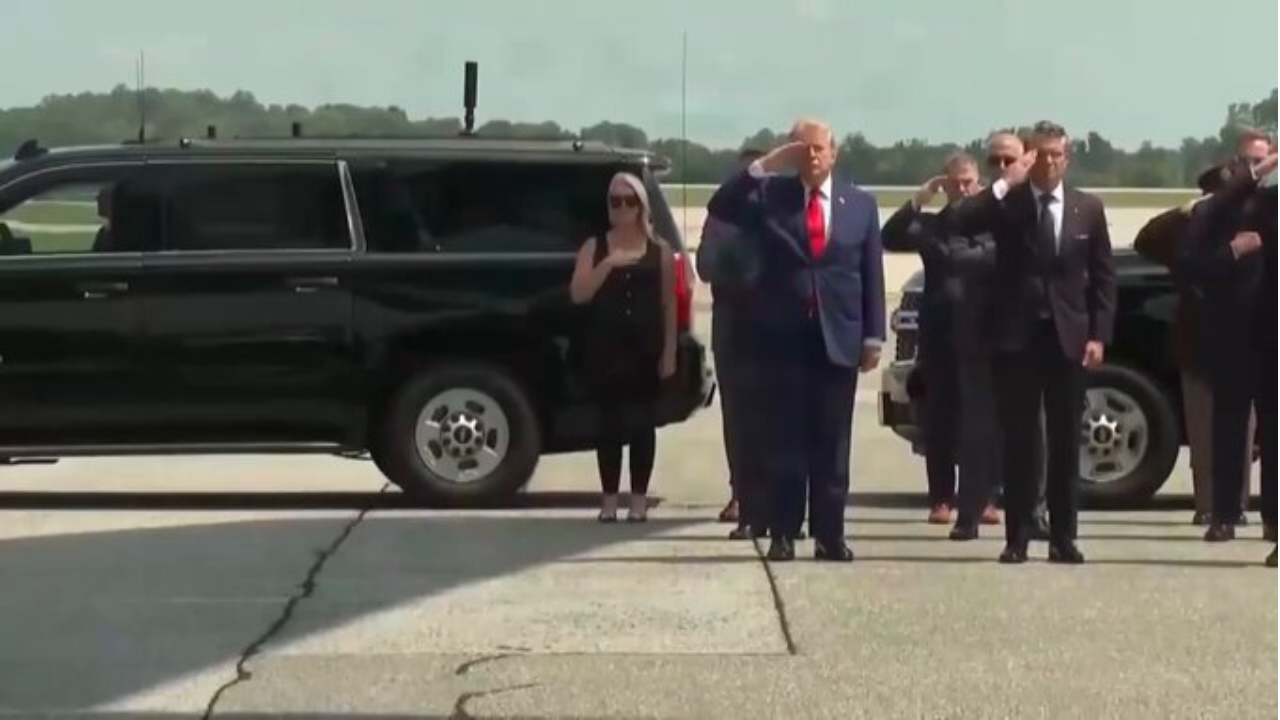
Standing on the tarmac at Dover Air Force Base in Delaware, President Donald Trump witnessed four flag-draped transfer cases carried off a military aircraft on July 22, 2026. The scene was silent, heavy, and raw. Four more American families stood nearby watching the return of their fallen children, spouses, and siblings from the Middle East.
Earlier that day, speaking to reporters, Trump put words to what many commanders in chief before him have acknowledged behind closed doors. He called participating in dignified transfers the single hardest thing he does in office. "There's no games, there's no nothing — that's their child," Trump said before departing Washington. "And all you can do is throw out your heart."
Later, speaking at an event in Georgia, he repeated the sentiment, reflecting on the heavy weight of meeting grieving families on the tarmac. Yet beyond the solemn ritual and political speeches lies a stark military reality. The return of these four service members highlights the growing human toll of the ongoing conflict with Iran that began in February 2026.
The Ritual and the Duty at Dover
Dover Air Force Base serves as the primary gateway where fallen U.S. service members return to American soil. The dignified transfer is not a formal ceremony with speeches or brass bands; it's a precise, solemn military operation. Honor guards from the respective branches carefully move each transfer case from the aircraft to specialized transport vehicles. Those vehicles then head directly to the Charles C. Carson Center for Mortuary Affairs, where technicians work to prepare the fallen for their final resting places.
Presidents aren't strictly required to attend dignified transfers, but doing so has become one of the most powerful gestures of presidential leadership. For Trump, this marked the third dignified transfer he attended since launching military action against Iran earlier this year. Dressed in a dark suit and red tie, he stood at attention alongside top military leadership, including Defense Secretary Pete Hegseth and Chairman of the Joint Chiefs of Staff Gen. Dan Caine. Bi-partisan lawmakers, including Senator Thom Tillis of North Carolina and Senator Chris Coons of Delaware, also joined the flight line.
The atmosphere on the tarmac is intentionally stripped of partisan politics. The quiet focus remains entirely on the service members and the families standing meters away.
The Four Soldiers Brought Home
Behind every military casualty statistic are individual lives, crushed dreams, and grieving communities. The four service members returned during this transfer were assigned to air defense and support units stationed across the Middle East.
First Lieutenant Tyler James Feehan
At 25 years old, First Lieutenant Tyler James Feehan of Ewa Beach, Hawaii, was assigned to the 32nd Army Air and Missile Defense Command out of Fort Bragg, North Carolina. He died on July 18 during Iranian missile and drone strikes targeting positions in Jordan.
Trump took the rare step of inviting Feehan's family to travel alongside him on Air Force One following the Dover transfer. During a subsequent speech in Georgia, Trump spoke personally about Feehan, calling him a "flawless" young officer who had a promising military career ahead of him. The Department of Defense announced Feehan would be posthumously promoted to captain and awarded the Bronze Star, Purple Heart, and Combat Action Badge.
Sergeant Isabella Gonzales
Sergeant Isabella Gonzales, aged 19, from Carrollton, Texas, was killed in the same missile and drone barrage in Jordan. Servicewomen and men working in air defense systems remain on constant high alert against incoming aerial threats, making their positions prime targets during intense exchanges. At just 19, Gonzales represented the youngest generation of service members deployed to the regional conflict.
Sergeant Angel S. Rampersad
Sergeant Angel S. Rampersad, 28, of Ozone Park, New York, had initially been listed as missing in action following the Jordan strike. Military search-and-recovery teams subsequently recovered his remains, bringing agonizing uncertainty to a close for his family in Queens. His return alongside his fellow soldiers marked a heartbreaking end to days of waiting for news.
Sergeant Michael Emmanuel Swinton
Sergeant Michael Emmanuel Swinton, 30, from Spring Lake, North Carolina, lost his life in Iraq during the detonation of an Iranian drone. Swinton enlisted in the U.S. Army in 2017 and served with the 55th Air Defense Artillery Regiment, 108th Air Defense Artillery Brigade, based at Fort Bragg. Swinton will receive the Bronze Star, Purple Heart, and Combat Action Badge posthumously, along with a promotion to staff sergeant.
Escalating Conflict and Growing Operational Pressure
The conflict between the United States and Iran has escalated significantly since operations kicked off in late February 2026. Official Pentagon updates confirm that 18 U.S. service members have died in combat or combat-related incidents since the start of hostilities. Additionally, over 500 service members have suffered injuries of varying severity, though military medical officials note that roughly 96% of those injured have returned to active duty following treatment.
The strikes that claimed these four soldiers point to the evolving tactical challenge posed by uncrewed aerial vehicles and tactical ballistic missiles in the region. Iranian-backed forces and military units have increasingly used layered drone swarms to test air defense batteries.
While U.S. Air Defense Artillery units intercept the vast majority of incoming threats, the volume of attacks means some munitions inevitably penetrate defensive umbrellas. Trump acknowledged this vulnerability directly, noting that while air defense systems stopped almost all incoming fire, "they did slip something through in Jordan."
The strategic objective, as stated by administration officials, remains preventing Iran from acquiring nuclear weapons capabilities and halting strikes against international shipping and U.S. regional installations. However, as retaliatory strikes continue back and forth, military analysts point out that maintaining air defense readiness across expansive theaters strains troops and equipment alike.
Public Reaction and Political Consequences
Back home, public sentiment regarding the war presents a complex picture. Recent national polling indicates that while a majority of Americans express deep anxiety over rising energy costs and potential long-term regional instability, a significant portion supports firm military responses against nuclear proliferation threats.
In Capitol Hill corridors, lawmakers express contrasting views on the path forward. Congressional leadership has raised questions about long-term strategy, force protection measures, and clear definitions of mission success. Meanwhile, administration allies insist that backing down now would embolden adversary forces across the region.
The White House has repeatedly emphasized its commitment to protecting deployed forces while maintaining military pressure. "Every time Iran kills an American soldier, they will pay for that killing many times over," Trump stated earlier in the week, reinforcing his administration's policy of proportional retaliation.
Supporting Military Families and Next Steps
For military families and veterans groups, moments like the Dover transfer serve as a sobering reminder of the immediate, life-altering costs borne by service members and their loved ones. Support organizations stress that public awareness must extend far beyond headline news cycles.
Individuals looking to offer meaningful support to families of fallen service members and wounded troops can take direct, actionable steps through established, vetted military support networks:
- Support verified tragedy assistance organizations, such as the Tragedy Assistance Program for Survivors (TAPS), which provides peer support, grief resources, and casework assistance to families grieving a military loss.
- Contribute to military relief societies—including the Army Emergency Relief (AER)—which offer immediate financial support and educational scholarships to surviving spouses and children.
- Connect with local Veterans of Foreign Wars (VFW) or American Legion posts to help coordinate community assistance for families during deployments and periods of bereavement.
- Stay informed through official Department of Defense news releases to track regional developments accurately rather than relying on unverified social media reports.