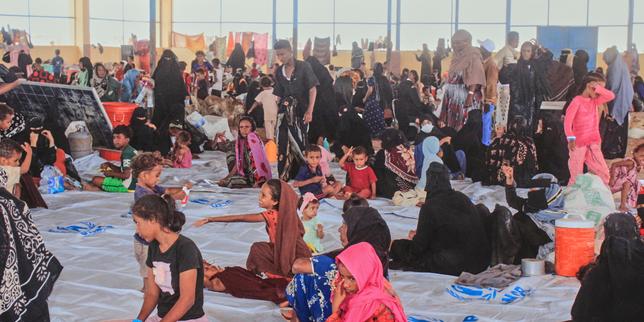
International humanitarian assistance is experiencing a silent collapse. Behind closed doors in Geneva and across frontline field offices, aid organizations are no longer managing growth or optimizing distribution; they are calculating triage. According to recent operational assessments issued by the UN Refugee Agency (UNHCR), a staggering shortfall in international funding now leaves 8.3 million refugees and displaced persons facing the immediate prospect of total assistance withdrawal.
The core crisis is not merely a shortage of cash. It is a fundamental structural breakdown in how the global community finances displacement. While total global displacement numbers hover at historic highs—driven by unrelenting conflicts from Sudan to the Middle East—donor fatigue, shifting domestic political priorities in Western capitals, and donor budget reallocations have drained the architecture of humanitarian relief.
Between fiscal cycles, available funds contracted from over five billion dollars down to less than four billion. For an agency mandated to safeguard tens of millions of vulnerable lives, this reduction triggered immediate operational contraction. Field offices have been closed by the dozens, internal workforces slashed by a third, and administrative overhead stripped to the bone. Yet these internal cuts have proven entirely insufficient to bridge the chasm left by shrinking donor contributions.
Protection cannot be rationed. You cannot deliver sixty percent of a legal status or half of a safe house. Below a precise operational threshold, humanitarian machinery does not simply shrink; it fails completely.
This systemic failure manifests concretely across vulnerable regions. Consider the situation in Chad, where hundreds of thousands of refugees, predominantly women and children fleeing regional violence, face cascading protection gaps. Safe spaces dedicated to preventing and responding to gender-based violence have experienced severe shutdowns. Child protection monitoring systems, essential for identifying unaccompanied minors and preventing forced recruitment or trafficking, have been gutted due to a lack of operational personnel on the ground.
Similar vulnerabilities plague operations across the Horn of Africa and South Asia. In Afghanistan, where hundreds of thousands of individuals have returned or been forced back across borders under harsh conditions, arrival grants have plummeted. Families returning after decades abroad arrive to find cash assistance programs slashed to fractions of their former value, leaving them to shelter in makeshift plastic-sheet tents ahead of freezing winters.
The structural flaw in international burden-sharing lies in its reliance on voluntary, non-binding contributions that fluctuate with political whims. Unlike domestic social safety nets funded by predictable tax revenues, international aid depends on annual budget appropriations that are easily derailed by domestic inflation, economic downturns, or changing electoral mandates in donor countries. When a major donor state cuts foreign aid allocations by even a small percentage, the ripple effect across multilateral agencies creates an immediate liquidity crisis.
Furthermore, traditional funding models heavily favor earmarking. Donors frequently prefer to allocate funds to high-visibility, short-term emergency responses—such as immediate food distribution during a sudden-onset famine—while starving flexible, unearmarked funding streams. Yet these flexible funds are the absolute lifeblood of institutional stability. They pay for legal registration, identity documentation, and long-term community resilience programs that keep displaced populations from falling into total destitution. Without registration and documentation, refugees vanish from legal recognition, rendering them acutely vulnerable to exploitation, arbitrary detention, and forced labor.
The long-term economic and security implications of this funding retreat extend far beyond the immediate humanitarian suffering. When international protection systems dissolve, populations driven from their homes are left with impossible choices. Deprived of food rations, legal recourse, and educational infrastructure for their children, displaced communities become prime targets for criminal smuggling networks and extremist recruitment.
Aid agencies have repeatedly warned that underfunding humanitarian response does not save taxpayer money in donor countries; it merely exports the cost into future geopolitical instability, unregulated secondary migration waves, and compounding regional conflicts. Stabilizing a refugee camp or funding a community livelihoods program is exponentially less expensive than managing the downstream security crises that erupt when millions of people are left entirely without a lifeline.
The architecture of international solidarity is being tested to its absolute limit. Unless major donor governments pivot away from short-term ad-hoc crisis response toward predictable, multi-year, and flexible financial commitments, the erosion of the global protection regime will cross the threshold from managed decline into catastrophic failure.
The numbers are clear, the warning signs are documented, and the threshold has already been breached.