Hyperlocal experiential events—specifically neighborhood-scale "cat tours" in Massachusetts—operate as high-margin, low-capital community aggregators that convert passive urban foot traffic into structured social capital and direct local commerce. Standard local journalism frames these gatherings as charming human-interest anomalies, missing the underlying mechanics of experience economics, third-place scarcity, and civic micro-engagement that drive their rapid adoption across dense New England municipalities.
The Structural Deficit of Modern Urban Third Places
To understand why residents in cities like Somerville, Cambridge, and Jamaica Plain organize and attend guided walking tours dedicated to viewing domestic cats in residential windows, one must examine the collapse of traditional
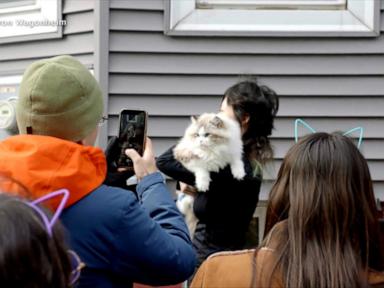
A neighborhood cat tour eliminates financial friction at the point of entry while preserving the physical density required for spontaneous social interaction. When a residential neighborhood hosts a walking route mapping visible indoor pets, the sidewalk transforms from a transit corridor into a shared gallery. The mechanism relies on asymmetric visibility: domestic cats naturally seek elevated, sunlit interior perches (windowsills, front porches, and screen doors) to monitor exterior territory. This behavioral trait creates predictable, stationary points of interest along standard pedestrian grids without requiring physical infrastructure investment from event organizers.
The Three Pillars of Micro-Event Architecture
Successful neighborhood animal tours in Massachusetts rely on three distinct operational components that distinguish them from unstructured dog-park gatherings or commercial pet expos. Further insights on this are detailed by The Spruce.
1. Spatial Curation and Route Density
Unlike dog-centric events, which require enclosed off-leash acreage and carry significant liability insurance overhead, feline tours utilize existing municipal sidewalks. Organizers map routes based on point-of-interest density—typically targeting residential blocks constructed between 1890 and 1930, where multi-family triple-deckers and narrow setbacks place living-room windows within ten to fifteen feet of the public right-of-way.
If the walking distance between verified feline sightings exceeds three minutes, pedestrian attention fractures and group cohesion degrades. Effective route architects solve this by clustering stops in high-density residential pockets and using local commercial corridors as staging and termination zones.
2. The Consent and Privacy Protocol
Residential window-watching introduces immediate friction regarding homeowner privacy and animal stress. Unmanaged crowds peering into private residences trigger defensive reactions from property owners and stress responses in territorial animals. Mature tour operations solve this through pre-event opt-in registries. Homeowners submit their address, the animal's name, behavioral notes (e.g., "enjoys slow blinks," "skittish around loud noises"), and optimal viewing hours.
This opt-in model converts potential adversaries into active stakeholders. Homeowners frequently place biographical placards in their windows, transforming a passive observation into a curated exhibit. The animal remains inside a controlled, climate-regulated environment, eliminating the escape risks, pathogen transmission, and inter-animal aggression inherent to physical pet meetups.
3. Asynchronous Social Triangulation
Direct conversation between strangers in New England urban centers carries high social inertia. Psychologists and urban sociologists identify triangulation—the process by which an external stimulus prompts strangers to talk to one another as if they knew each other—as the primary catalyst for public sociability.
A cat sitting behind glass acts as an ideal triangulation object. It is non-threatening, visually expressive, and requires zero obligation from the observer. Two pedestrians standing on a sidewalk commenting on a tabby's posture bypass standard social defensive barriers. The animal absorbs the initial focus of attention, lowering interpersonal anxiety and allowing participants to transition naturally into conversations about neighborhood history, housing, and local businesses.
Economic Spillover and Municipal Value Capture
While individual cat tours rarely charge admission—often operating as free community initiatives or low-cost fundraisers for local animal shelters—their economic footprint manifests through localized foot-traffic redirection.
- Retail Halo Effect: Tour routes that originate or terminate near independent coffee shops, bakeries, or bookstores generate predictable demand spikes. A cohort of 40 to 80 walkers moving at a leisurely 1.5 miles per hour creates a captive consumer group looking for post-walk refreshments.
- Civic Wayfinding: Participants frequently explore residential side streets they otherwise bypass during routine commutes. This micro-tourism increases familiarity with neighborhood boundaries, local architecture, and small-scale service providers.
- Low-Cost Civic Branding: Municipalities spend substantial capital attempting to cultivate "walkable, vibrant" neighborhood identities. Grassroots tours achieve this organic branding at zero cost to the municipal budget, generating earned media coverage across regional broadcast outlets and social feeds.
Operational Bottlenecks and Failure Modes
Despite low capital requirements, scaling a neighborhood cat tour exposes specific structural vulnerabilities. Organizers who ignore these constraints risk municipal pushback or rapid participant attrition.
The primary failure mode is crowd saturation. A group of 15 to 25 people occupies roughly 40 linear feet of sidewalk. When attendance spikes to 100 or more participants following local television coverage, the crowd spills onto active roadways, blocks ADA-compliant curb cuts, and generates noise levels that cause indoor cats to retreat from windows—destroying the core value proposition of the event.
The second limitation is seasonal volatility. Massachusetts weather imposes a strict operational window between late April and October. During winter months, lower ambient temperatures prompt homeowners to draw thermal curtains and restrict window access, while icy sidewalks increase pedestrian liability. Events that fail to transition to digital community engagement or indoor partner venues during Q1 and Q4 lose institutional momentum.
Finally, informational decay undermines static maps. Domestic pets age, relocate, or alter their sleeping schedules. A digital map published in May becomes inaccurate by September if organizers do not enforce a verification cycle prior to each scheduled walk.
Strategic Execution Blueprint for Community Organizers
To build a repeatable, high-retention experiential event using the Massachusetts feline tour model, operators must transition from ad-hoc social media coordination to structured event management:
- Cap Cohort Sizes via Timed Ticketing: Even for free events, require registration capped at 25 participants per wave, staggered at 20-minute intervals. This preserves sidewalk flow and prevents sensory overload for the animals.
- Monetize Through B2B Sponsorships, Not Attendee Fees: Keep participant entry free to maximize top-of-funnel attendance, and sell route-anchor sponsorships to independent cafes, veterinary clinics, and pet supply retailers located at the start and finish coordinates.
- Standardize Homeowner Signage: Provide participating households with uniform, high-contrast window cards featuring a QR code. Scanning the code should link to a lightweight mobile directory containing the pet's profile and a direct donation portal for a partner municipal shelter, converting passive viewing into measurable charitable yield.
- Enforce Strict Observation Etiquette: Require tour guides to establish explicit boundaries at the staging point—prohibiting window tapping, flash photography, and stepping onto private lawns or stoops—ensuring multi-year retention of homeowner hosts.