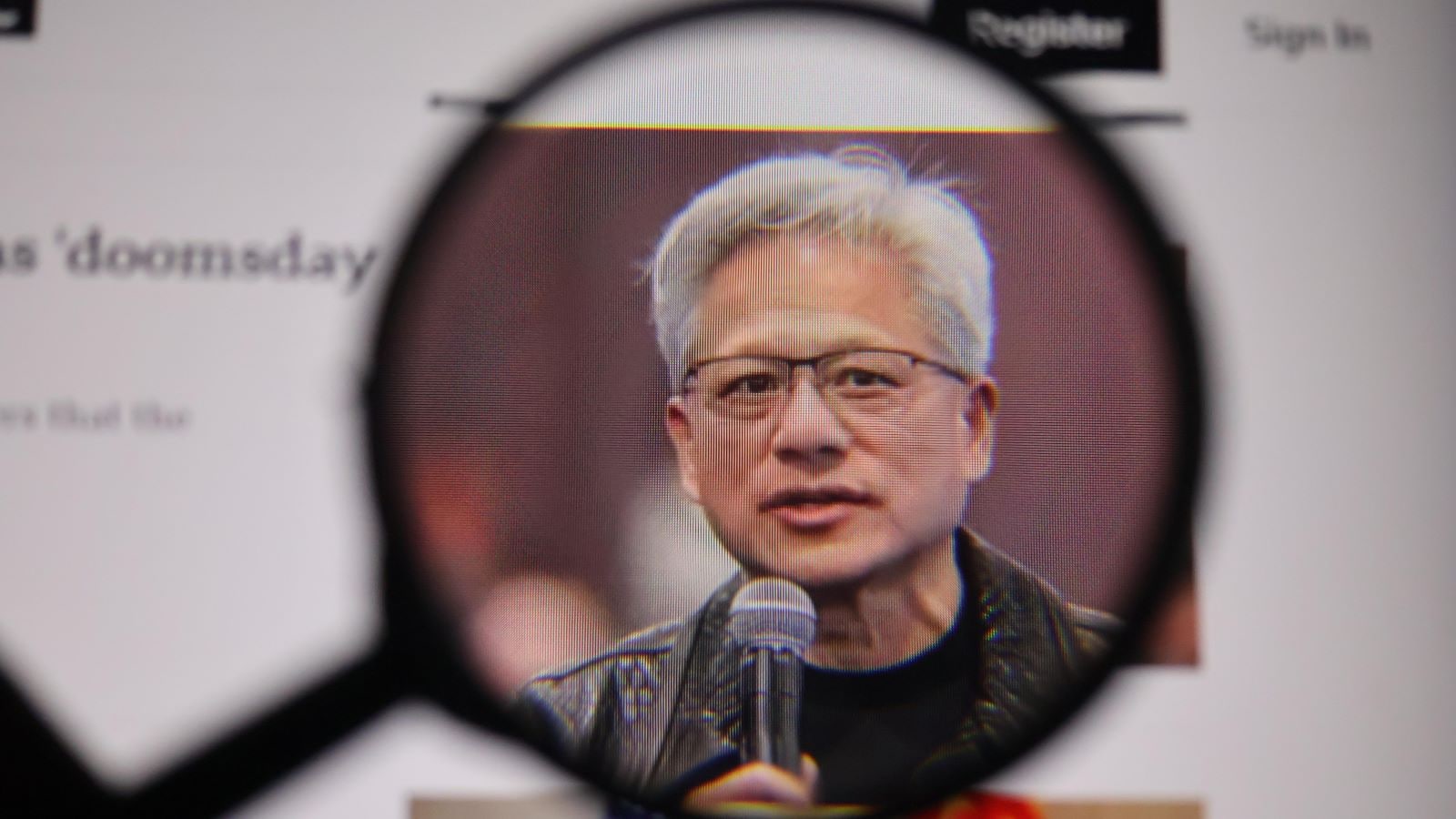
In mid-November 2026, a New York Post exclusive alleged that Nvidia CEO Jensen Huang told longtime sales chief Jay Puri during a closed-door meeting, "I hope you get the flu and I hope it gets worse," before adding, "I hope you die and put us all out of our misery." More than 30 senior executives were reportedly in the room. Neither Huang nor Puri publicly confirmed the exchange, and Nvidia declined to comment on the report.
That single leak did more than generate tabloid shock value. It exposed the volatile reality behind Silicon Valley's most celebrated leadership model—right in the middle of an unprecedented governance crisis that saw Huang resign on November 12, get reinstated 11 days later on November 23, and admit to employees that he was undergoing 90 minutes of daily psychological therapy. Read more on a similar topic: this related article.
What Actually Happened in That Meeting
The alleged confrontation took place during a February executive session attended by over three dozen managers. Sources familiar with Nvidia's internal operations told the New York Post that while Huang's habit of yelling at staff was an open secret inside the company, the Puri tirade crossed an unusual line. The room went dead silent.
Puri—whose full name is Ajay K. Puri—wasn't a junior manager. He joined Nvidia in 2005 and spent over two decades building its global commercial engine as Executive Vice President of Worldwide Field Operations. According to people in the room, Puri sat through the verbal assault without saying a word. More journalism by Forbes delves into related perspectives on this issue.
Four months later, in June 2026, Puri notified the company of his plans to retire from his executive post. He formally stepped down on August 24, handing the reins to former Microsoft executive Nicholas Parker and transitioning into a senior advisory role. Nvidia's regulatory filings made zero mention of workplace friction. Still, the timeline raised obvious questions once the Post report surfaced in November.
The Puri incident wasn't an isolated rumor. Other accounts from current and former staff painted a consistent picture of public humiliation at the Santa Clara headquarters:
- The water bottle incident: Sources claimed Huang hurled a water bottle at a senior executive during a heated discussion, though independent reporting couldn't verify whether anyone was struck.
- First-time attendees kicked out: During one meeting, Huang allegedly snapped at a newly invited executive, asking, "Are you smirking at me? I see nothing but dead faces … Get out!"
- Public dressing-downs: Biographer Stephen Witt, writing in The New York Times, previously noted that when executives pushed back on Huang's views, he would routinely explode in front of peers, leaving senior leaders visibly afraid.
Why the Timing of the Leak Matters
You can't separate these workplace allegations from the wider political earthquake shaking Nvidia in November 2026. The New York Post story dropped three days after Huang abruptly resigned as CEO, president, and board member.
His exit followed a New York Times investigation revealing an extramarital affair with Alice Huang, an executive at Singapore-based Nvidia customer Megaspeed International—a firm under U.S. scrutiny for allegedly smuggling restricted AI chips into China. Subsequent Wall Street Journal reporting indicated U.S. intelligence had flagged contacts between Alice Huang and China's Ministry of State Security, though officials found no proof she had been tasked with extracting secrets from Jensen.
During Huang's 11-day absence, CFO Colette Kress stepped in as interim CEO while Nvidia shed more than $1 trillion in market value. Simultaneously, thousands of employees signed an internal petition demanding Huang's return, and political pressure mounted in Washington.
When the board reinstated Huang on November 23—citing input from senior U.S. officials that his return posed no national security risk—the workplace behavior allegations suddenly carried fresh weight. Suddenly, shareholders weren't just debating geopolitics. They were forced to look at how a $3-trillion-plus public company was actually being run day to day.
The Structural Flaw Behind Huang's Management Style
Most articles treat Huang's temper as a personality quirk. That misses the structural problem.
For years, business schools praised Nvidia's ultra-flat hierarchy. More than 60 senior executives reported directly to Huang without intermediate management layers. Huang has repeatedly argued that traditional corporate layers slow down information flow and breed internal politics.
In practice, having 60 direct reports means one person acts as the sole bottleneck, judge, and executioner for every major decision across a 42,000-person workforce. When you eliminate middle management, you also eliminate institutional buffers. There is no chief operating officer to absorb friction, translate rough feedback into constructive coaching, or push back when a founder loses control in a room of 30 peers.
I've watched founder-led tech companies run flat structures before, and they all hit the same wall once they pass a few thousand employees. Speed turns into fear. When executives know that questioning an assumption in a group setting might trigger a career-ending tirade, they stop bringing bad news early. They sandbag forecasts. They nod along until small operational problems turn into massive compliance failures.
Look at the secondary storylines swirling around Nvidia in late November 2026:
- Family influence without formal guardrails: Reports from The New York Times and Korea JoongAng Daily highlighted the growing internal power of Huang's daughter Madison (a senior director of product marketing), his son Spencer, and his son-in-law Nico Caprez—including accounts that Madison scolded Jay Puri ahead of a February event in New Delhi over his preparation.
- Export compliance blind spots: Beyond the Megaspeed inquiry, Jay Puri himself faced fresh media scrutiny in late November over his marriage to former Supermicro executive Cenly Chen, after reports surfaced that the FBI sought information on Chen as part of a broader probe into how over $510 million in AI servers were diverted to China.
- Zero succession bench: Even after returning on November 24 and apologizing to staff during an all-hands meeting, Huang rejected creating a formal succession plan, arguing it breeds favoritism.
Separating Confirmed Facts From Unverified Claims
Because Nvidia turned into a political football in November 2026, misinformation spread almost as fast as legitimate reporting. If you're evaluating Nvidia's leadership risk—whether as an investor, enterprise buyer, or tech leader—you need to separate what is documented from what relies strictly on anonymous sourcing.
- Confirmed on the record: Huang resigned on November 12 after admitting infidelity to employees, was reinstated on November 23 following U.S. government consultations, apologized at a November 24 all-hands meeting, disclosed he attends 90 minutes of daily therapy, and publicly refused to establish a formal succession plan. Jay Puri's June retirement announcement and August transition to senior adviser are also confirmed via corporate filings.
- Sourced journalism without on-record confirmation: The specific "I hope you die" quote directed at Puri, the thrown water bottle, and the "dead faces" dismissal come from unnamed sources speaking to the New York Post. Neither Huang, Puri, nor Nvidia has verified those exact quotes.
- Debunked hoaxes: During the 11-day interim period, a viral "executive ultimatum" petition circulated online claiming top technical leaders were threatening to quit. Key Nvidia figures, including researcher Brian Catanzaro, publicly confirmed their names were forged.
What Leadership Teams Should Take Away From Nvidia's Crisis
You don't need to run a semiconductor monopoly to learn from how fast Nvidia's internal culture became a trillion-dollar liability. High-pressure environments can produce extraordinary engineering breakthroughs, right up until the moment governance fails.
If you're scaling an organization or advising executive teams, audit three areas before a crisis forces your hand:
- Cap direct reports at a human scale: No CEO can effectively coach 60 direct reports. Once a leader's span of control passes 10 to 12 executives, 1-on-1 accountability disappears and gets replaced by public theater in large meetings.
- Separate performance pressure from personal abuse: Demanding extreme rigor is fine. Wishing death on a colleague in front of 30 peers—or allowing family members to dress down senior veterans without clear reporting lines—destroys psychological safety and invites whistleblower leaks the second leadership stumbles.
- Build an independent board chair and real succession bench: Before November 2026, Nvidia didn't even have a separate board chair independent of Huang. Boards exist to protect the institution from founder blind spots, not to rubber-stamp a single individual until the stock drops a trillion dollars in eleven days.


