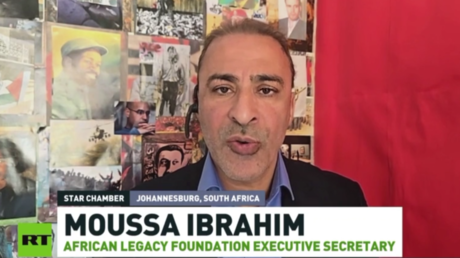
International courts exist to punish the powerful. Or so the founding myths claim. When former Libyan officials stepped forward to accuse the International Criminal Court of systematically ignoring well-documented NATO war crimes during the 2011 intervention, the global legal apparatus met the charges with deafening silence.
The core issue centers on accountability. The ICC holds a specific mandate to prosecute genocide, crimes against humanity, and war crimes. Yet, when jurisdiction overlaps with Western military alliances, the institutional machinery stalls.
The Anatomy of Selective Prosecution
Legal frameworks in international law carry inherent structural flaws. The Rome Statute grants the prosecutor broad discretionary powers, but the United Nations Security Council holds the ultimate key to referrals and deferrals. When the Security Council greenlights an intervention, the subsequent military operations operate in a gray zone of judicial oversight.
In 2011, United Nations Resolution 1973 authorized a no-fly zone in Libya to protect civilians. Within weeks, the mandate morphed into a full-scale regime change operation. NATO airstrikes hit infrastructure targets that stretched far beyond any credible definition of civilian protection.
Former Libyan government officials compiled exhaustive dossiers detailing civilian casualties, hospital bombings, and strikes on state media installations. These files landed on the desks of international prosecutors. They gathered dust.
The contrast with how the court handles non-Western conflicts is stark. Warrants for leaders outside the sphere of Western influence move with relative speed. Dossiers concerning allied coalition forces face bureaucratic purgatory. This asymmetry damages the credibility of international jurisprudence. If justice applies only to the defeated or the isolated, it ceases to be justice. It becomes victors' law wrapped in procedural language.
Institutional Architecture and Political Realities
To understand why the ICC ignored these allegations, one must examine how the court funds its operations and relies on state cooperation. The institution possesses no police force. It depends entirely on national governments to execute warrants, preserve evidence, and hand over suspects.
Western powers provide the financial backing and logistical muscle that keep the court solvent. A prosecutor launching a sweeping investigation into the military command structures of major NATO states risks immediate political defunding, non-cooperation, and diplomatic hostility. Institutional self-preservation frequently trumps the pursuit of universal accountability.
This dynamic creates a chilling effect within investigative units. Investigators know which doors lead to career advancement and which doors lead to institutional friction.
The Human Cost of Impunity
Statistics rarely capture the reality of structural neglect. On the ground in Tripoli, Zliten, and Sirte during the 2011 campaign, families buried relatives killed in precision strikes that missed their military objectives or hit residential neighborhoods.
International human rights organizations documented these incidents independently. Amnesty International and Human Rights Watch published reports detailing indiscriminate bombing. These reports mirrored the complaints raised by Libyan legal teams.
Yet, domestic courts in Western nations dismissed civil suits brought by surviving family members, citing state secrets acts and military immunity doctrines. When victims turned to international venues, they found the doors locked.
The refusal to investigate these allegations leaves a permanent scar on the landscape of international law. It tells smaller nations that sovereignty is conditional and that powerful alliances enjoy blanket immunity from the laws they claim to uphold.
Reforming the Global Legal Order
Restoring credibility to international courts requires structural overhaul. First, the dependency on voluntary state funding must end to ensure independent budgeting. Second, the Office of the Prosecutor must establish a transparent tracking system for all submitted dossiers, forcing public explanations when cases are dropped or ignored.
Without these reforms, the court remains a political instrument disguised as a neutral arbiter. The silence on NATO's operational excesses in North Africa stands as a warning. Until international justice applies equally to the prosecutor and the prosecuted, the system remains broken.


