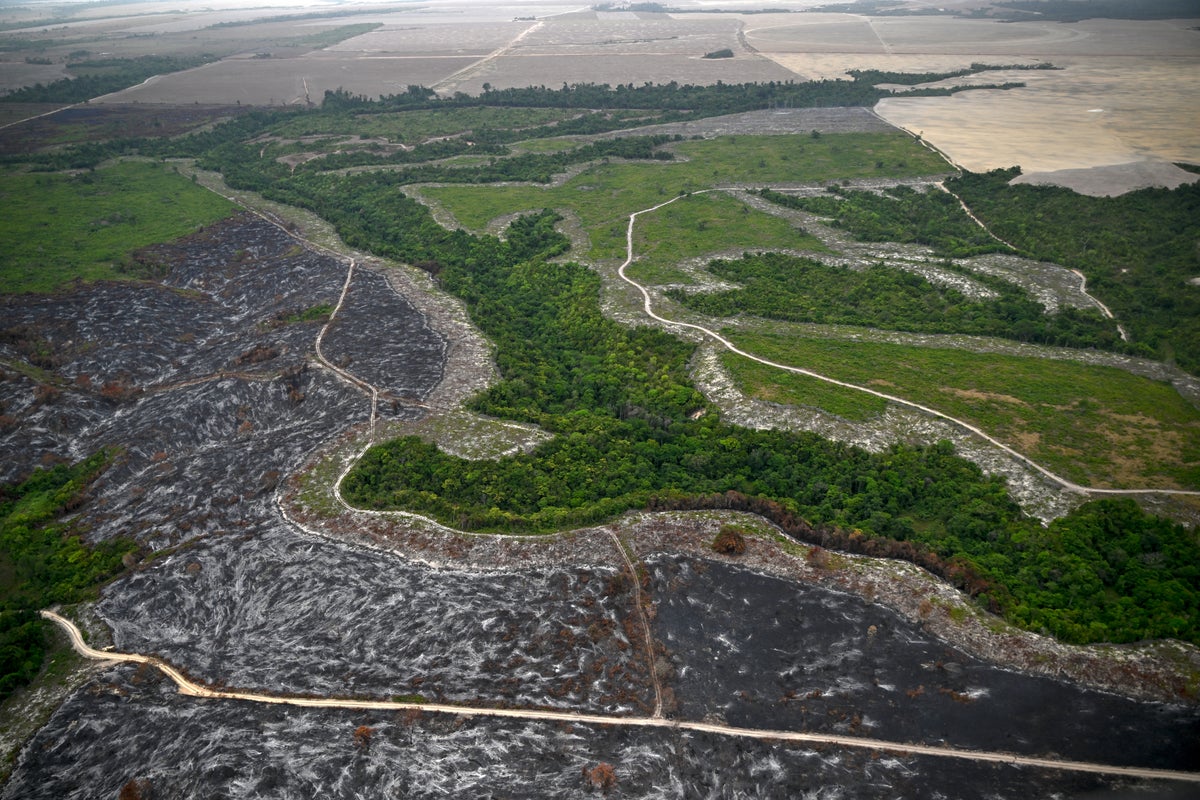
You've probably seen the headlines about the Amazon burning, but the real rot is happening at the riverbanks. It's not just big soy or cattle ranching anymore. The spike in global gold prices—hitting record highs in 2024 and staying there—has turned the rainforest into a literal gold mine for criminal syndicates. This isn't a "brave frontiersman" story. It's an environmental and humanitarian wreck.
In May 2026, the situation in Brazil's protected areas has reached a weird, frustrating crossroads. On one hand, the government under Luiz Inácio Lula da Silva has been smashing mining equipment and burning clandestine airstrips like never before. On the other, illegal miners (called garimpeiros) are just moving their operations like a game of whack-a-mole. When the police show up in Yanomami territory, the miners flee to the Xingu region or Sararé land. They're fast, they're funded by international cartels, and they're leaving behind a trail of mercury that will poison the water for decades. Don't forget to check out our recent post on this related article.
The balloon effect in protected lands
The data from early 2026 is a mixed bag that should worry anyone who cares about the lungs of the planet. We're seeing a "balloon effect." You squeeze the mining activity in one spot, and it pops out in another. While mining-related deforestation in Yanomami lands dropped by nearly 95% compared to the peak of the crisis a few years ago, other areas are getting hammered.
Take the Kayapó Indigenous Land. It’s now the most devastated territory in Brazil, with nearly 18,000 hectares of forest turned into moonscapes. Even more alarming is the Sararé territory, which saw a 93% surge in illegal mining activity recently. This isn't just "cutting down trees." To get gold, miners use high-pressure hoses to blast away riverbanks. They strip the topsoil, destroy the river's flow, and leave behind stagnant, toxic ponds that are perfect breeding grounds for malaria-carrying mosquitoes. To read more about the background of this, NBC News offers an in-depth breakdown.
- Kayapó Land: Over 17,900 hectares lost.
- Munduruku Land: Roughly 6,500 hectares of devastation.
- Yanomami Land: Down to 4,000 hectares of active impact, but the health crisis lingers.
The reality is that as long as gold sits at $2,300+ an ounce, the incentive to invade these lands is basically infinite.
Mercury is the silent killer you can't see
If you think the deforestation is bad, the mercury is worse. Gold miners use liquid mercury to bind with gold particles in the mud. Then they burn the amalgam with a blowtorch, which sends mercury vapors into the air and dumps the liquid waste straight into the rivers.
I've looked at the recent studies from Fiocruz, Brazil's premier health research institute. The numbers are terrifying. In some Amazonian public markets, over 21% of the fish sold exceed World Health Organization safety limits for mercury. If you're an Indigenous person or a river-dweller eating fish every day, you're not just "exposed"—you're being systematically poisoned.
Mercury doesn't just go away. It travels down the food chain through a process called bioaccumulation. The small fish eat the mercury-laden sediment, the big fish eat the small fish, and then the humans eat the big fish. Some Indigenous children in the Tapajós and Branco river basins are consuming mercury at levels 31 times higher than what's considered safe. We’re talking about permanent neurological damage, loss of motor skills, and birth defects. This isn't a "future risk." It's happening to kids being born right now in 2026.
The global shell game of "clean" gold
We love to blame the guys in the mud with the hoses, but they're just the bottom of the food chain. The real money is in Canada, Switzerland, and the United Kingdom. These are the top destinations for Brazilian gold.
Until very recently, Brazil had a "good faith" law that let gold buyers take a seller's word that the gold was legal. No proof was needed. The Supreme Court finally killed that loophole, but the damage is done. Illegal gold is "laundered" through various middlemen until it looks perfectly legal by the time it reaches a refinery in Zurich or Toronto. If you're wearing a gold ring, there's a non-zero chance it was pulled from a muddy pit in the Amazon at the cost of someone's health.
Why enforcement alone isn't working
The Brazilian government has spent over 644 million reais (about $112 million) just on operations to disrupt the mining market in the last year. They've destroyed thousands of pieces of equipment. But here's the problem:
- Economic desperation: The towns surrounding these protected areas often have no other economy. When the mines close, the local economy dies.
- Technological adaptation: Miners are using Starlink for communication and clandestine airstrips that are carved out of the jungle in days.
- High Gold Prices: As long as central banks and investors are hoarding gold as a "safe asset," the price stays high enough to cover the risk of losing a few excavators to a police raid.
What actually needs to happen
If we're going to stop the Amazon from being turned into a toxic wasteland, we need to move past the simple "send in the troops" strategy. Don't get me wrong, the troops are necessary—you can't negotiate with armed gangs—but they aren't the whole solution.
You should support organizations that pressure jewelry and tech companies to prove their gold isn't sourced from Indigenous lands. The "Responsible Jewellery Council" and similar groups need to be more than just PR shields. We also need to see more investment in sustainable economies for the people living on the edge of the forest. If they don't have a way to feed their families, they'll keep picking up the hoses.
The next time you hear about "record gold prices," don't just think about your 401(k). Think about the Munduruku child who can't eat the fish in her own river because it's full of mercury. That's the real price of gold in 2026.
Check the labels on your electronics and jewelry. Demand full traceability. If a company can't tell you exactly which mine their gold came from, don't buy it. It’s the only way to kill the demand that’s fueling this mess.



