The letter arrives in a plain white envelope. It features a reassuring hospital logo, a standard block layout, and a single, life-altering word: normal.
When Deborah Higgs opened that letter in February 2022, she breathed a sigh of relief. At 59 years old, she had been highly conscious of her breast health. Finding a palpable lump earlier that month had sent a jolt of anxiety through her, prompting an immediate visit to Baptist Medical Park in Pensacola, Florida. She did exactly what every medical public service announcement instructs women to do. She got a diagnostic mammogram. She underwent a breast ultrasound.
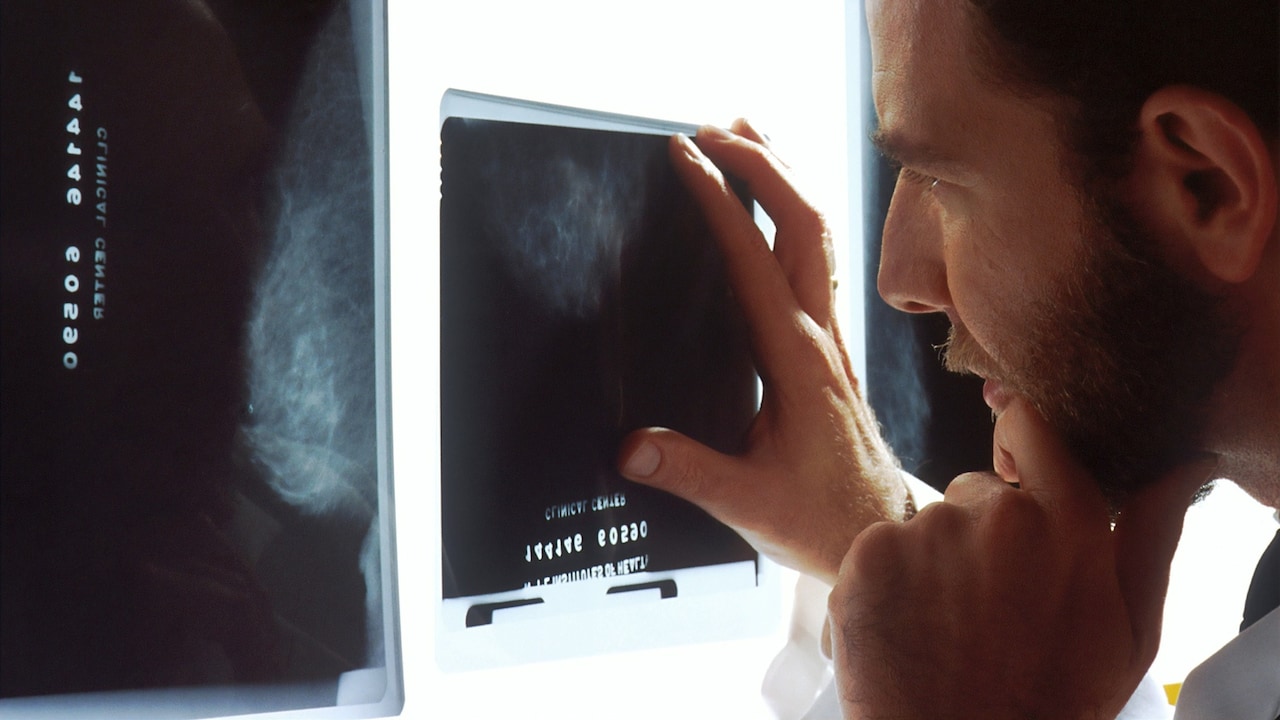
Inside the reading room, the diagnostic imaging data was evaluated by a radiologist. The report came back benign. The letter sent to her home confirmed that nothing was wrong.
Trusting a piece of paper backed by decades of medical authority is natural. We hand over our bodies to the experts, assuming that the heavy machinery and specialized eyes behind the glass see what we cannot. Armed with her official all-clear, Deborah went home. She tucked the anxiety away. She believed the system had protected her.
But the lump did not care about the letterhead.
The Weight of Eight Months
By October, the phantom danger had become a painful reality. The lump had grown. It throbbed. The quiet reassurance of the winter had devolved into a terrifying autumn urgency.
When Deborah returned for medical care, she was referred to a surgeon. His reaction was immediate and visceral. A simple physical exam—something that had been noticeably absent during her initial diagnostic evaluation—revealed the undeniable truth. The surgeon felt the lump and noted enlarged axillary lymph nodes. The situation was grave.
She was sent back for more imaging. Ironically, the data landed on the desk of the exact same radiologist who had cleared her eight months prior. This time, looking at the new scans, the medical assessment was vastly different, noting a high suspicion for malignancy. A subsequent biopsy confirmed the nightmare: Stage 4 breast cancer. Terminal.
The difference between February and October was not just a change in seasons. It was the dividing line between a treatable illness and a death sentence. Expert testimony during an eight-day trial would later reveal a devastating timeline. Had the malignancy been identified when she first reported it, Deborah could have avoided a terminal prognosis. Instead, an unpreventable disease became a preventable tragedy because of an eight-month delay.
Denial comes first. It is a psychological shield against a reality too heavy to bear. Deborah described a state of complete disbelief when the diagnosis hit her. The shock eventually gave way to a profound, justified anger. It simply did not make sense. How does a person go from perfectly healthy to terminally ill while actively following every rule of preventative medicine?
The Fine Print of Accountability
When a medical system breaks down, the instinct of the institution is often self-preservation. As Deborah began a legal battle for accountability, the hospital system attempted to detach itself from the failure.
During the litigation, the hospital pointed to the paperwork Deborah had signed upon admission. Deep within the standard forms sat a clause stating she agreed to discharge the hospital from liability for services rendered by independent contractors. The radiologist, the hospital argued, belonged to an outside doctors' group, Acumen Medical Imaging. Therefore, the hospital claimed, its hands were clean.
It is a corporate shell game that patients rarely understand until it is too late. You walk under a massive hospital sign, check in at a hospital desk, and receive care in a hospital gown, only to be told later that the person holding the scalpel or reading the scan was legally a stranger to the institution.
The court, however, looked at a different piece of paper.
The original letter sent to Deborah—the one that falsely promised her everything was fine—bore the hospital's explicit letterhead. A judge ruled that the jury should weigh this contradiction. Internal corporate messages introduced at trial further demonstrated that the hospital maintained significant control over the manner in which care was provided and communicated. The illusion of independence crumbled under scrutiny.
Just before opening arguments were set to begin, a settlement was reached. A $7 million payout—$5 million from the hospital system and $2 million from the radiology group. The institutions released statements emphasizing that the compromise was not an admission of guilt or liability. To the legal teams, the allegations remained mere allegations, a financial calculation to avoid the distraction and expense of prolonged court battles.
To Deborah, the money was never the point. No amount of currency can buy back eight months of cellular growth. No verdict can reverse a Stage 4 diagnosis.
Changing the Script
True victory in the wake of medical negligence is rarely measured in dollars; it is measured in systemic change. Deborah made it clear to her legal team from the beginning that her priority was ensuring other women would not walk blindly into the same trap.
The settlement mandated structural alterations to how both institutions handle patient care:
- Explicit Warnings: The hospital must rewrite its communication protocols. Future patients receiving normal mammogram results will receive explicit documentation warning them that a clear scan is not an absolute guarantee. They must still follow up with their primary care providers if symptoms persist.
- Direct Access: The radiology group must implement a policy allowing women who present with physical breast lumps to request a direct, face-to-face audience with the radiologist interpreting their scans.
These changes dismantle the clinical isolation that defines modern diagnostics. They bridge the gap between the patient who feels the symptom and the specialist who reads the pixels.
Consider what happens next when a woman feels a lump. She will no longer be forced to rely solely on a one-word letter. She will have the right to look the physician in the eye, to point to where it hurts, and to demand that the human hand verify what the machine might miss.
Deborah’s story is a sobering reminder that the ultimate advocate for your health is yourself. If a persistent symptom contradicts a piece of medical paperwork, trust your body over the ink.
The legacy of this legal battle is not the multi-million dollar headline. It is the invisible shield now placed over every woman who walks into those specific Florida clinics. Because one woman refused to let her terminal diagnosis pass in silence, the next woman with a clear letter might just think twice, seek a second opinion, and save her own life.


