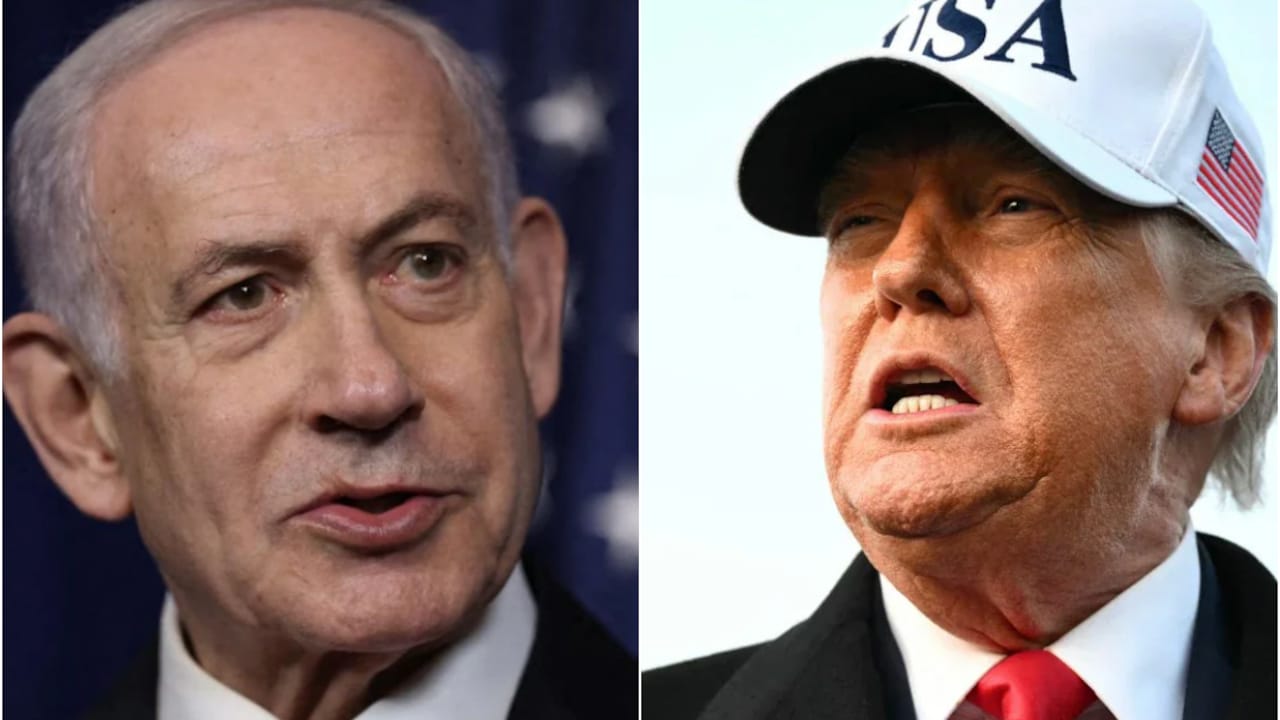
The collapse of the short-lived June ceasefire between Washington and Tehran exposes a fundamental miscalculation by Western planners. When United States President Donald Trump phoned Israeli Prime Minister Benjamin Netanyahu to brief him on American military operations in the Persian Gulf, the official readout described a routine synchronization of allied strategy. The reality is far more combustible. Following two consecutive nights of intense American airstrikes hitting ninety targets deep inside Iranian territory, the fragile diplomatic architecture brokered at Versailles has completely shattered, throwing the world’s most critical energy chokepoint back into open warfare.
The sudden escalation catches global markets completely unprepared. For less than a month, the maritime industry operated under the assumption that the 14-point memorandum of understanding signed on June 17 would hold long enough to stabilize oil shipments. That assumption dissolved the moment Iranian forces targeted commercial vessels in the Strait of Hormuz, prompting an immediate, overwhelming kinetic response from U.S. Central Command.
The Fatal Flaw in the Versailles Memo
Diplomats celebrated the Versailles agreement as a masterpiece of transactional statecraft, but it carried the seeds of its own destruction from the outset. The text required the United States to lift its naval blockade of Iranian ports and ease specific oil export sanctions in exchange for Iran guaranteeing the unhindered transit of merchant shipping through the Strait of Hormuz. It was a classic trade of economic oxygen for maritime security.
The arrangement ignored the vacuum at the center of Iranian decision-making. Since the February airstrikes that killed Supreme Leader Ali Khamenei, the political structure in Tehran has fractured into competing factions. The formal government led by President Masoud Pezeshkian signed the memorandum, but the Islamic Revolutionary Guard Corps retains independent operational control over the coastal missile batteries and fast-attack crafts lining the Persian Gulf. Pezeshkian promised stability he could not enforce. When the regular navy and paramilitary cells launched drones at three international tankers, they were not just targeting Western commerce. They were intentionally sabotaging their own presidency’s diplomatic track.
Washington reacted with a speed that suggested the strike packages were already programmed into the computers of regional command centers. B-52 bombers and carrier-based strike fighters pounded port facilities, missile storage sites, and transport networks across southern Iran. The objective was clear. The White House intended to show that any disruption to international navigation would be met with disproportionate devastation. Yet, by flattening infrastructure near the Bushehr nuclear power plant and destroying key railway bridges leading to the holy city of Mashhad, the American military campaign has driven even moderate Iranian politicians into a corner where retaliation is the only option for survival.
How the Strait of Hormuz Became a Ghost Route
Commercial shipping cannot operate in an environment where air superiority campaigns and anti-ship missile volleys occur on a weekly basis. Before the outbreak of hostilities in early 2026, more than three thousand ships transited the Strait of Hormuz each month, carrying roughly twenty percent of the global supply of crude oil and liquefied natural gas. Today, the waterway is effectively a no-go zone for major commercial fleets.
Insurance underwriters have adjusted their risk premiums to prohibitive levels. A single transit now requires financial guarantees that smaller independent operators cannot afford, while multinational energy giants refuse to risk their hulls and crews in an active combat theater. The brief spike in maritime traffic observed during June, when over five hundred ships braved the channel under the temporary truce, has completely evaporated. The global economy now faces the most severe, prolonged energy supply disruption in modern history.
The domestic fallout for the White House is mounting rapidly. With critical midterm elections approaching, skyrocketing fuel prices are placing intense political pressure on the administration. The strategy of using maximum military pressure to force an unconditional surrender has instead triggered an asymmetric economic counter-offensive. Iran understands that it cannot match American conventional firepower in the sky. It does not need to. By simply maintaining the capability to threaten the sea lanes with low-cost loitering munitions and hidden sea mines, Tehran can inflict severe economic pain directly on Western consumers.
What Trump Whispered to Netanyahu
The phone call between the American president and the Israeli prime minister on July 9 went far beyond a simple operational briefing. While the Israeli Prime Minister’s Office released a sparse statement confirming that Trump updated Netanyahu on moves in the Gulf, intelligence sources indicate the discussion focused heavily on containment and regional alignment. Netanyahu has long advocated for a decisive blow against Iran's strategic assets, viewing the current conflict as a historic window to permanently dismantle Tehran's regional influence.
The conversation revealed deep undercurrents of friction regarding third-party actors. Netanyahu used the call to air grievances about Turkish President Recep Tayyip Erdogan, who has maintained an aggressive rhetorical stance against Israeli military operations while maintaining a complicated, deeply transactional relationship with Washington. The regional layout is becoming dangerously tangled. Turkey, a member of NATO, has openly criticized Western interventions in Iran, creating a significant diplomatic headache for the American administration as it attempts to maintain a unified front among its traditional allies.
Furthermore, Israel is currently managing its own complex security calculations along its northern border. Even as the Israel Defense Forces continue operations against Hezbollah elements in Lebanon, the prospect of a full-scale regional war restarting threatens to overextend allied resources. The American briefing was designed to reassure Jerusalem that U.S. forces would handle the maritime arena and the containment of Iranian missile forces, leaving Israel free to manage its immediate peripheral threats. This division of labor assumes that the conflict can be kept within neat geopolitical boxes. It is an assumption that rarely survives contact with reality in West Asia.
The Illusion of a Limited Air Campaign
The Pentagon insists that the latest wave of airstrikes is strictly designed to degrade Iran's ability to threaten freedom of navigation. White House officials have publicly stated that these actions do not signal an intent for long-term military occupation or a protracted ground war. They claim everything will happen very fast. This rhetorical framework is designed to soothe an American public weary of overseas entanglements, but it ignores the strategic doctrine of the adversary.
Iran’s military strategy has always been built around deep strategic depth and decentralized command structures. The destruction of ninety targets, including missile launchers and airfield runways, inflicts genuine tactical damage but does not eliminate the underlying threat. The Revolutionary Guard has spent decades fortifying subterranean missile cities and dispersing its command nodes into the rugged terrain of the Zagros Mountains. An air campaign alone cannot neutralize these hidden assets without expanding into a massive, sustained bombardment that would inevitably target civilian infrastructure and governance centers.
The counter-attacks have already begun to spill across the borders of neighboring states. Iranian state television proudly broadcasted reports of missile and drone strikes targeting facilities in Kuwait, Qatar, and Bahrain, home to the United States Navy's Fifth Fleet. Sirens sounded across Manama as air defense systems scrambled to intercept incoming targets. By drawing Gulf Cooperation Council members directly into the line of fire, Tehran is sending a blunt message to Washington's regional partners. If the American military destroys the Iranian economy, the rest of the Gulf will burn alongside it.
The Shifting Loyalties of the Gulf States
This regional retaliation is severely testing the unity of the Arab Gulf states. Countries like Saudi Arabia, the United Arab Emirates, and Qatar find themselves caught in a vice between their security reliance on the United States and the physical proximity of an aggressive Iranian state. The joint statements issued by the Gulf Cooperation Council during the June peace talks emphasized the need for a comprehensive solution covering all regional threats, but the reality on the ground is characterized by intense anxiety.
Kuwait’s military is currently on high alert, actively intercepting drones that cross its airspace. Qatar, which has historically maintained a delicate diplomatic balancing act by hosting both a massive American airbase and maintaining open communication channels with Tehran, faces an existential dilemma. The temporary sanctions waivers that allowed regional states to facilitate limited trade with Iran have been revoked by the U.S. Treasury, forcing these nations to completely cut off economic ties or face secondary American sanctions.
This economic coercion is creating quiet resentment. While Gulf monarchies have no desire to see a nuclear-armed or dominant Iran, they are equally terrified of an unguided American military campaign that destroys regional infrastructure and halts the flow of commerce for months or years. They remember that the conventional military superiority of the West cannot protect every desalination plant, oil refinery, or commercial port from a swarm of low-cost drones.
The Nuclear Dark Zone
The most alarming aspect of the renewed bombardment is the proximity of the strikes to Iran's primary nuclear infrastructure. Local officials in Bushehr province reported multiple explosions near the perimeter of the country's sole operational nuclear power plant. While Central Command's official documentation omitted any mention of the facility, the margin for error in these high-velocity air operations is razor-thin.
A mistake during an airstrike on a conventional military target adjacent to a nuclear reactor risks triggering a catastrophic environmental and humanitarian crisis. Moreover, the destruction of the Versailles framework means that international monitoring of Iran's nuclear materials is now non-existent. With the Pakistan-mediated negotiations dead and the formal ceasefire discarded, the remaining elements of the Iranian political establishment have every incentive to accelerate their enrichment activities in deep underground facilities like Fordow and Natanz.
The administration’s stated goal at the beginning of the war in February was to ensure Iran never acquires a nuclear weapon. The irony is stark. By choosing a path of total military confrontation and targeting the leadership structure, the United States has removed every diplomatic mechanism that could prevent that exact outcome. A nation that believes it is facing total destruction has no reason to respect international non-proliferation norms.
The funeral processions for Ali Khamenei have finally concluded in Mashhad, amidst a backdrop of smoke rising from port cities along the coast. The crowds chanting slogans against Washington and Jerusalem are not merely engaging in state-directed theater. They represent a deeply nationalistic population that has grown accustomed to decades of economic hardship and is now unified by the spectacle of direct foreign attack. The United States and its allies are operating under an obsolete paradigm that views regional conflicts as issues that can be solved through tactical dominance and localized deterrence. The reality unfolding in the waters of the Persian Gulf proves that the era of managed escalation is officially over, and the path ahead offers no easy exits for any of the players involved.