The ink on diplomatic briefings is always dry, but the air inside the rooms where they are read is heavy with the scent of stale coffee and anxiety. For decades, the global approach to North Korea has operated like a predictable, high-stakes theater piece. Washington scripts the demands, Pyongyang fires a test missile, and the world holds its collective breath until the next summit is scheduled. We have conditioned ourselves to believe that if we just find the right combination of economic carrots and military sticks, the isolated regime will eventually walk into the light of global compliance.
Then Kim Yo Jong speaks, and the theater collapses.
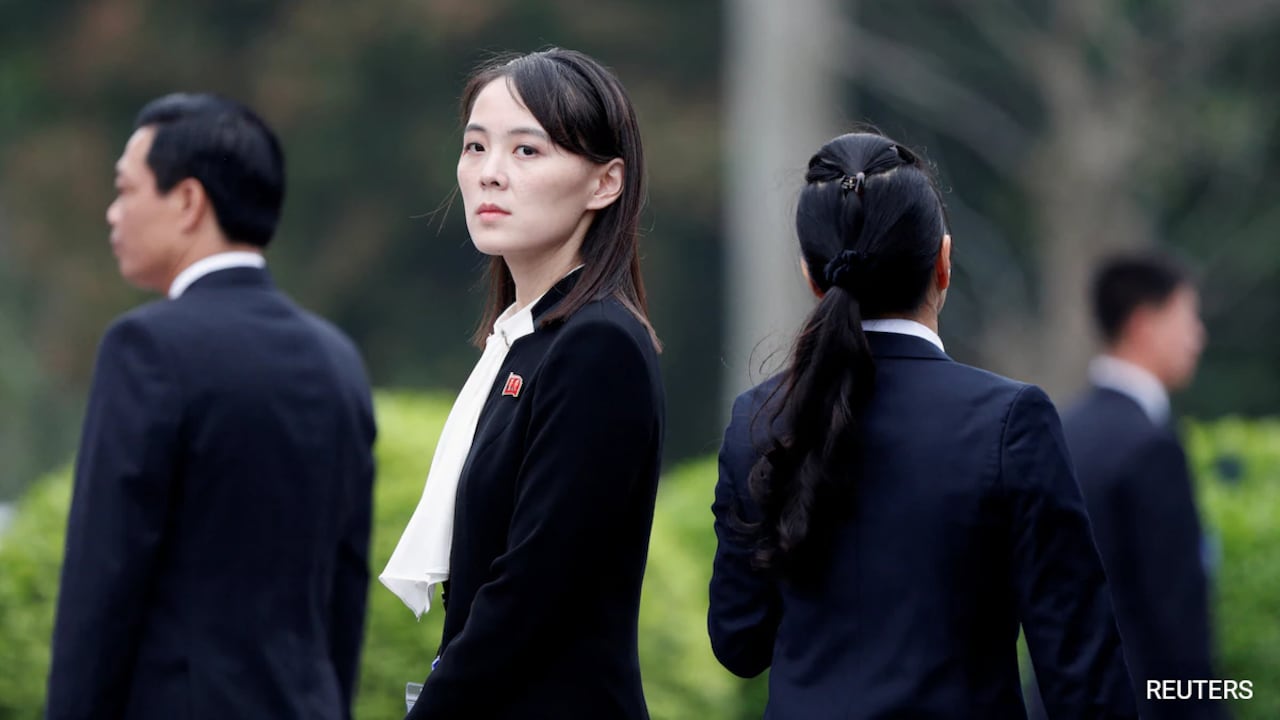
When the powerful sister of North Korean leader Kim Jong Un released her statement dismissing American calls for denuclearization as an "anachronistic dream," she did not just reject a policy. She mocked a worldview. She exposed the fundamental disconnect between Western diplomatic strategy and the cold reality lived inside the fortress walls of Pyongyang.
To understand why her words carry such a chilling weight, you have to step away from the podiums of the Pentagon and look at the map through her eyes.
The Ghost in the Room
Imagine sitting across from someone who believes your very existence is a temporary historical mistake. That is the psychological baseline of North Korean diplomacy.
Every American administration enters the fray with a familiar playbook. They offer security guarantees. They promise integration into the global economy. They talk about a brighter future for the North Korean people, rich with technology and trade. To a Western mind, it is a generous, logical offer. Who wouldn't want prosperity over isolation?
But inside the Ryongsong Residence, those promises sound like a death warrant.
Pyongyang looks across the border at South Korea, a roaring economic engine backed by the full might of the United States military. They look back at history, watching the fates of leaders like Libya’s Muammar Gaddafi or Iraq’s Saddam Hussein—men who bargained away their unconventional arsenals only to find themselves deposed, hunted, or executed when the geopolitical winds shifted.
The North Korean leadership does not view nuclear weapons as a bargaining chip to be traded for a better standard of living. They view them as the only reason they are still alive to bargain at all.
When Kim Yo Jong called the American demands anachronistic, she was pointing out that Washington is still playing a game from the 1990s. The United States is treating North Korea like a rogue state that can be pressured into submission through sanctions. But the world has shifted beneath our feet. Pyongyang has watched the growing chasm between the West and a revisionist bloc led by Russia and China. They realize they no longer need Washington’s approval to survive.
The Architecture of Defiance
The language used by Kim Yo Jong is rarely accidental. It is calculated, designed to inflict maximum psychological leverage while signaling absolute resolve to her domestic audience. She does not speak as a mere bureaucrat; she speaks with the inherited authority of the Paektu bloodline.
Her statements frequently strip away the polite euphemisms of traditional diplomacy. Where a Western diplomat might speak of "denuclearization of the Korean Peninsula," she frames it as a demand for unilateral surrender.
Consider the sheer mechanics of what the West asks for. Denuclearization is not just about dismantling missiles. It requires international inspectors walking through secret underground facilities. It means revealing the blueprints of the state’s ultimate defense system to the very nations that have spent decades isolating it. It demands total transparency from a regime whose survival depends entirely on opacity.
It is a fantasy.
By labeling the request anachronistic, she is telling the world that the window for that conversation closed years ago. North Korea is no longer a country trying to build a nuclear deterrent. They are a nuclear-armed state with an operational arsenal. You do not ask a country to un-ring a bell that took them three decades of starvation, isolation, and engineering miracles to forge.
The strategy now shifting in Pyongyang is one of forced acceptance. They are not waiting for sanctions to lift; they are adjusting to a world where sanctions are simply the cost of doing business. Through illicit ship-to-ship transfers, cyber warfare, and a deepening alignment with Moscow—manifested in recent ammunition and missile transfers for the war in Ukraine—the regime has found new lungs to breathe.
The Human Cost of the Stalemate
Away from the rhetorical fire, the real tragedy unfolds in the quiet corners of the peninsula.
The stalemate means the continuation of a brutal status quo for millions of ordinary citizens. The border remains an impenetrable wall of razor wire and minefields. Families separated for generations die without ever hearing each other's voices again. The resources that could transform the country’s failing agricultural sector are instead funneled into centrifuge cascades and solid-fuel rocket boosters.
Yet, the regime handles this internal suffering not as a vulnerability, but as a proof of strength. The narrative fed to the public is one of eternal siege. Every sanction imposed by the United Nations is weaponized by state media to prove that the cruel outside world is intent on destroying them, making the nuclear shield seem all the more necessary.
This is the psychological trap of the Korean conflict. The harder the West pushes, the more it validates the regime's reasons for holding onto its weapons. The more North Korea digs in, the more impossible it becomes for any American president to offer concessions without looking weak.
Dismantling the Table
So, where does that leave the world?
It leaves us at the end of an era. The illusion that a grand bargain can be struck at a luxury hotel in Singapore or Hanoi has dissolved. The diplomatic track we have walked for thirty years has led to a dead end, blocked by a wall of reality that Kim Yo Jong just articulated with brutal clarity.
Accepting this does not mean condoning a nuclear North Korea. It means abandoning the comforting lie that they can be talked out of it.
The future of containment on the peninsula will not be decided by soaring speeches about a nuclear-free world. It will be decided by the gritty, dangerous work of deterrence, missile defense, and managing a permanent crisis. We are no longer trying to solve a problem; we are trying to manage a condition.
The sister’s message was a bucket of cold water thrown on a collective daydream. The round table of disarmament is gone, replaced by a permanent frontline where the stakes are measured not in diplomatic breakthroughs, but in the fragile, day-to-day avoidance of total war.
The nuclear state is here to stay, and the world must now figure out how to live in its shadow.