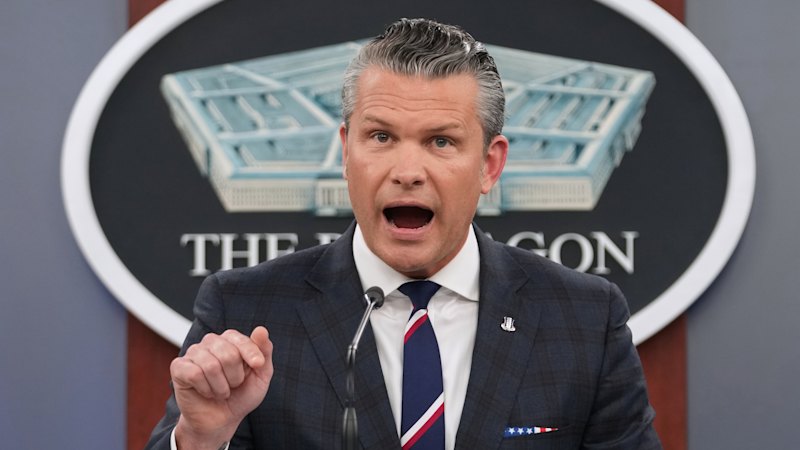
Washington is treating the impeachment push against Defense Secretary Pete Hegseth like another standard partisan brawl. Media commentators frame the dispute as a predictable clash between congressional critics demanding accountability and administration allies, including Vice President JD Vance, rallying to defend a cabinet official against claims of sabotage.
That framing misses the structural reality of how the modern executive branch operates. While cable news panels debate political optics and partisan loyalty, the actual conflict centers on constitutional mechanics, civilian control of the military, and the practical limits of legislative oversight in a polarized Congress.
The Myth of the Impeachment Silver Bullet
Conventional political coverage treats impeachment articles against a cabinet secretary as an existential threat to an administration. When critics introduce resolutions targeting a Pentagon chief, the immediate narrative centers on whether the official can survive the political fallout.
History suggests otherwise. Under Article II, Section 4 of the United States Constitution, the House of Representatives holds the sole power to impeach civil officers for treason, bribery, or other high crimes and misdemeanors, while the Senate holds the sole power to try them. Removing an official requires a two-thirds supermajority vote in the Senate.
In the entire history of the United States, only one cabinet secretary has ever been impeached by the House: Secretary of War William Belknap in 1876, who resigned hours before the vote and was subsequently acquitted by the Senate. Even when the House impeached Homeland Security Secretary Alejandro Mayorkas in 2024, the Senate dismissed the articles without holding a full trial.
| Milestone | Official | Year | Outcome |
|---|---|---|---|
| First Cabinet Impeachment | William Belknap (Secretary of War) | 1876 | Resigned prior to vote; acquitted by Senate |
| Second Cabinet Impeachment | Alejandro Mayorkas (Secretary of Homeland Security) | 2024 | Articles dismissed by the Senate |
| Constitutional Threshold | Any Civil Officer | Ongoing | Majority in House; two-thirds in Senate |
Treating impeachment resolutions as an imminent removal mechanism ignores this constitutional math. Without broad bipartisan consensus in the Senate, impeachment functions primarily as a messaging vehicle rather than a viable path to removing a sitting Defense Secretary.
What "Sabotage" Actually Means in Executive Politics
When Secretary Hegseth characterizes impeachment efforts as "sabotage" and Vice President Vance steps in to reinforce that defense, critics often dismiss the language as mere political deflection. Yet from an institutional perspective, the word reflects a genuine friction point inside the executive branch.
Running the Department of Defense requires managing a massive bureaucracy, complex procurement pipelines, and global military deployments. Senior Pentagon leaders frequently argue that constant congressional investigations, document demands, and impeachment threats divert senior staff away from operational readiness and strategic planning.
From the perspective of administration defenders, aggressive oversight tied to impeachment resolutions is designed to stall policy implementation—specifically efforts to reshape Pentagon leadership, revise military personnel policies, and overhaul defense acquisition priorities. By framing the effort as sabotage, Hegseth and Vance are appealing directly to voters who view entrenched Washington institutions and congressional opposition as obstacles to executive branch reform.
Conversely, congressional critics and legal scholars argue that vigorous oversight is not sabotage, but a core constitutional duty under Article I. When lawmakers raise concerns regarding military operations, chain-of-command protocols, or adherence to statutory reporting requirements, they contend that failing to press the issue would amount to abdicating their responsibility to check executive power.
The Vice President's Strategic Calculation
Vice President Vance’s vocal defense of Hegseth highlights another misunderstood dynamic: the evolving role of the vice presidency in managing intra-party discipline and public messaging.
Historically, vice presidents often avoided wading into early legislative battles over individual cabinet members to preserve their own political capital. In the modern media environment, however, silence is routinely interpreted by political opponents and the press as a lack of confidence.
By stepping forward immediately to back Hegseth, Vance accomplishes three distinct objectives:
- Closing the Daylight: Publicly aligning with the Defense Secretary prevents reporters from driving a wedge between the White House and the Pentagon.
- Signaling to the Base: Defending a high-profile cabinet official reinforces solidarity with the administration's core supporters, framing external attacks as collective challenges to the administration's mandate.
- Deterring Internal Dissent: Vocal backing from the Vice President signals to lawmakers within the governing coalition that breaking ranks carries high political costs.
However, this strategy carries real risks. By tying the administration's broader political standing directly to the Defense Secretary, the Vice President assumes shared ownership of any future policy missteps or operational controversies emerging from the Pentagon. If an issue escalates beyond partisan rhetoric into a substantive operational failure, the administration has less room to distance itself.
The Real Oversight Levers Congress Ignores
Focusing exclusively on impeachment obscures the far more potent tools Congress actually possesses to constrain or direct the Department of Defense. If lawmakers genuinely intend to alter Pentagon policy or compel compliance, impeachment is arguably the least efficient mechanism available.
- The Power of the Purse: Through the annual National Defense Authorization Act (NDAA) and defense appropriations bills, Congress can fence off funding, prohibit specific programs, or withhold travel and administrative budgets for senior officials until statutory conditions are met.
- Confirmation Holds: Senators can place holds on pending civilian and military nominations, effectively freezing leadership transitions across key Pentagon offices and combatant commands.
- Subpoena Enforcement and Contempt: Committees can compel testimony from lower-level officials and career civil servants who manage day-to-day operations, exposing policy implementation details without needing a two-thirds Senate vote.
When lawmakers opt for impeachment resolutions instead of targeted appropriations riders, they are often prioritizing public visibility over legislative leverage. Appropriations battles happen in dense committee markups that rarely dominate evening news cycles; impeachment generates immediate headlines.
Addressing the Core Questions Voters Actually Ask
When news of impeachment threats against a sitting Defense Secretary breaks, public interest spikes around several practical questions. Looking past partisan talking points reveals straightforward answers:
- Can Congress actually force a Defense Secretary to resign? Not directly through impeachment unless two-thirds of the Senate votes to convict. Historically, cabinet officials leave office only when they lose the confidence of the President, or when prolonged political controversy threatens the President's broader legislative agenda.
- Does an impeachment push affect military operations? Day-to-day military command flows from the President through the Secretary of Defense to the combatant commanders. While senior civilian leaders and congressional liaison teams spend significant time responding to Capitol Hill, operational commanders continue executing standing orders.
- Why do administrations fight back so aggressively against symbolic resolutions? Because in modern politics, narrative momentum matters. Allowing an unchallenged narrative of misconduct or incompetence to take hold can erode public trust, complicate confirmation battles for other nominees, and embolden primary or midterm challengers.
The Bottom Line on Civilian Control
The founders designed the American system to pit ambition against ambition, dividing war powers and military oversight between the President as Commander in Chief and Congress as the body that raises, funds, and regulates the armed forces. Friction between the Pentagon and Capitol Hill is not an aberration; it is a permanent feature of the constitutional architecture.
Viewing the clash over Pete Hegseth simply as a personal feud or an isolated political stunt misses the larger institutional contest. Critics are testing the boundaries of legislative accountability, while Hegseth and Vance are asserting broad executive authority to run the Pentagon without continuous congressional interference. Until voters and commentators look past the spectacle of impeachment to examine how defense budgets, nominations, and statutory authorities are actually wielded, they will continue misreading how power really operates in Washington.


