Imagine sitting in your home, surrounded by family, crying through the second day of funeral rituals for your father. You’ve accepted his death because he disappeared a week ago in the Death Zone of Mount Everest. Then, your phone rings. Someone tells you he’s alive, crawling into Base Camp on his hands and knees.
You wouldn't believe it either. His daughter, Mhendo Lhamo Sherpa, didn't. She had to ask for photos just to prove the man arriving at the hospital in Kathmandu wasn't a ghost.
Dawa "Hillary" Sherpa, a 52-year-old veteran guide, didn't just survive an accidental night out on the world's highest peak. He pulled off arguably the most mind-bending feat of self-rescue in mountaineering history. He spent nearly six days missing, covering more than 12 kilometers of broken, vertical terrain from the Yellow Band at 25,000 feet down to Crampon Point at 17,000 feet. He did it without food. He did it without supplemental oxygen. He did it by scavenging abandoned tents for freezing scraps of water and leftover gas canisters.
But while the mountaineering community celebrates this as a definitive miracle, Dawa's survival exposes a deeply unsettling reality about the commercial exploitation and ethical rot currently plaguing Mount Everest.
The Nightmare Descent from 7,200 Meters
The trouble started on May 29. Dawa was working for a small, Kathmandu-based agency called Himalayan Traverse, guiding a client during what became the busiest, most chaotic climbing season in Everest history. Over 1,000 people choked the routes this May.
Dawa had just helped his group summit. Among them was Chris Thrall, a former British Royal Marine. By the time they began descending past the Yellow Band—a steep limestone feature just above Camp 3—everyone was completely spent.
According to a video Thrall posted later, Dawa sat down on his backpack to rest. Thrall checked on him, asking, "Hillary, are you OK brother?" Dawa replied, "Yes, yes, I'm fine, Chris. Please go."
Thrall moved down, eventually sharing his own remaining oxygen with a frostbitten Polish climber from their team. They made it down. Dawa didn't.
What happened next is a blur of isolation. As the climbing season officially closed, expedition teams packed up and left. The safety ropes were being cut down. The ladders spanning bottomless crevasses were being removed. Dawa was left entirely alone in a collapsing icy wasteland.
Surviving on Scraps and Pure Grit
How does a 52-year-old man survive six days alone in the Death Zone and the treacherous Khumbu Icefall?
"Two days in a deep crevasse below Camp 1 after a full week in the death zone? Surviving on ice and one packet of biscuits at that altitude is an unbelievable feat of mental strength," says Nima Tenzing Sherpa, an independent high-altitude guide. "Most people lay down and accept the end, but Dawa chose to fight."
Dawa crawled. When his legs failed, he used his hands, which are now heavily frostbitten. He dug through the trash left behind by wealthy commercial expeditions, hunting for half-empty oxygen bottles and frozen remnants of food inside abandoned tents.
He managed to navigate the Khumbu Icefall completely solo. It's the most lethal section of the mountain, a shifting glacier that moves up to four feet a day, opening new crevasses without warning. Doing this without a team or fixed safety lines is practically a death sentence.
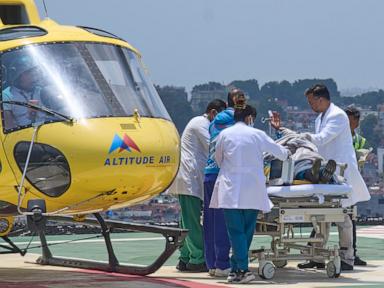
On June 4, a cleanup crew from the Sagarmatha Pollution Control Committee spotted a figure dragging itself through the snow just above Base Camp. It was Dawa. They carried him down, pumped him full of fluids, and got him onto a rescue helicopter to HAMS Hospital. He's currently in intensive care, battered and frozen, but he's speaking, and he's going to live.
The Disposable Guide Problem on Commercial Peaks
We need to stop talking about this exclusively as an inspiring miracle. Dawa should never have been left behind to begin with.
The internet quickly turned on Thrall, calling him a murderer on social media until he defended his actions, noting that Dawa explicitly told him to keep moving. In survival situations above 24,000 feet, you can't easily drag an exhausted human down a cliff face. Thrall made a textbook choice to save the struggling Polish climber.
The real blame lies squarely on the commercial system. Independent logistics coordinators are furious with Himalayan Traverse, the agency that employed Dawa.
When the clock runs out on Everest, the big commercial teams vanish. They scramble to get their high-paying Western clients down to safety, pack up their gear, and head to the bars in Kathmandu. If a local guide falls behind or gets separated in the closing rush, the system treats them as disposable.
There was a massive delay in launching a helicopter search for Dawa. By the time birds were in the air, they couldn't spot him. The agency essentially packed up and gave him up for dead, leaving his family to start funeral prayers while Dawa was actively eating snow and fighting for his life a few miles away.
What Needs to Change Before Next Season
If you're tracking the mountaineering industry, Dawa's ordeal is a flashing red light. We can't keep pretending the current Everest model is sustainable. If an elite guide can get abandoned on the standard south face route during a routine descent, the safety net is completely broken.
Fixing this requires concrete action from the Nepal Ministry of Tourism and expedition operators.
- Mandatory GPS Trackers for All Support Staff: Clients pay tens of thousands of dollars and often wear trackers. Every single Sherpa and porter needs the same technology. If Dawa had a live tracker, rescuers wouldn't have been guessing his location.
- Strict Accountability for Agencies: If an agency leaves a staff member behind without an immediate, fully funded, and aggressive search-and-rescue deployment, they should lose their operating license permanently.
- A Standardized "No Man Left Behind" Protocol: The season shouldn't officially close, and route clearing shouldn't begin, until every single manifest log from Base Camp confirms all guides and clients are accounted for downstairs.
Dawa Sherpa survived because he possesses a level of physical resilience and mental toughness that normal humans can't comprehend. He's a mountain tiger. But relying on miracles is a terrible strategy for running an industry. Next time, the family won't get a phone call interrupting their funeral rites. They'll just finish them.