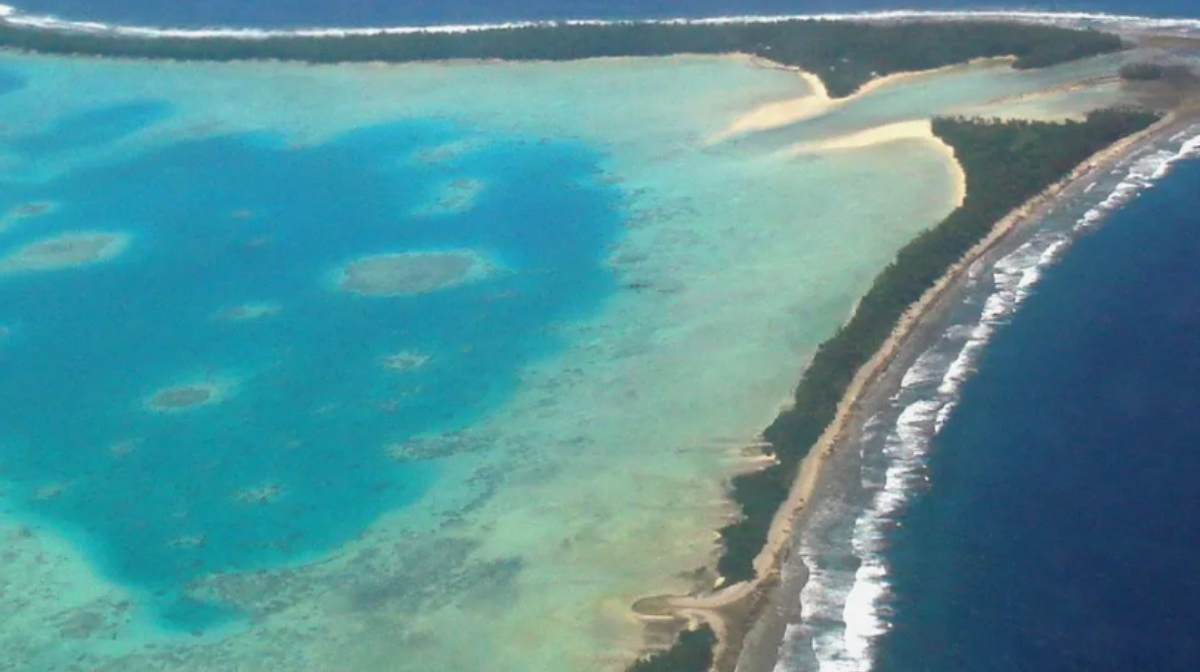
India doesn't usually send high-ranking ministers to a tiny archipelago of 11,000 people just for the scenery. When Pabitra Margherita, the Minister of State (MoS) for External Affairs, landed in Funafuti this week, it wasn't a vacation. It was a calculated move in a much larger geopolitical chess match.
Honestly, most people couldn't find Tuvalu on a map. But for India, this Pacific nation is becoming a critical piece of the "Act East" policy. On April 24, 2026, Margherita sat down with Tuvalu’s Acting Prime Minister Paulson Panapa. They didn't just exchange pleasantries; they talked hard numbers, maritime safety, and how to keep a sinking island nation afloat—both literally and economically.
More than just a handshake in Funafuti
The meeting with Panapa focused heavily on development cooperation. India isn't just trying to sell goods; it's trying to build a foundation. You don't get trade without infrastructure, and you don't get infrastructure without survival.
Margherita’s visit followed a stop in Vanuatu, proving this is a concerted sweep of the Pacific. In Tuvalu, the discussions weren't limited to the top office. The MoS met with Minister for Home Affairs, Climate Change, and Environment Maina Talia, and Minister of Education Hamoa Holona.
They’re looking at a multi-pronged approach.
- Healthcare: India is sponsoring 10 patients for specialized treatment back in India under the "Heal in India" initiative.
- Logistics: A new sea ambulance is being provided to bridge the gap between Tuvalu’s scattered islands.
- Culture: A "Quick Impact Project" check was handed over to help preserve Tuvalu’s heritage sites.
It’s a smart play. By tackling the immediate crises—like health and rising sea levels—India secures the goodwill needed for long-term economic ties.
Breaking the trade barriers in the Pacific
Trade between India and Tuvalu has historically been a rounding error. But Panapa and Margherita are trying to change that. They discussed enhancing bilateral trade, specifically focusing on how India can support Tuvalu’s labor and trade sectors.
It’s about more than just shipping containers. It’s about capacity building. India is betting that by training Tuvalu’s workforce and providing digital infrastructure—similar to the IT center support they just pledged in Vanuatu—they can create a stable trading partner in a region often dominated by other giants.
The "Heal in India" program is a perfect example of "service trade" that actually works. By bringing patients to Indian hospitals, India showcases its medical prowess while solving a desperate need for the Tuvaluan government. It’s practical. It’s direct. And it’s far more effective than a vague memorandum of understanding.
Why the Pacific Islands matter to New Delhi
You might wonder why India is bothering with such a small market. It’s about the Forum for India-Pacific Islands Cooperation (FIPIC). India wants to be the "trusted development partner" that isn't China.
While others might offer massive loans that lead to debt traps, India is leaning into "Quick Impact Projects" and technical cooperation. Margherita's meetings with Governor-General Sir Tofinga Vaevalu Falani and the cabinet ministers emphasized a partnership of equals.
The strategy is clear.
- Build the infrastructure (sea ambulances, IT).
- Solve the immediate pain points (healthcare, food security).
- Secure the diplomatic loyalty.
- Open the doors for Indian textiles and services.
What happens next
If you're watching this space, don't expect a sudden flood of Tuvaluan goods in Indian markets. That's not the point. Expect more Indian involvement in Pacific climate resilience projects and a steady increase in service-based exports.
The next step for India is ensuring these promises turn into reality. The sea ambulance needs to arrive. The dialysis unit for Princess Margaret Hospital needs to be functional. If India delivers on these small, high-impact items, the trade talks with Paulson Panapa will be remembered as the moment the relationship actually shifted from symbolic to substantial.
Keep an eye on the upcoming FIPIC meetings. The momentum Margherita built in Funafuti this week is exactly what India needs to solidify its footprint in the blue economy of the Pacific.