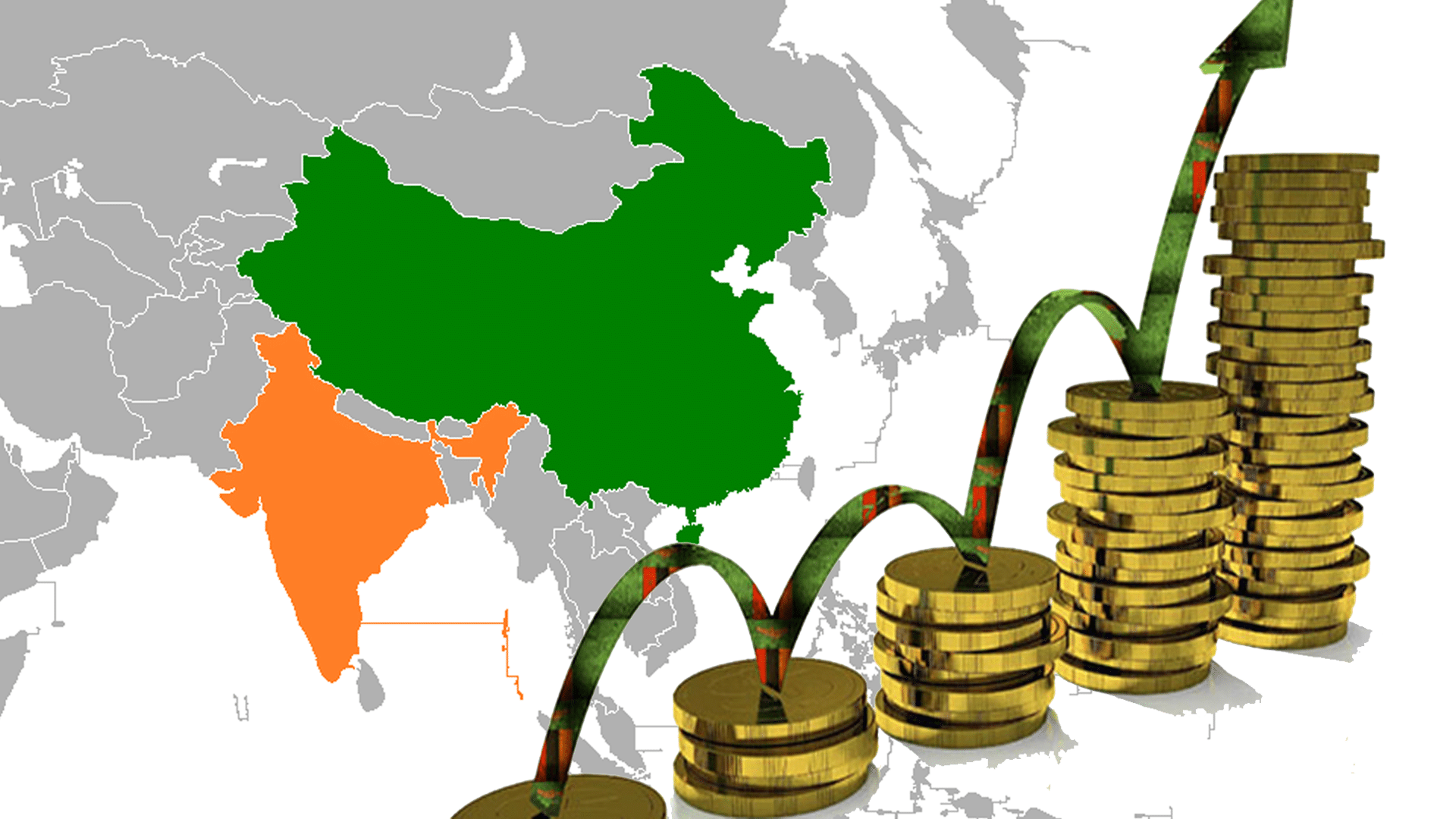
Ninety-two billion dollars. That is the figure currently being celebrated by the pink papers and the nationalist echo chambers. They see India climbing to the fifth spot in the global defense spending hierarchy and smell a superpower in the making. They are wrong. They are mistaking a massive receipt for actual muscle.
In the world of geopolitics, spending is not a metric of power; it is a metric of cost. If you spend $100 on a hammer that your neighbor bought for $10, you aren't ten times more powerful—you’re just a sucker. India’s defense budget, while record-breaking in nominal terms, is a bloated ledger of legacy liabilities, skyrocketing pension obligations, and a desperate, late-stage attempt to bridge a technological chasm that should have been addressed two decades ago.
The Pension Trap Eating the Teeth of the Military
The biggest lie in the $92 billion headline is that this money is buying "defense." It isn't. A staggering portion of India’s defense outlay is swallowed before a single bullet is purchased or a single jet is fueled.
Look at the breakdown. Roughly 25% to 30% of the total allocation often goes toward pensions alone. When you add the salaries of a 1.4 million-strong standing army, the "Revenue Expenditure"—the cost of just keeping the lights on and the boots fed—consumes the lion’s share. What’s left for "Capital Outlay" (the actual buying of new tech) is a shrinking slice of a very expensive pie.
- India: ~1.4 million active personnel.
- USA: ~1.3 million active personnel.
- China: ~2 million active personnel (but pivoting hard toward automation).
India is maintaining a 20th-century labor-intensive force structure while trying to fight a 21st-century algorithmic war. We are paying for ghosts and bureaucracies while our adversaries are investing in autonomous loitering munitions and hypersonic glide vehicles. High spending on personnel is a sign of an industrial-age relic, not a digital-age titan.
The Import Addiction That Taxes Sovereignty
The "Make in India" initiative, or Atmanirbhar Bharat, is a noble slogan that masks a grim reality. India remains the world’s largest arms importer. Between 2019 and 2023, India accounted for 9.8% of total global arms imports.
When you buy a Rafale from France or an S-400 system from Russia, you aren't just buying hardware. You are buying a geopolitical leash. You are paying a "sovereignty tax" in the form of maintenance contracts, spare parts dependencies, and end-user monitoring.
Spending $92 billion is a badge of shame when you realize how much of that capital is flowing out of the domestic economy to subsidize the R&D of Dassault, Lockheed Martin, or Almaz-Antey. True power is the ability to produce a $50,000 drone that can take out a $5 million tank. India is still largely focused on buying the $5 million tank.
The Obsolescence of Heavy Metal
The competitor's article waxes poetic about "modernization." But what are we modernizing? The obsession remains with "Big Metal"—aircraft carriers, main battle tanks, and manned fighter wings.
I’ve seen defense ministries across the globe incinerate billions on platforms that are essentially floating or rolling targets for modern electronic warfare. In the Black Sea, we saw a navy without a functional fleet use cheap, unmanned surface vessels to neuter a traditional superpower’s naval dominance.
India’s push for a third aircraft carrier is the pinnacle of this "sunk cost" fallacy. A carrier battle group is a massive, $10 billion target that requires a dozen other ships just to protect it. In a conflict in the Indian Ocean, a swarm of $100,000 anti-ship missiles makes that $10 billion investment look like a monumental tactical error.
Instead of bragging about being the 5th largest spender, we should be asking why we aren't the 1st largest innovator in asymmetric warfare. The "lazy consensus" says more money equals more security. The contrarian truth is that more money spent on the wrong things creates a "fragility gap." You become too expensive to lose, but too cumbersome to win.
The R&D Deficit
While the US and China pour billions into DARPA-style moonshots and AI-integrated command structures, India’s internal R&D is often stifled by the bureaucratic inertia of the DRDO (Defence Research and Development Organisation).
Capital expenditure in the 2025 budget is a significant number, but how much of that is going to foundational research? Not much. Most of it is "committed liability"—paying the installments on gear we ordered five years ago.
Imagine a scenario where India diverted just 10% of its personnel costs into a decentralized network of private defense startups. Instead of waiting ten years for a homegrown tank that is obsolete by the time it hits the dirt, you get a thousand iterations of AI-driven surveillance software in six months. That is how you disrupt a global arms race. You don't outspend the giants; you out-evolve them.
The Real Numbers Nobody Wants to Talk About
To understand the scale of the inefficiency, we have to look at the "Bang for Buck" ratio.
| Country | Defense Budget (Est. 2025) | % GDP | Primary Spend Focus |
|---|---|---|---|
| USA | $900B+ | 3.4% | Tech Superiority & Global Reach |
| China | $230B-$400B* | 1.7% | Asymmetric Warfare & Naval Expansion |
| India | $92B | ~2.4% | Pensions, Salaries, & Import Payments |
*China's actual spending is widely considered to be much higher than their official figures.
India’s spending is high as a percentage of GDP, but the "utility per dollar" is abysmal. We are spending like a superpower but getting the results of a regional power in a defensive crouch.
The Fallacy of the Two-Front War
The justification for this massive spend is always the "Two-Front War" scenario involving Pakistan and China. This is a 1970s strategic framework. A modern two-front war isn't fought on the Line of Control or the LAC alone; it’s fought in the server farms of Bengaluru, the power grids of Mumbai, and the satellite constellations above the subcontinent.
If $92 billion doesn't buy you total dominance in the cyber and space domains, it’s just decorative spending. You can have the best tanks in the world, but if your communications are jammed and your grid is dark, those tanks are just high-end scrap metal.
Stop Measuring the Input
The obsession with "spending rankings" is a dopamine hit for a nation that wants to feel like it has arrived. But in the defense industry, the only ranking that matters is the "Cost of Imposing Will."
If it costs India $92 billion to maintain a stalemate, and it costs an adversary $20 billion in cyber-intrusion tools and drone swarms to keep India off-balance, the adversary is winning the economic war of attrition.
We need to stop celebrating the size of the check. A large defense budget is not a sign of health; it is often a sign of a nation that has failed to innovate its way out of expensive, old-fashioned problems.
Burn the spreadsheets that celebrate the $92 billion. Start looking at the capability-to-cost ratio. If we don't pivot from being a "Big Spender" to a "Smart Killer," we are simply financing our own tactical irrelevance.
The era of the "Mass Army" is over. The era of the "Massive Budget" should be next on the chopping block. Move the money or lose the war.