Israel elects its government through a single nationwide proportional representation vote where citizens cast ballots for closed party lists rather than individual local lawmakers, requiring a faction to clear a 3.25 percent electoral threshold to enter the 120-seat Knesset and secure a 61-seat coalition majority that directly dictates military strategy, ceasefire terms, and post-war governance in Gaza.
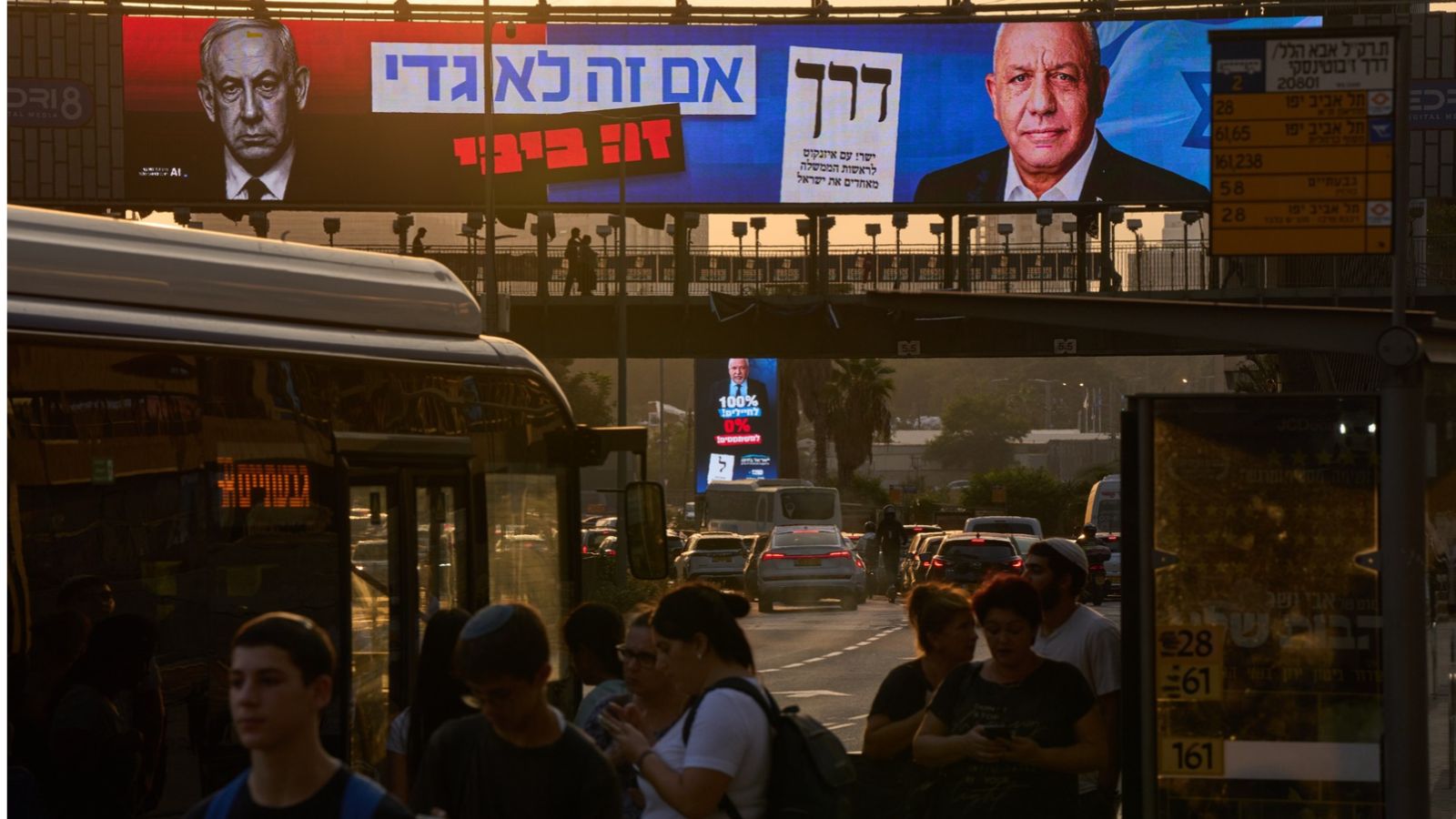
To understand why Israeli politics frequently paralyzes or accelerates military campaigns, you have to look past the surface-level horse race and examine the mechanical gears of the system itself. Most Western democracies rely on geographic districts where a representative answers to local voters. Israel treats the entire country as one single electoral district. When an Israeli voter walks behind the cardboard screen at a polling station, they do not pick a person. They pick a paper slip bearing the Hebrew letters of a political party.
How the 120-Seat Proportional System Actually Works
The math looks deceptively simple on paper, yet it produces some of the most volatile coalition politics in the democratic world. Every valid ballot cast across the country—from Tel Aviv apartment blocks to West Bank settlements and diplomatic missions abroad—goes into one massive national pot.
To win a single seat in the parliament, a party must clear the 3.25 percent threshold of all valid votes. That translates roughly to four seats right out of the gate. If a party finishes at 3.24 percent, every single vote cast for it evaporates. Those wasted ballots do not just disappear into thin air; they effectively lower the total pool of qualifying votes, handing extra proportional weight to the larger parties that survived the cut.
Once the qualifying parties are established, the 120 seats are divided proportionally based on each party's share of the surviving vote. Leftover fractions of votes are distributed using the Bader-Ofer method, a mathematical formula favoring larger lists that frequently triggers frantic pre-election surplus-vote agreements between ideologically aligned factions.
No single party in Israeli history has ever won an outright majority of 61 seats on its own. Not even during the towering eras of David Ben-Gurion or Menachem Begin. Consequently, Election Day is merely the opening bell for weeks of ruthless backroom horse-trading.
The President of Israel—a largely ceremonial head of state—consults with the leaders of every faction that crossed the threshold. Based on who commands the largest bloc of recommendations, the president tasks one party leader with forming a governing coalition. That nominee has 28 days, with a possible 14-day extension, to cobble together at least 61 seats.
This structural reality hands disproportionate leverage to small, single-issue, and ideological kingmaker parties. A faction holding just six or seven seats can threaten to bolt the coalition at any moment, collapsing the government and forcing yet another election. When a prime minister's political survival depends on keeping a handful of ultranationalist or ultra-Orthodox lawmakers happy, strategic decisions regarding Gaza cease being purely military calculations and become matters of coalition arithmetic.
The Power Brokers Shaping the Ballot
Israeli electoral alignments rarely sit still for long, but the fundamental fault lines have hardened dramatically following the October 7 attacks and the subsequent multi-front war. Voters are no longer sorting themselves solely by traditional left-versus-right economic theories. They are voting on security doctrine, state-religion boundaries, and institutional survival.
Benjamin Netanyahu and the Likud Apparatus
Benjamin Netanyahu remains the gravitational center of Israeli politics, whether voters want to keep him in office or drive him out. Leading the right-wing Likud party, Netanyahu relies on a loyal base that views him as a seasoned statesman capable of withstanding international pressure, particularly from Washington. His political survival strategy hinges on maintaining an ironclad alliance with right-wing religious and nationalist factions while framing his rivals as weak on security and overly deferential to foreign diplomats.
The Centrist Security Establishment
On the opposing side stands a fragmented but formidable bloc of former military chiefs and pragmatic centrists. Figures like Benny Gantz of the National Unity party and Yair Lapid of Yesh Atid appeal to secular, middle-class voters exhausted by years of constitutional crisis and prolonged warfare. Gantz, a former Israel Defense Forces (IDF) Chief of Staff, markets himself as a steady, non-ideological hand who prioritizes hostage recovery and strategic alliances with the United States and moderate Arab states. Lapid positions himself as the defender of Israel's liberal democratic institutions and judiciary against right-wing overreach.
The Ultranationalist Right
To Netanyahu's right sit the true ideological drivers of the current governing era: Bezalel Smotrich of the Religious Zionist party and Itamar Ben-Gvir of Otzma Yehudit (Jewish Power). Far from peripheral actors, these leaders control critical ministries overseeing finance, national security, and civilian administration in the West Bank. Their voter base demands total military subjugation of Gaza, an outright rejection of any Palestinian statehood framework, and, among their more hardline supporters, the re-establishment of Israeli civilian settlements inside the Gaza Strip.
The Ultra-Orthodox Kingmakers
Parties like Shas and United Torah Judaism operate on a completely different axis. Historically focused on securing state funding for religious schools and preserving military draft exemptions for yeshiva students, these Haredi factions have traditionally aligned with Netanyahu because he gives them what they want. However, the acute manpower shortage in the IDF caused by prolonged fighting in Gaza and along the northern border has turned the ultra-Orthodox draft exemption into political dynamite, straining their decades-old alliance with the secular right.
The Arab Lists and the Left
Representing roughly a fifth of Israel's population, Arab citizens vote primarily for factions such as Ra'am (the United Arab List), Hadash-Ta'al, and Balad. Mansour Abbas, leader of Ra'am, shattered decades of political taboo in 2021 by becoming the first independent Arab party leader to join an Israeli governing coalition, focusing pragmatically on municipal budgets and crime reduction. Yet the devastation in Gaza has deeply alienated Arab voters, driving down turnout projections and making cross-ethnic coalition building vastly harder. Meanwhile, Israel's historic Zionist left—represented by the merged Democrats alliance combining Labor and Meretz—fights to stay relevant by advocating a negotiated diplomatic end to the conflict.
What Is Actually at Stake for Gaza
Every ballot dropped into an Israeli polling box carries direct operational consequences for the two million Palestinians living in the Gaza Strip and the Israeli communities along its perimeter. The election is effectively a referendum on three irreconcilable visions for the territory's future.
The Forever Occupation and Settlement Push
If a hardline right-wing coalition secures a decisive 61-seat mandate, Israel's policy in Gaza shifts permanently away from temporary military incursion toward indefinite territorial control. Under this model, the IDF maintains permanent buffer zones, splits the territory along strategic corridors like Netzarim and Philadelphi, and assumes direct military governance over civilian aid distribution. While Netanyahu has publicly expressed skepticism about rebuilding Jewish settlements in Gaza, his reliance on Smotrich and Ben-Gvir means policy on the ground constantly drifts toward de facto annexation and the systematic dismantling of any international mechanism involving the Palestinian Authority.
The Regional Security and Hostage Framework
A coalition led by centrist figures like Gantz or Lapid would pursue a fundamentally different architecture. Their stated objective involves leveraging a comprehensive ceasefire and hostage release deal to unlock a broader regional normalization agreement, primarily with Saudi Arabia. Under this blueprint, Israel would gradually hand over civilian administration in Gaza to a reformed, technocratic Palestinian mechanism backed by moderate Sunni Arab states and Washington, while the IDF retains overarching security freedom of action to raid emerging terror cells—a model similar to how Israel operates in Area A of the West Bank.
The Humanitarian and Reconstruction Bottleneck
International donors, Gulf monarchies, and European governments have made their position brutally clear: they will not pour tens of billions of dollars into rebuilding Gaza's shattered infrastructure if Israeli military operations are poised to flatten it again eighteen months later. Without a governing coalition in Jerusalem willing to articulate a credible political horizon for Gaza, reconstruction remains frozen. Humanitarian aid stays trapped in bureaucratic and military chokepoints, leaving millions dependent on emergency food drops and makeshift tent cities.
The Hidden Mechanics That Skew the Outcome
Polls published in Israeli newspapers months or even weeks before an election frequently miss the mark because they fail to account for structural traps built into the system.
First is the threshold guillotine. Suppose three small center-left or Arab factions each poll at 3.1 percent. In a hypothetical scenario where all three fall just short of the 3.25 percent cutoff, roughly nine percent of the entire national electorate gets wiped off the parliamentary map. Their rivals do not need to win a single extra vote to capture a supermajority; they simply inherit the vacant seats by default. Party leaders spend the final weeks before an election desperately merging unlikely factions purely to avoid this mathematical suicide.
Second is the voter turnout differential. Israel's ultra-Orthodox and national-religious communities vote with military discipline, regularly posting turnout rates above 80 or 85 percent. Their rabbis issue explicit religious directives telling followers which slip to drop in the box. Conversely, secular centrist voters in Tel Aviv and Arab citizens in Nazareth or Umm al-Fahm frequently stay home out of disillusionment, cynicism, or anger. When turnout drops in secular and Arab towns, the proportional weight of every religious-nationalist vote skyrockets.
Third is the unpredictability of reserve soldiers. Hundreds of thousands of Israelis have cycled through extended reserve duty in Gaza, Lebanon, and the West Bank. This generation of combat reservists—largely secular and traditional middle-class citizens who bore the heaviest burden of the war—has emerged deeply skeptical of political slogans from both sides. Their anger over military failures, economic strain, and unequal burden-sharing makes them the single largest wild card in the electorate.
Why Coalition Math Overrides Campaign Promises
Voters outside Israel often make the mistake of reading party platforms as binding contracts. In Jerusalem, a party platform is an opening bid in a bazaar.
Consider the hypothetical example of a centrist candidate who campaigns on an immediate diplomatic settlement and strict limits on military expansion, yet finishes the night with 24 seats. To reach 61, that candidate might need the support of a hawkish secular right-wing party like Avigdor Lieberman's Yisrael Beiteinu, which holds 8 seats and opposes territorial concessions, alongside an ultra-Orthodox party demanding billions in religious subsidies. Within forty-eight hours of the polls closing, the campaign promises dissolve into a coalition agreement written in legalistic ambiguity.
The inverse is equally true. A right-wing prime minister who promises uncompromising military victory can find himself constrained the moment Washington threatens to withhold critical munitions shipments or block diplomatic cover at the United Nations Security Council. Israeli prime ministers govern inside a permanent vise: domestic coalition partners pull them hard toward ideological purity, while economic realities, military exhaustion, and American geopolitical leverage pull them toward pragmatic restraint.
The person who sits in the Prime Minister's Office on Balfour Street does not hold unchecked executive authority like an American president. They are more akin to a tightrope walker balancing a long pole weighted on both ends by rival faction leaders waiting for a single misstep. Until the final coalition signatures dry in Jerusalem, no military doctrine in Gaza is truly permanent, and no ceasefire agreement is safe from a six-seat rebellion on the Knesset floor.