Argentina’s economy is contracting sharply under President Javier Milei’s shock-therapy austerity program, raising urgent doubts about whether the libertarian leader can deliver a sustainable recovery before voters return to the polls in 2027. By slashing public spending, freezing infrastructure projects, and eliminating subsidies, the administration successfully wrestled monthly inflation down from triple-digit annual peaks and achieved rare fiscal surpluses. Yet those macroeconomic victories have come at a punishing cost to the real economy, choking off domestic consumption, stalling industrial output, and pushing millions of households deeper into poverty just as the political runway toward the next presidential election begins to narrow.
The numbers tell a stark story of contraction. Retail sales, construction activity, and manufacturing output have all suffered steep declines since the administration took office in late 2023 and instituted its sweeping chainsaw budget cuts. For decades, Argentina’s economic model relied heavily on state spending, public employment, and subsidized utilities to prop up internal demand. Pulling that plug all at once induced an immediate, predictable liquidity freeze across the domestic market. Read more on a related issue: this related article.
The Anatomy of a Manufactured Contraction
To understand why Argentina is sliding toward a prolonged downturn, you have to look at the mechanics of fiscal dominance. For years, successive governments financed massive budget deficits by ordering the central bank to print pesos. That monetary expansion fueled chronic inflation, eroding savings and distorting price signals across every sector of the economy.
Milei’s economic team, led by Economy Minister Luis Caputo, diagnosed this monetary printing as the root disease. Their cure was brutal and immediate. Within weeks of taking office, the government devalued the official exchange rate by more than 50 percent, halted transfers to provincial governments, suspended virtually all federally funded public works, and allowed inflation to temporarily spike so that real government outlays—particularly pensions and public sector wages—would shrink in real purchasing power. Further journalism by Business Insider explores related views on this issue.
It worked on paper. Argentina posted consecutive monthly financial surpluses for the first time in over a decade, delighting bondholders and earning praise from the International Monetary Fund.
On the streets of Buenos Aires, Rosario, and Córdoba, however, the math looked entirely different. Wages failed to keep pace with the initial inflationary surge, stripping working-class and middle-class families of discretionary income. When consumers stop buying appliances, clothing, and restaurant meals, factories cut shifts. When federal funds for roads, schools, and housing vanish overnight, hundreds of thousands of construction workers lose their livelihoods. A recession was not an accidental side effect of Milei’s plan; it was the primary transmission mechanism used to crush inflation.
Why the V-Shaped Recovery Has Stalled
Early in his tenure, Milei and his advisors promised that the pain would be brief, predicting a rapid V-shaped recovery once macroeconomic stability took hold and private investment flooded in to replace the retreating state. That rebound has proven far more elusive than Buenos Aires anticipated.
Several structural bottlenecks explain why growth remains stuck in reverse:
- Currency Controls and the Exchange Rate Trap: Despite running on a platform of radical free-market liberalization, the administration maintained strict capital controls known locally as the cepo. Fearful that lifting the controls too quickly would trigger a run on the peso and reignite inflation, the government opted for a slow, controlled crawling peg devaluation. While this anchored prices, it also made Argentina expensive in dollar terms, eroding export competitiveness and deterring foreign corporations reluctant to invest capital they cannot freely repatriate.
- Collapsed Domestic Purchasing Power: Because internal consumption accounts for roughly two-thirds of Argentina’s gross domestic product, an export-led recovery in agriculture, energy, or mining cannot easily offset a deeply depressed domestic market. Even as inflation cooled into low single digits monthly, cumulative price increases left real salaries trailing behind basic living costs, particularly as utility bills surged following subsidy removals.
- Credit Scarcity: Years of high inflation and sovereign defaults decimated Argentina’s banking sector. Private sector credit as a share of GDP remains among the lowest in Latin America. Without affordable financing, small and medium-sized enterprises—which generate the vast majority of formal employment in Argentina—cannot expand operations or bridge months of weak sales.
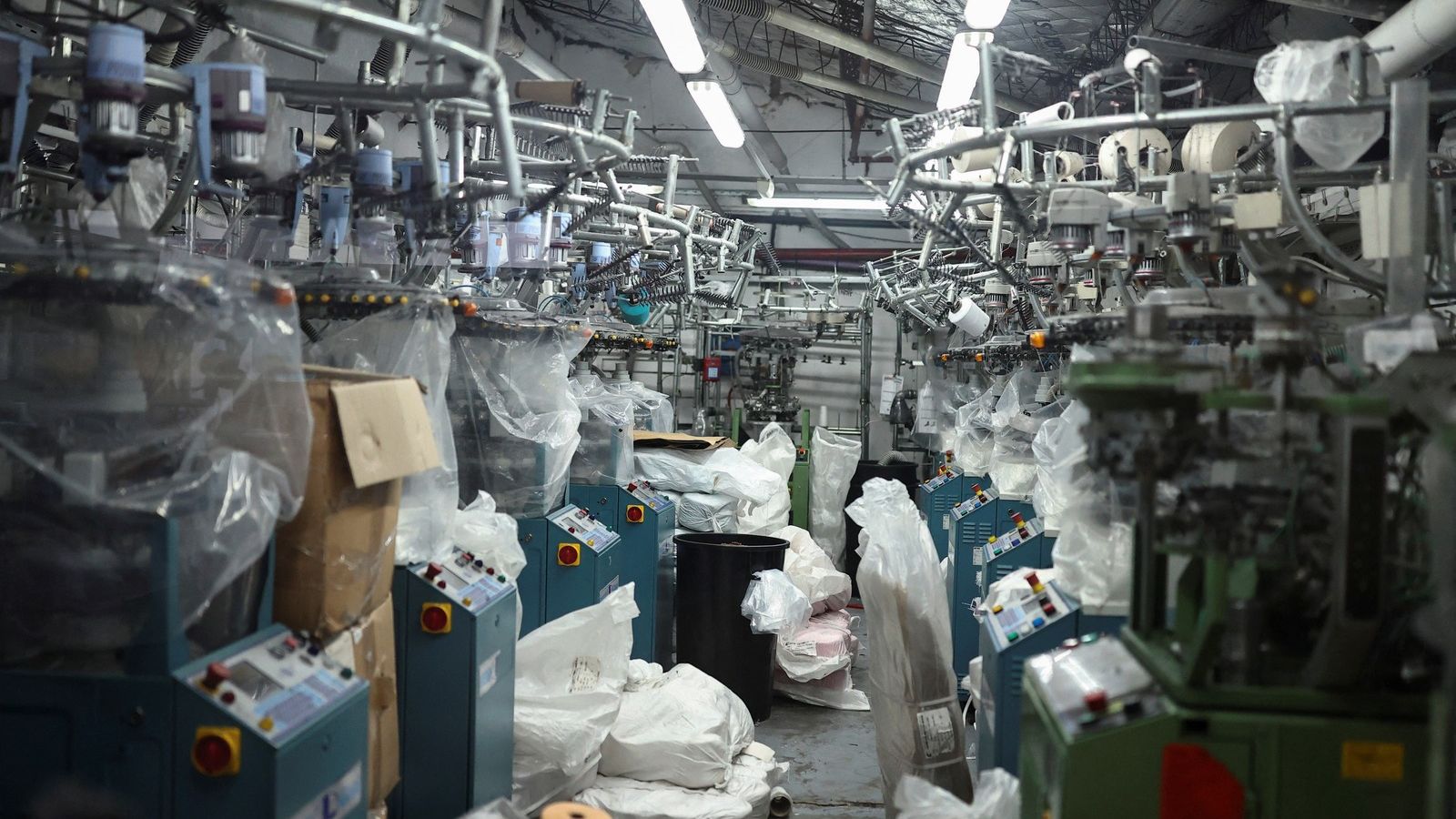
Consider a hypothetical mid-sized textile manufacturer in the province of Buenos Aires. Under the previous regime, the company benefited from cheap electricity, subsidized loans, and a closed market protected by import restrictions. Under Milei’s reforms, that same factory faces electricity bills that have tripled, vanishing orders from cash-strapped local retailers, and newly relaxed import rules allowing cheaper foreign garments into the country. Without access to affordable credit to modernize its machinery, the firm’s only option is to lay off workers and scale back production.
The Political Clock Ticking Toward 2027
In economics, timing is everything. In politics, timing is survival. Milei swept to power as an outsider capitalizing on public disgust with entrenched Peronist mismanagement and runaway prices. Voters granted him an extraordinary honeymoon period, tolerating severe short-term hardship because they believed the alternative was hyperinflation.
That patience is finite. Argentina’s electoral calendar does not wait for long-term structural reforms to mature. With midterm legislative elections behind him and the 2027 presidential race looming on the horizon, the political calculus is shifting rapidly from stabilizing the currency to generating tangible improvements in living standards.
Governors across Argentina’s 24 provinces, many of whom initially cooperated with the administration to pass key deregulation bills, are growing restless as tax revenues slump and local unemployment rises. Meanwhile, labor unions and social movements—though weakened by internal divisions and public skepticism—retain the capacity to mobilize street protests if poverty rates remain stubbornly elevated.
The opposition, particularly the fragmented Peronist movement, is watching closely. While Peronism remains tainted by its association with the economic chaos that preceded Milei, a prolonged recession gives opposition leaders a clear narrative: that the government balanced its books on the backs of retirees, workers, and small businesses while failing to deliver the promised prosperity.
The Illusion of Permanent Austerity
Defenders of the administration argue that critics are judging a multi-year structural transformation through the narrow lens of short-term cyclical pain. They point to significant achievements that previous governments deemed impossible, including the deregulation of rental markets—which quickly expanded housing supply in major cities—and the passage of the RIGI incentive regime designed to attract multi-billion-dollar investments in lithium, copper, and the vast Vaca Muerta shale oil and gas formation.
Those long-term bets are real. Vaca Muerta alone has the potential to transform Argentina from a net energy importer into a major regional exporter, generating billions in much-needed foreign currency reserves.
Yet energy pipelines and open-pit mines take years to build and employ relatively few people compared to retail, construction, and manufacturing. A country of 46 million people cannot subsist solely on bond market optimism and future mining royalties while its urban middle class hollows out. Furthermore, fiscal surpluses achieved largely through emergency spending freezes and one-off tax measures are inherently fragile. True fiscal durability requires economic growth that expands the tax base organically, rather than squeezing a shrinking economy harder.
What Argentina Actually Needs to Break the Cycle
Escaping this recession without triggering a fresh inflationary spiral requires walking a razor-thin policy tightrope. Continuing down the exact same path of demand suppression risks turning a cyclical downturn into permanent economic stagnation, eroding the very political capital Milei needs to complete his reforms.
First, the administration must establish a credible, transparent exit strategy from capital controls. Foreign direct investment will remain largely on the sidelines so long as businesses cannot freely move dividends across borders. Rebuilding central bank reserves through trade surpluses and multilateral financing is a prerequisite for lifting the cepo safely, meaning the government cannot afford to let the peso become overvalued to the point where it chokes off exports.
Second, tax reform must move from rhetoric to reality. Argentina’s tax code is a labyrinth of distortionary levies, including export duties on agricultural goods and financial transaction taxes that penalize formal business activity. Lowering the tax burden on productive enterprises—paid for by permanent reductions in bureaucratic waste rather than ad-hoc cuts to capital investment—is essential to spur hiring.
Finally, the government needs a coherent industrial transition strategy. Opening a heavily protected economy overnight without addressing high domestic taxes, rigid labor laws, and logistical bottlenecks simply destroys local capacity before new industries can take root.
Javier Milei proved he had the political nerve to dismantle a broken economic consensus that had trapped Argentina in decades of stagnation and inflation. Proving he can build a growing, inclusive market economy in its place before voters pass judgment in 2027 is an entirely different test—and one he has yet to pass.