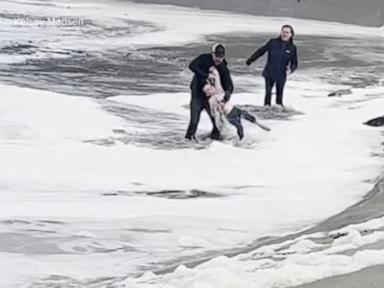
At least 39 people died when an overloaded wooden boat capsized off Senegal's northwest coast, turning an open-water crossing toward Spain's Canary Islands into another mass-casualty recovery operation. The vessel went down in rough Atlantic waters near the coastal hub of Saint-Louis, leaving local fishermen, navy patrol units, and Red Cross volunteers to pull bodies from the surf while dozens more remained unaccounted for.
Wire reports treat these sinkings as isolated weather accidents or sudden mechanical failures. They are neither. Every wooden pirogue that breaks apart off the West African coast is the predictable end result of a multi-tiered smuggling economy, shifting European border enforcement, and collapsing local livelihoods along the Senegalese shoreline.
Anatomy of an Open-Ocean Crossing
To understand why 39 people died within sight of the northwest coast, look first at the vessel itself. Smugglers operating out of coastal towns like Mbour, Joal, and Saint-Louis rely almost exclusively on traditional wooden pirogues.
These boats were designed for artisanal coastal fishing, not deep-ocean transit. Built from planks of local timber and sealed with basic caulking, a standard 20-meter pirogue carries a crew of ten or fifteen fishermen on day trips. Smuggling syndicates pack between 100 and 200 passengers onto the exact same hull.
The physics are unforgiving.
When two hundred people sit shoulder-to-shoulder on open wooden benches, the boat's center of gravity rises dangerously high, while its freeboard—the distance between the waterline and the upper edge of the hull—drops to mere inches. Outfitted with two or three standard outboard motors bolted to a transom never engineered for sustained oceanic torque, these boats push into the open Atlantic with minimal fuel reserves, handheld GPS units, and zero maritime safety gear.
A single cross-swell shifts the human cargo to one side. Water pours over the gunwale. Within seconds, the weight of the trapped water drags the timber hull beneath the surface, giving passengers—most of whom cannot swim and wear heavy winter clothing to survive freezing Atlantic nights—no chance of reaching shore.
Why Smugglers Push North Toward Saint-Louis
Geographic location matters here. Saint-Louis sits at the mouth of the Senegal River near the Mauritanian border, making it the northernmost major departure hub in the country.
When enforcement tightens around Dakar or the southern Petite-Côte, departure networks shift north to shave distance off the brutal 1,500-kilometer journey to El Hierro or Tenerife. Yet the waters off Saint-Louis carry their own lethal hazards. Where the Senegal River meets the Atlantic Ocean, shifting sandbars create the notorious Langue de Barbarie—a narrow, volatile strip of sand where river currents collide with heavy ocean surf.
Even experienced local captains lose vessels crossing that bar. When a smuggling syndicate launches an overloaded pirogue at night to evade coastal radar and Senegalese Navy patrols, they navigate treacherous shoals in pitch darkness without running lights. If an engine stalls in the surf zone, the boat broaches sideways and rolls immediately.
The Economics Pushing Boats Into the Water
European policymakers frequently frame West African migration as a law enforcement problem that can be solved with patrol boats and surveillance drones. On the docks of Saint-Louis and Kayar, the math looks entirely different.
For generations, coastal communities in Senegal relied on small-scale fishing to sustain entire extended families. Over the past two decades, industrial trawlers—many operating under foreign joint ventures or flags of convenience—have stripped the continental shelf of sardinella and other staple species. Local pirogue captains now burn twice as much fuel to return with half the catch.
Smuggling networks stepped directly into that economic vacuum.
A seasoned captain who can no longer turn a profit netting fish faces a stark financial calculation. A single successful run to the Canary Islands generates tens of thousands of dollars in passenger fees, with individual migrants paying anywhere from $600 to over $1,000 for a spot on the benches. While smugglers pocket the bulk of the revenue, the boat owners and navigators earn more in one seven-day crossing than they would in two years of legitimate fishing.
The Enforcement Trap and Longer Routes
Whenever border patrol agreements tighten surveillance along one stretch of coast, human traffic does not stop. It simply moves further out to sea.
Over the past several years, joint maritime patrols involving Spanish Civil Guard units, Frontex intelligence sharing, and Senegalese naval vessels have intercepted hundreds of boats close to shore. In response, smuggling coordinators stopped hugging the coastline of Mauritania and Western Sahara—a route that previously allowed distressed boats to beach themselves if engines failed or storms hit.
Instead, captains now steer wide into the deep Atlantic, arcing hundreds of kilometers west of the African mainland to bypass coastal patrol zones before turning north toward the Canaries.
That tactical shift explains why casualty numbers have spiked even when overall departure figures fluctuate. Out in the deep Atlantic, there are no fishing fleets to spot a drifting hull, no cell phone signals to call for rescue, and no shorelines within reach when fuel runs dry. When a boat capsizes near Saint-Louis, bodies wash ashore and make international headlines; when one goes down 300 kilometers offshore, it disappears without a trace.
What Happens After the Recovery
In the immediate aftermath of a disaster like the Saint-Louis sinking, the response follows a rigid, familiar script. Local authorities deploy naval vessels and fire brigade divers to recover bodies. Prosecutors announce investigations into human trafficking rings. Red Cross teams set up temporary triage tents on the beach to treat survivors for severe dehydration, hypothermia, and chemical burns caused by spilled gasoline mixing with saltwater in the bilge.
Then the news cycle moves on, while the underlying machinery remains untouched.
As long as industrial overfishing hollows out coastal economies, youth unemployment remains entrenched across inland regions like Tambacounda and Kolda, and legal visa pathways stay locked shut for working-class West Africans, the departure beaches will never stay empty for long. Another wooden hull is already being caulked on a quiet stretch of sand north of Dakar, waiting for the next moonless night and another hundred passengers willing to bet their lives against the Atlantic.