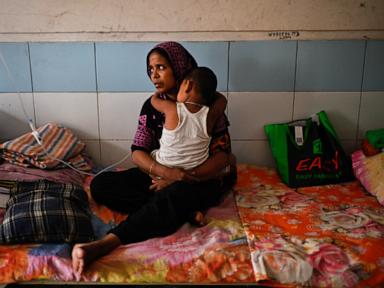
The death toll from a devastating measles surge in Bangladesh has climbed toward one thousand children, exposing a catastrophic breakdown in public health infrastructure and herd immunity. Since mid-March, more than 160,000 suspected cases and thousands of laboratory-confirmed infections have flooded pediatric wards across the South Asian nation. Hospitals in Dhaka and surrounding districts are confronting an influx of critically ill infants whose immune systems are buckling under the combined weight of the virus, severe respiratory distress, and underlying malnutrition.
For decades, international health bodies pointed to Bangladesh as a public health success story. Routine immunization programs steadily beat back vaccine-preventable diseases, keeping measles numbers low and localized. Between 2021 and 2025, annual cases hovered at historic lows, creating a dangerous sense of permanence. Public health authorities grew complacent, assuming the baseline coverage achieved in previous decades would indefinitely shield the population.
That illusion shattered when a collision of political upheaval and systemic administrative inertia disrupted scheduled immunization campaigns. When mass anti-government protests and civil unrest toppled former Prime Minister Sheikh Hasina in 2024, planned nationwide measles vaccination drives stalled entirely. Subsequent political instability and worker strikes through 2025 further delayed catch-up campaigns.
The math of measles is unforgiving. As an airborne contagion boasting an exceptionally high reproduction number, the virus requires population-wide immunity thresholds of roughly 95 percent to halt transmission entirely. When routine coverage metrics slipped—with first-dose and second-dose metrics dropping significantly over a multi-year window—an estimated cohort of millions of children grew up completely unprotected.
When the virus finally tore through densely populated urban neighborhoods in March, it encountered an entirely open field.
In the crowded wards of the Bangladesh Shishu Hospital and Institute, the clinical reality of this policy failure plays out hourly. Pediatric specialists note that young patients rarely present with uncomplicated infections. Instead, they arrive with secondary viral or bacterial pneumonia, severe dehydration from diarrhea, and acute encephalitis. Malnutrition acts as an accelerant, stripping vulnerable bodies of the metabolic reserves required to fight a high fever and widespread skin and mucosal lesions.
While the Ministry of Health, alongside international partners like the World Health Organization and UNICEF, launched emergency vaccination drives to administer millions of doses, operational hurdles remain immense. Contact tracing is difficult in densely packed urban slums, and vaccine hesitancy—fueled by misinformation and fear during periods of civil disruption—has complicated outreach efforts.
The crisis in Bangladesh serves as a brutal reminder of how quickly epidemiological gains can evaporate. Herd immunity is not a permanent shield; it is a fragile, actively maintained ecosystem. When political crises displace public health execution, the cost is measured not in abstract statistics, but in empty shoes left behind in hospital corridors.


