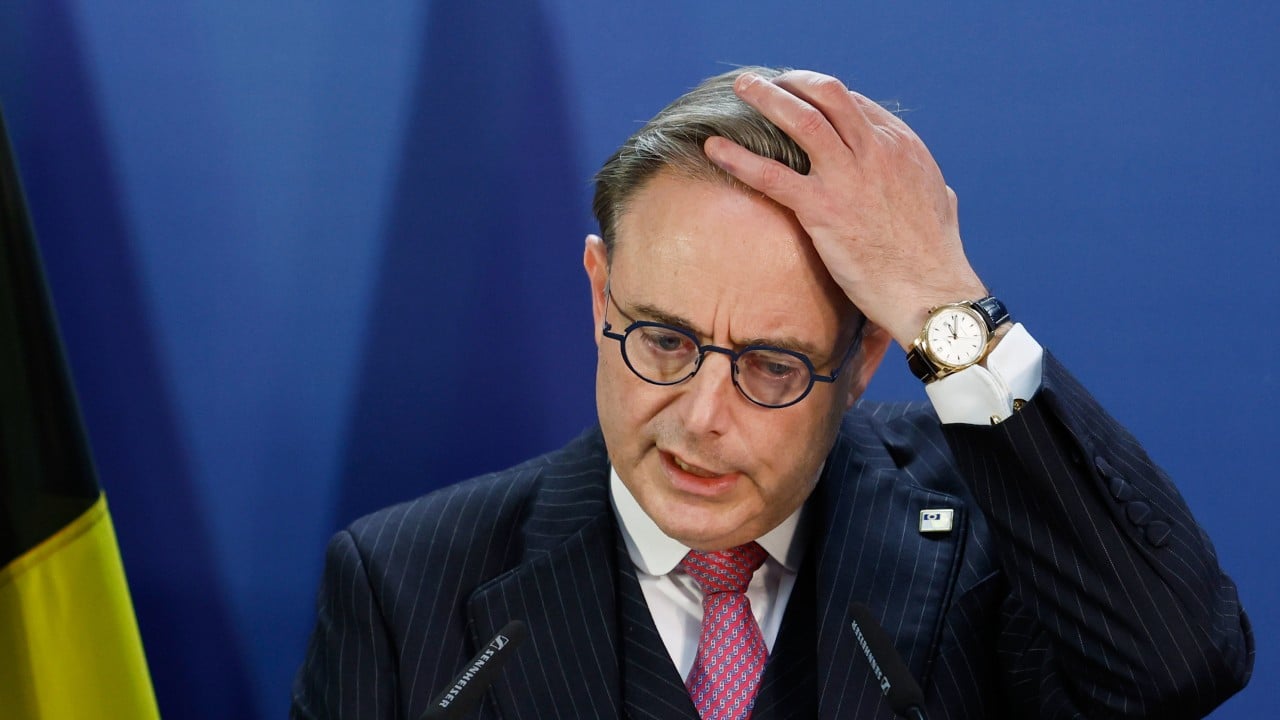
The Belgian federal government faces imminent collapse after coalition negotiators failed to agree on a multi-billion-euro deficit reduction package, leaving the country paralyzed between European Union fiscal mandates and deep ideological divides among its governing parties. According to reporting by Reuters and Politico Europe, marathon overnight talks between Flemish nationalists, francophone liberals, and centrist factions broke down over how to distribute tax increases and spending cuts without triggering a revolt from labor unions or alienating core voters. Without a credible budget draft submitted to the European Commission, Belgium risks formal excessive deficit procedures, credit rating downgrades, and a return to the prolonged caretaker governments that have defined its recent political history.
Brussels knows this routine too well. Every few years, the arithmetic of Belgium's complex federal system collides with the cold reality of sovereign debt, and the resulting friction grinds the machinery of state to a halt. Surface-level coverage treats this breakdown as a sudden failure of political will among bickering party leaders. That reading misses the structural trap built into the Belgian economy. You might also find this related coverage insightful: Why Russia Is Exploiting Polish Political Turmoil Right Now.
The immediate crisis stems from a simple, brutal set of numbers. Belgium carries one of the highest public debt-to-GDP ratios in the Eurozone, hovering well above 100 percent, alongside a structural budget deficit that breaches the European Union's three percent threshold. Under the EU's reinstated fiscal rules, member states with excessive deficits must present multi-year adjustment paths to bring their finances back into line. For Belgium, that requires finding tens of billions of euros in structural savings and new revenue over the coming legislative term.
Coalition negotiators walked into the budget room knowing the target, yet each party arrived with a mutually exclusive list of untouchables. As reported in recent coverage by NPR, the results are widespread.
The Structural Trap Behind the Deadlock
To understand why Belgian budget talks collapse with such regularity, you have to look at the country's unique economic stabilizers and how they interact with regional politics. Belgium is one of the few Western economies with automatic wage indexation. When inflation rises, salaries and social benefits automatically increase to match the cost of living.
Economists and international institutions like the International Monetary Fund have long noted the double-edged nature of this system. During periods of high inflation, automatic indexation protects household purchasing power and prevents a collapse in domestic consumption. At the same time, it rapidly inflates the government's own wage bill and pension obligations while eroding the competitiveness of Belgian exporters compared to neighboring Germany, France, and the Netherlands.
When negotiators sit down to cut the deficit, they are fighting against an automated spending machine. Before a single minister proposes a new program, baseline expenditures have already climbed.
This fiscal pressure collides directly with Belgium's linguistic and economic divide. The northern region of Flanders, wealthier and more export-oriented, generally favors parties pushing for labor market deregulation, pension reform, and strict limits on unemployment benefits. The southern region of Wallonia and the Brussels-Capital Region, facing higher unemployment rates and greater reliance on public sector jobs and social transfers, lean toward parties that defend welfare protections and advocate for higher taxes on capital and corporate profits.
A Belgian federal coalition is never just a political alliance. It is a fragile treaty between two distinct economic realities.
The Tax Burden Ceiling
Raising revenue sounds like an obvious escape valve until you examine Belgium's existing tax structure. According to data from the Organisation for Economic Co-operation and Development (OECD), Belgium consistently ranks among the highest-taxed nations in the developed world, particularly regarding the tax wedge on labor—the difference between what an employer pays to hire a worker and what that worker actually takes home.
Center-right parties in the negotiations argued fiercely that raising income taxes or social security contributions further would suffocate job creation and drive skilled professionals across the border. Their preferred path involved capping the duration of unemployment benefits—Belgium is famously the only EU country where unemployment benefits are technically unlimited in time, though they decrease gradually—and raising the effective retirement age.
Center-left and Christian Democratic coalition partners countered that targeting unemployment benefits and pensions would push hundreds of thousands of people into poverty while leaving vast pools of untaxed wealth untouched. They demanded a comprehensive capital gains tax, higher levies on securities accounts, and stricter crackdowns on corporate tax loopholes.
Every euro proposed on the revenue side triggered a veto from the right. Every euro proposed on the spending side triggered a veto from the left.
Why European Fiscal Rules Changed the Game
In previous decades, Belgian politicians could often paper over these differences with creative accounting, one-off asset sales, or optimistic growth projections. Those escape hatches have largely welded shut.
Following the suspension of EU budget rules during the pandemic and the subsequent energy crisis, Brussels reinstated its Stability and Growth Pact framework with tighter enforcement mechanisms for high-debt countries. Under the revised rules, the European Commission evaluates member states based on a net expenditure path. Governments can no longer rely on temporary windfalls to mask underlying structural deficits.
Financial markets are watching just as closely as European bureaucrats. Rating agencies such as Moody's and S&P Global Ratings have repeatedly warned that political gridlock in Belgium threatens its creditworthiness. A downgrade increases borrowing costs on the country's massive debt pile, which in turn consumes more of the annual budget in interest payments, leaving even less money for healthcare, infrastructure, and defense.
Defense spending itself has become an acute pressure point. As a founding member of NATO—and the host of its headquarters—Belgium has historically lagged near the bottom of the alliance in military expenditure as a share of GDP. International pressure to reach the two percent spending target adds billions of euros in new financial commitments at the exact moment the treasury is trying to slash outlays.
The Myth of the Harmless Caretaker Government
Whenever Belgian coalition talks collapse, outside observers often point to the country's past world-record stretches without a fully empowered government—541 days in 2010–2011 and nearly 500 days in 2019–2020—as proof that Belgium runs fine on autopilot.
That assumption is dangerously outdated.
During a caretaker government period, ministers are restricted to handling "current affairs." They can pay civil servants, keep hospitals open, and execute previously approved budgets. What they cannot do is pass major structural reforms, approve new multi-year fiscal frameworks, or commit Belgium to ambitious European investment initiatives.
In a low-interest-rate environment with suspended EU deficit rules, running on autopilot was manageable. In a high-debt environment with strict European enforcement, a caretaker government means automatic provisional twelfths—a mechanism where the state is legally restricted to spending one-twelfth of the previous year's budget each month.
Provisional twelfths freeze public investment. Infrastructure projects stall. Defense procurement contracts sit unsigned. Worse, the structural deficit continues to widen unchecked because automatic indexation keeps pushing baseline costs higher while the government lacks the parliamentary mandate to enact offsetting savings.
The Union Factor and Social Backlash
Even if party leaders manage to cobble together a last-minute compromise behind closed doors, the deal faces an immediate test on the streets. Belgium has one of the highest rates of union membership in Europe, and its trade unions—divided along socialist, Christian, and liberal lines—possess the organizational muscle to bring public transport, ports, and industrial zones to a standstill.
Throughout the negotiations, union leaders made clear that any unilateral tampering with automatic wage indexation or drastic cuts to pension calculations would be met with general strikes. For parties with strong ties to the labor movement, signing off on an austerity-heavy budget is an act of political self-harm ahead of municipal and regional elections.
Conversely, employers' federations warned that failure to rein in labor costs and public spending would accelerate deindustrialization, pointing to factory closures and declining foreign direct investment in Belgium's chemical and manufacturing sectors.
The Asymmetric Risk for Coalition Partners
The breakdown in talks also reflects a brutal game of political chicken among the party leaders themselves. In Belgium's fragmented multiparty system, where no single party ever wins more than roughly 15 to 20 percent of the national vote, governing requires uncomfortable marriages between ideological rivals.
When a budget deal collapses, the immediate instinct of every party is to blame its partners for intransigence.
Flemish nationalists and liberals calculate that standing firm against new wealth taxes plays well with their core electorate of entrepreneurs, homeowners, and middle-class taxpayers who feel squeezed by the state. If the government falls and snap elections are called, they bet they can campaign as the only responsible stewards defending working taxpayers from an insatiable public sector.
Francophone socialists and centrists make the opposite calculation. Defending purchasing power, healthcare funding, and social security against what they frame as brutal neoliberal cuts cements their support in Wallonia and Brussels. For them, walking away from an unbalanced austerity package is preferable to presiding over policies that alienate their base.
The flaw in both strategies is that snap elections rarely break the deadlock. Belgium's electoral system—proportional representation split across linguistic boundaries—almost guarantees that the same parties will have to sit back down at the exact same negotiating table after the votes are counted, only with a larger budget hole to fill and less time to do it.
What Actually Happens Next
With the budget deadline breached, the institutional choreography in Brussels follows a predictable, tense sequence. Party leaders enter bilateral consultations with the King, who acts as a constitutional mediator in federal crises, to determine whether a revised mandate can salvage the coalition or if a new formateur must be appointed to test alternative combinations.
Any viable path forward requires breaking at least one major political taboo.
Option one is a grand fiscal bargain that pairs genuine structural reforms to the labor market and pension system with a broad-based tax shift—lowering levies on wages while introducing a clear, predictable tax on capital gains and tightening corporate deductions. This is the solution most economists favor, yet it requires every party in the room to swallow a policy they explicitly campaigned against.
Option two is a series of painful, across-the-board spending freezes combined with targeted excise tax hikes on consumption, energy, or financial transactions. This approach avoids ideological showdowns over wealth taxes or unemployment limits, though it tends to drag down economic growth and hit lower-income households disproportionately.
Option three is a prolonged institutional crisis that forces the European Commission to step in with formal sanctions, turning external pressure from Brussels into the political cover Belgian leaders need to pass unpopular measures they could not agree to on their own.
History suggests Belgian politicians rarely make hard fiscal choices until external pressure removes every alternative. Until bond yields spike or European regulators issue formal ultimatums, the parties at the negotiating table have every incentive to hold their ground and let the clock run down.


