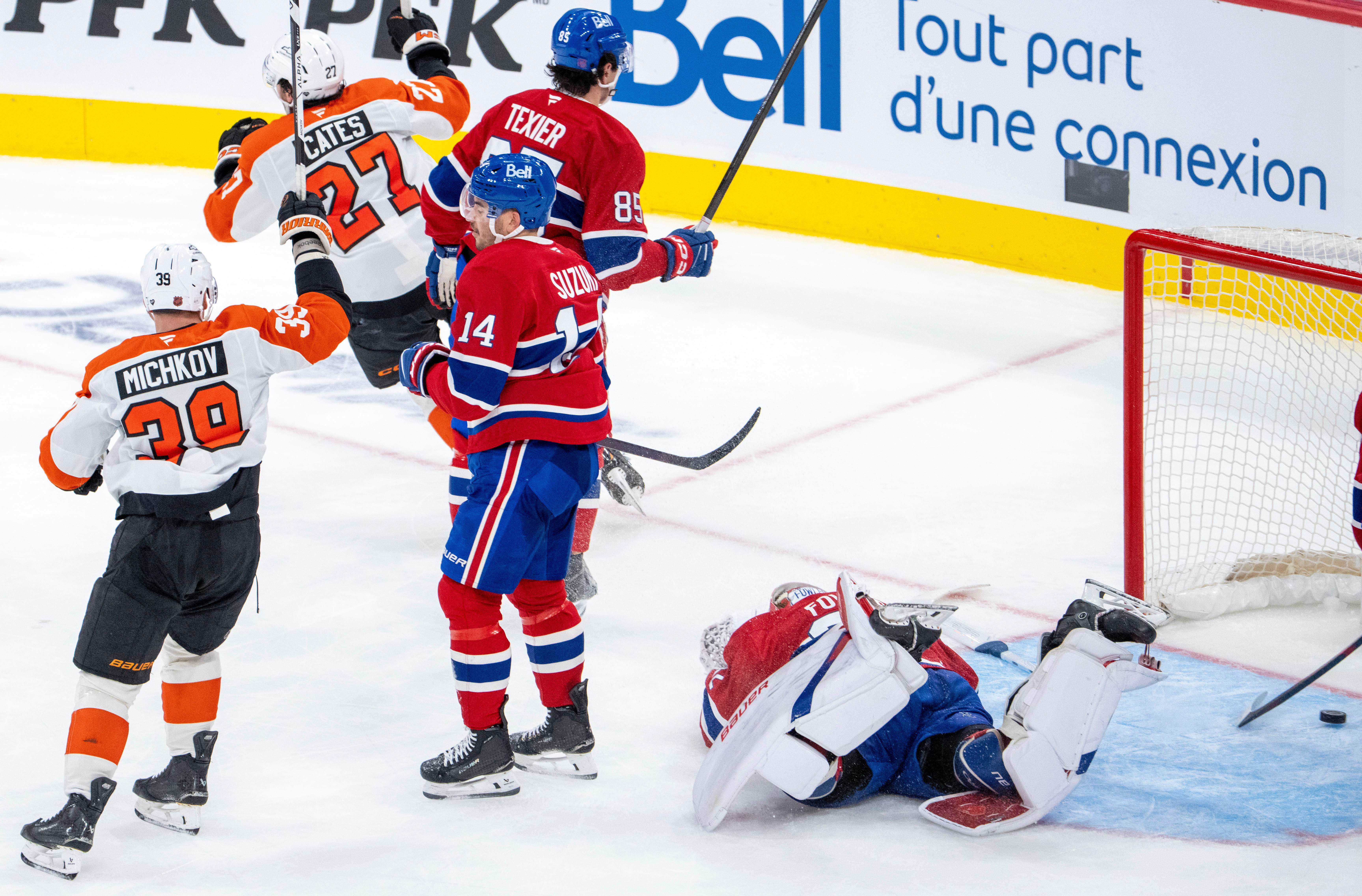
The Montreal Canadiens lost to the Philadelphia Flyers at the Bell Centre because their aggressive, high-event style collapses under structured forechecking pressure, turning what used to be the NHL’s most intimidating building into a tactical trap for the home team. When the Flyers walked out of Montreal with an upset victory, they did not steal two points through luck or hot goaltending alone. They exposed a structural flaw that has plagued the Canadiens on home ice for months.
For decades, playing in Montreal meant surviving an opening ten-minute storm fueled by twenty-one thousand screaming fans and an electric atmosphere. Visiting teams expected to weather the chaos and hope to escape the first period tied. Today, that dynamic has flipped entirely. Opposing coaches now view the Bell Centre energy as a weapon they can turn against the Canadiens, baiting a young, impatient roster into overcommitting in the offensive zone before striking on the counterattack.
The Anatomy of a Tactical Trap
Philadelphia arrived in Montreal with a clear, unglamorous blueprint designed to suffocate transition play. Rather than trading rush chances with a Canadiens lineup built for speed, the Flyers clogged the neutral zone with a disciplined 1-2-2 forecheck and forced Montreal’s defensemen to make difficult cross-ice passes under duress.
It worked almost immediately. Every time the Canadiens tried to stretch the ice, a Philadelphia forward stepped into the passing lane, turning sloppy puck management into odd-man rushes going the other way.
The Bell Centre crowd demands action. You can feel the collective impatience ripple down from the upper bowl whenever the Canadiens hold the puck behind their own net for more than three seconds without advancing it. Young players hear that hum and feel obligated to force plays that simply are not there. Against a veteran-minded system like Philadelphia’s, forcing low-percentage passes through the middle of the ice is hockey suicide.
Instead of chipping pucks deep and grinding down the Flyers' defense below the goal line, Montreal repeatedly tried to beat layers of defenders off the dribble at the offensive blue line. Those turnovers did not just kill offensive momentum; they left Montreal’s trailing defensemen flat-footed against waves of Philadelphia attackers.
Why Home Ice Disadvantage Happens in Modern Hockey
We tend to think of home ice advantage as an automatic boost, a built-in cushion worth an extra five to ten points in the standings over an eighty-two-game grind. In reality, home ice is a double-edged sword for rebuilding or transitional rosters.
When a team plays on the road, the tactical mandate is simple. Keep things quiet, dump the puck in, change lines safely, and frustrate the home crowd. Nobody expects a road team to dazzle anyone with high-risk east-west passing plays. That simplicity breeds defensive structure.
At home, especially in a hockey-obsessed market like Montreal, the psychological pressure shifts dramatically. Players want to put on a show. They hold onto the puck an extra half-second looking for the highlight-reel seam pass, pinch aggressively at the offensive blue line to keep a shift alive, and abandon their defensive responsibilities to join the rush.
Line-matching advantages also vanish when the home team cannot establish clean zone entries. On paper, having the last change allows the Canadiens' coaching staff to dictate matchups, getting their top offensive units away from Philadelphia’s premier shutdown pairs. Yet last change means nothing when you spend forty minutes chasing the puck in your own end because you lost the battle at the blue lines. Philadelphia dictated the terms of engagement by keeping shifts short, hammering Montreal’s puck carriers along the boards, and refusing to let the Canadiens set up their cycle game.
Overcommitted Defensemen and the Slot Breakdown
Look closely at how Philadelphia generated its highest-danger scoring chances, and a glaring pattern emerges. The Flyers did not beat Montreal from the perimeter; they feasted directly between the faceoff dots.
Modern defensive systems rely heavily on layered box-plus-one coverage around the net front. To make that work, the weak-side winger must collapse low to support the defensemen when the puck moves below the goal line, while the center tracks high threats rotating into the slot. Against Philadelphia, Montreal’s coverage fractured repeatedly because their defensemen chased puck carriers too far into the corners.
Consider a standard sequence in the defensive zone. A Flyers forward carries the puck behind the net, drawing both a Montreal defenseman and the recovering center toward the same patch of ice. With two defenders occupying the same space behind the goal line, the area directly in front of the crease empties out. A simple rim pass or short curl out from the corner finds an unmarked Philadelphia trailer drifting into the high slot with time to pick a corner.
Goaltending always takes the heat in a hockey-mad city after a frustrating home loss, and Montreal’s netminders certainly wished they had a couple of those shots back. Blaming the goalie, however, misses the forest for the trees. No NHL goaltender can post sustainable save percentages when opponents are permitted to walk uninterrupted into the inner slot with their heads up.
The Special Teams Momentum Swing
Special teams often decide games between evenly matched rosters, and the contrast between how Philadelphia and Montreal handled their power-play opportunities told the story of the night.
Montreal’s power play looked static, relying almost entirely on perimeter puck movement that allowed Philadelphia’s penalty killers to stay comfortably inside their diamond formation. Without net-front traffic or rapid cross-seam movement to force the penalty kill out of position, the Flyers' goaltender saw every shot cleanly from release to arrival. Worse still, slow puck movement at the point allowed Philadelphia’s aggressive forwards to jump routes and generate shorthanded pressure, draining the remaining life out of the building.
Philadelphia took the exact opposite approach with the man advantage. Rather than waiting for the perfect backdoor tap-in, the Flyers funnelled pucks to the net immediately, crashing the blue paint with two forwards to create chaos and hunt rebounds. It was ugly, blue-collar hockey, and it shattered Montreal’s penalty-killing structure. When a team is already struggling to win battles on home ice, watching an opponent score gritty, second-effort goals on the power play feels like a gut punch.
The Psychological Weight of the Bell Centre
Veterans who have worn the Canadiens sweater often talk about how heavy the jersey can feel when things start sliding sideways at home. Every missed pass draws an audible groan. Every failed clearing attempt triggers a wave of nervous tension that travels straight from the stands onto the bench.
Opposing teams know this. When Philadelphia survived the opening push and scored first, you could practically see the Flyers' bench exhale. They knew they no longer had to take risks. All they had to do was sit back in their neutral-zone shell, protect the middle of the ice, and let Montreal’s growing frustration do the heavy lifting.
A hypothetical scenario illustrates how quickly this unravels a game plan. Imagine a second-line winger stepping over the offensive blue line down by a goal midway through the second period. The smart, disciplined play is to place the puck softly into the far corner, initiate a forecheck, and force the tired opposing defensemen to turn and retrieve it. Instead, feeling the urgency of a restless crowd, the winger tries to toe-drag around a defender with a six-foot-four wingspan. The stick check knocks the puck loose, springing a three-on-two counterattack while the winger is caught leaning forward. Within four seconds, the puck is in the back of the net, and the home team is suddenly chasing a two-goal deficit.
That exact sequence played out in variations throughout the night. Philadelphia did not out-skill Montreal; they simply waited for Montreal to beat itself.
What the Flyers Got Right
Giving Philadelphia full credit requires looking past the upset label. While the standings might suggest Montreal held the advantage on paper, the Flyers played a brand of hockey perfectly tailored to neutralize speed-oriented teams.
Their defensive pairs maintained tight gap control through the neutral zone, stepping up at the red line to deny Montreal’s forwards the runway they needed to build momentum. Whenever the Canadiens chipped the puck past the first layer of defense, Philadelphia’s weak-side defenseman retrieved it cleanly and executed quick, five-foot outlet passes to break the forecheck before Montreal’s second wave could arrive.
More importantly, Philadelphia won the battle of attrition along the walls. NHL games are rarely won in open ice once the calendar turns toward the winter grind; they are won in the dirty areas two feet off the boards. The Flyers leaned on Montreal’s smaller, skill-heavy forwards every time a puck went into the corner, separating players from the puck with heavy body positioning rather than reaching with sticks. By the third period, Montreal’s top lines looked visibly worn down, hesitant to absorb another hit just to extend an offensive-zone possession.
The Broader Warning Signs for Montreal
One bad loss to a hard-working opponent is an aberration over a long season. A recurring pattern of losing winnable games in your own building is a systemic warning sign that coaching staffs cannot ignore.
If the Canadiens want to turn the Bell Centre back into a genuine fortress, they have to decouple their tactical execution from the emotional temperature of the arena. Playing fast does not mean playing frantic. True speed in the NHL comes from moving the puck quickly to open teammates, not skating full tilt into a wall of four defenders at the offensive blue line.
The fix starts with puck management in the neutral zone and a willingness to embrace boring hockey when the game demands it. Dump the puck in when the blue line is crowded. Take the simple pass off the glass to clear the defensive zone rather than threading a backhand pass through the middle of the ice. Accept that winning at home sometimes requires grinding out a 2-1 victory built on blocked shots and wall battles rather than skating away with a 6-5 track meet.
Until Montreal learns how to control the pace of play in its own building, visiting teams will keep arriving at the Bell Centre with the exact same game plan—weather the early noise, lock down the neutral zone, and wait for the home team to hand them the game.