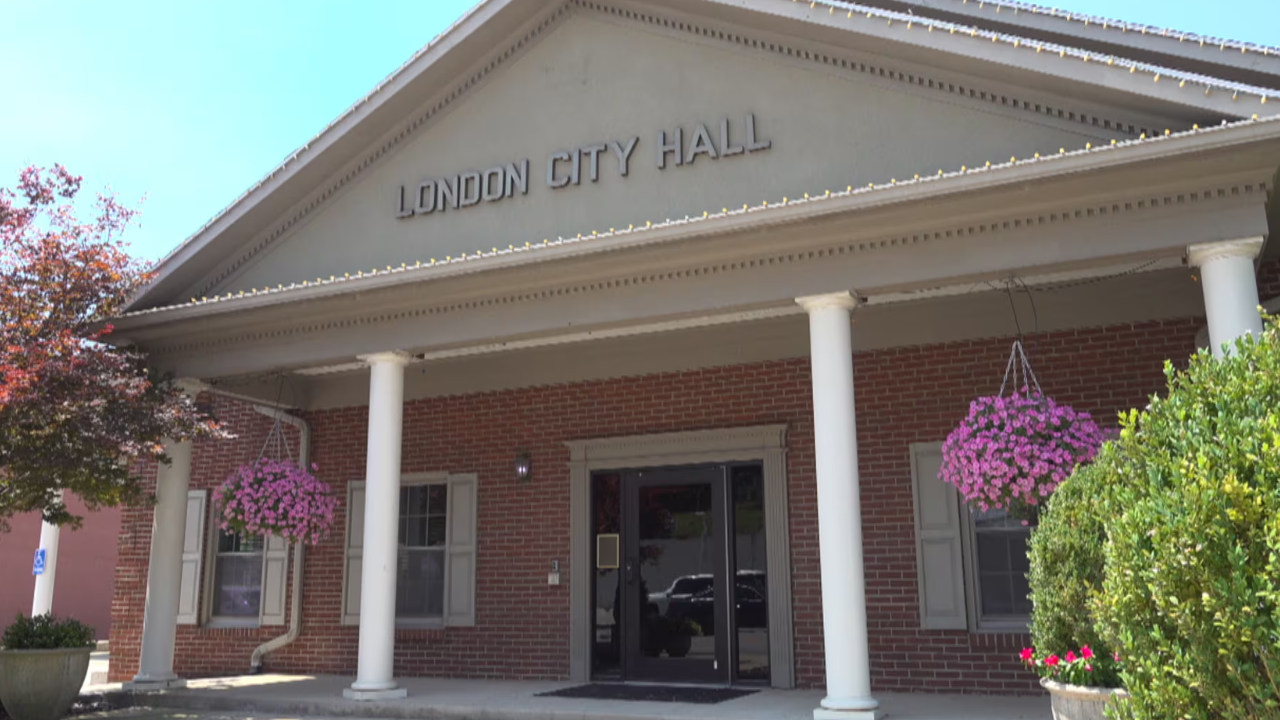
A Kentucky circuit court judge has blocked East Kentucky Power Cooperative (EKPC) from seizing private land through eminent domain for its proposed Big Hill Transmission Line, halting a critical infrastructure corridor and sending the high-stakes property rights battle to the Kentucky Court of Appeals. The ruling strips the utility of immediate condemnation authority across contested parcels in Madison and Jackson counties, forcing a delay on a project EKPC argues is mandatory for regional grid reliability.
For decades, rural electric cooperatives operated with near-total deference when claiming public necessity for high-voltage corridors. That era is ending. Property owners, armed with better legal representation and growing skepticism toward utility load forecasts, are dismantling the traditional playbook that allows power companies to carve up farmland and forested ridges with minimal pushback.
How the Big Hill Eminent Domain Bid Unraveled
The Big Hill Transmission Line was designed to bridge a perceived reliability gap in central and eastern Kentucky. Utilities build these 69-kilovolt and 138-kilovolt arteries to loop radial feeds—single-line power sources that leave entire communities dark when a tree falls on a wire. On paper, creating a looped system makes engineering sense. In practice, drawing a straight line across multi-generational family farms triggers fierce resistance.
EKPC pursued voluntary easements first, the standard opening move in transmission development. Landowners receive a one-time payment based on appraised fair market value for a strip of cleared right-of-way, usually 100 feet wide. When holdouts refused to sign, the cooperative turned to eminent domain, the statutory power allowing utilities to take private property for public use upon paying just compensation.
The circuit court judge looked past the utility's standard engineering affidavits and focused on the statutory threshold for necessity and route selection. Under Kentucky law, a condemning authority cannot act arbitrarily or capriciously. When landowners demonstrated that EKPC failed to adequately evaluate less intrusive routing alternatives—or leaned too heavily on cost-saving straight lines over existing rights-of-way—the court pulled the emergency brake.
The Collision Between Grid Reliability and Rural Property Rights
Utility executives view transmission lines as blood vessels. Without new capacity, voltage drops during peak winter heating demands, risking rolling blackouts across rural distribution networks. East Kentucky Power Cooperative supplies wholesale electricity to 16 member-owned distribution cooperatives serving over a million Kentuckians. When EKPC planners model winter peak loads, they see aging substations and single-point vulnerabilities that a Big Hill connection is meant to cure.
Landowners see something entirely different. They see permanent scars across agricultural land, diminished property values that appraisers rarely capture in full, and perpetual access rights allowing utility crews to drive heavy machinery across their pastures.
The friction boils down to how public necessity is defined in the modern energy economy. Historically, courts rubber-stamped utility determinations of necessity. If a licensed engineer testified that a line was needed, the judge signed the condemnation order, leaving only the dollar amount to be settled by commissioners or a jury.
That deference is eroding because the underlying math of utility planning has grown more complex and more contested. Landowners now routinely hire independent transmission consultants to scrutinize utility filings before the Kentucky Public Service Commission (PSC). If a Certificate of Public Convenience and Necessity (CPCN) is granted based on broad system-wide projections, local circuit judges are increasingly willing to examine whether the specific taking of a specific farm actually meets the strict legal standard of necessity.
The Hidden Economics of Right-of-Way Acquisition
Money drives route selection far more than utilities admit in public hearings. Building a transmission line along an existing highway corridor or upgrading an older line in place costs significantly more per mile than cutting across untouched private timberland.
- Clearing virgin timber requires heavy forestry mulchers and crews, which is relatively cheap compared to working around live traffic, buried fiber-optic cables, and existing distribution poles along state roads.
- Angle structures—the heavy steel poles required every time a transmission line turns a corner to follow a property boundary—cost three to five times more than standard tangent poles built in a straight line.
- Litigation reserves are already baked into capital budgets. Utilities calculate that fighting ten holdout landowners in court is often cheaper than rerouting three miles of 138-kV line around a ridge.
When a judge blocks eminent domain at the circuit level, that entire financial calculation flips. Delay costs accumulate rapidly. Engineering contracts expire, steel pole fabrication slots are lost, and interest rates on borrowed capital eat into the cooperative's margins—costs that eventually flow directly back to cooperative members through higher monthly electric bills.
What Happens in the Kentucky Court of Appeals
The appeal shifts the battlefield from fact-finding on the ground to strict statutory interpretation. The Kentucky Court of Appeals will not re-try the engineering merits of the Big Hill Transmission Line from scratch. Instead, appellate judges will examine whether the lower court abused its discretion or misapplied Kentucky's Eminent Domain Act.
Two critical legal questions will dominate the appellate briefs. First, to what extent does a CPCN from the Public Service Commission preempt a circuit court's inquiry into necessity? Utilities argue that once state regulators approve a project's need, local judges have no business second-guessing the route. Landowner attorneys counter that regulatory approval of a broad project does not grant a blank check to seize any specific parcel without proving the route itself was chosen without abuse of discretion.
Second, the appellate court will scrutinize the burden of proof. In Kentucky, once a utility establishes a prima facie case of public use, the burden shifts to the landowner to prove fraud, bad faith, or abuse of discretion. That is a notoriously high bar to clear. If the circuit judge lowered that bar—requiring EKPC to prove its route was the best possible option rather than merely a reasonable one—the appellate court could reverse the decision and hand condemnation power back to the cooperative.
The Broader Threat to Regional Grid Expansion
The Big Hill standoff is not an isolated local squabble. Across the United States, transmission development has hit a structural wall. Federal regulators at the Federal Energy Regulatory Commission (FERC) and regional grid operators like PJM Interconnection—which manages the high-voltage grid across Kentucky and 12 other states—warn that aging infrastructure and shifting generation mixes require thousands of miles of new high-voltage lines.
Yet every major project faces the exact same bottleneck. Local communities bear 100 percent of the visual, environmental, and property-value impacts of high-voltage corridors, while the reliability benefits are spread thinly across an entire multi-state region.
Cooperatives face an even tougher political dynamic than investor-owned utilities. EKPC is owned by the very distribution cooperatives whose members live along the Big Hill route. When a cooperative sues its own ratepaying neighbors to take their land, the internal governance friction becomes intense. Local board members face angry constituents at grocery stores and county fairs, creating immense pressure to settle rather than scorch the earth in appellate court.
Why Alternative Technologies Rarely Stop High-Voltage Projects
Critics of new transmission lines frequently ask why utilities cannot simply deploy battery storage, local solar microgrids, or advanced conductors instead of building new towers. These are known in the industry as non-wires alternatives.
While advanced conductors—lines made with composite cores that carry twice the current of traditional steel-reinforced aluminum cables—can upgrade existing corridors without widening rights-of-way, they only work if an existing line already runs between the right substations. Battery storage can shave peak loads for four hours, but it cannot sustain a rural county through a five-day winter ice storm when regional generation is strained. For utilities tasked with keeping the lights on during extreme weather events, physical steel and wire remain the foundational backstop.
The Strategic Reality for Landowners and Utilities
If the Kentucky Court of Appeals upholds the circuit court's block, EKPC will be forced back to the drawing board. That means either paying dramatically higher prices to secure voluntary easements from holdouts, redesigning the route to follow existing road corridors at massive expense, or scrapping segments of the Big Hill project altogether.
If the appellate court reverses the ruling, bulldozers will eventually clear the disputed right-of-way, though the delay will have already added millions to the final price tag. Even in victory, the cooperative will have burned through years of community goodwill that takes decades to rebuild.
For landowners watching from neighboring counties, the lesson from Big Hill is unmistakable. Eminent domain is no longer an automatic rubber stamp, and utilities that treat route selection as an engineering spreadsheet exercise rather than a rigorous legal and community negotiation will find their projects dead in the water before a single shovel hits the dirt.