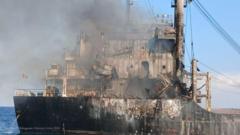
Targeted Strikes Disrupt Maritime Trade Corridors
Ten sailors are dead following a sudden escalation in missile and drone strikes against civilian cargo vessels traversing the Black Sea. The casualties mark a dangerous shift in regional conflict dynamics, moving away from military-on-military engagements toward direct disruption of commercial shipping lanes. Merchant ships carrying grain, metal, and fuel now face targeted attacks in neutral waters. Insurance underwriters have responded immediately by skyrocketing premiums or canceling coverage entirely, threatening to paralyze a vital artery of global agricultural supply chains.
The economic fallout reaches far beyond the immediate coastline. When commercial crews refuse to sail and insurers pull back, foreign ports dependent on grain shipments face rapid price spikes and severe supply shortages.
Anatomy of a Escalation
Attacks on commercial vessels are rarely accidental. Modern anti-ship missiles and loitering munitions rely on sophisticated targeting platforms, meaning these strikes represent a deliberate policy to enforce an unofficial blockade.
By striking merchant vessels carrying standard commercial cargo, hostile forces achieve several strategic objectives simultaneously:
- Insurance Capital Flight: Forcing maritime insurers to withdraw war-risk coverage, effectively stopping commercial traffic without deploying a physical naval blockade.
- Supply Chain Inflation: Elevating global food and raw material prices, creating economic pressure on importing nations.
- Rerouting Costs: Forcing logistics operators onto longer, significantly more expensive overland routes or indirect maritime detours.
+-------------------------------------------------------------------+
|                     MECHANICS OF MARITIME DISRUPTIONS             |
+-------------------------------------------------------------------+
|                                                                   |
|   [ Direct Missile Strike ]                                       |
|               |                                                   |
|               v                                                   |
|   [ Soaring War-Risk Premiums ]                                   |
|               |                                                   |
|               v                                                   |
|   [ Crew Refusals & Canceled Voyages ]                            |
|               |                                                   |
|               v                                                   |
|   [ Global Grain & Commodity Shortages ]                          |
|                                                                   |
+-------------------------------------------------------------------+
Short-term solutions remain scarce. Navies operating in nearby waters are constrained by international treaties and rules of engagement, leaving merchant crews largely undefended as they transit high-risk zones.
The Broader Impact on Global Markets
Food security relies heavily on the unhindered movement of bulk carriers. Wheat, corn, and sunflower oil exported through regional ports feed hundreds of millions of people across North Africa, the Middle East, and Asia.
When ten workers die on the job in the middle of a trade corridor, the immediate reaction in commodity pits thousands of miles away is swift volatility. Buyers scramble to secure alternative supplies from North or South America, driving up futures contracts and freight rates across the globe.
Key Takeaway: Maritime safety is not merely a regional concern; it is the fundamental foundation of stable global food prices.
Navigational freedom in international waters has long been treated as a guaranteed default. Recent events demonstrate how fragile that assumption actually is when commercial infrastructure becomes a primary target. As long as strikes against civilian traffic continue with impunity, the cost of moving critical goods across international waters will continue to rise.