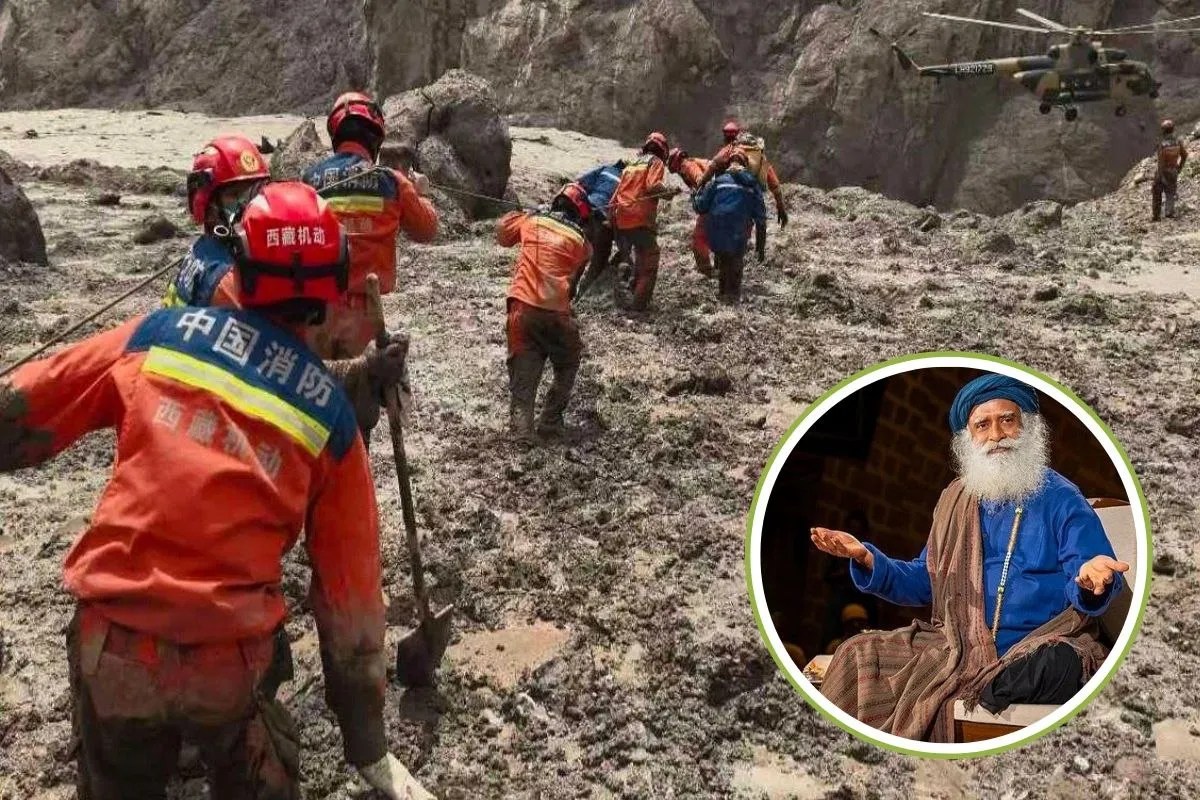
Seventy-seven pilgrims linked to the Isha Foundation's Sacred Walks program vanished near the China-Nepal border following a catastrophic flash flood that obliterated local infrastructure and left communication lines entirely severed. The group, composed of international travelers from nineteen countries including fifty-three individuals of Indian origin, had just completed the arduous Kailash Mansarovar pilgrimage. As they converged on the immigration center in Gyirong on the Tibet side to process their return, a sudden surge of water tore through the valley. Days after the disaster, emergency responders face massive logistical hurdles as blocked mountain passes and collapsed bridges stall rescue operations in the remote border zone.
The mechanics of Himalayan flash floods reveal a terrifying window of vulnerability for travelers. When a glacial collapse or heavy upper-catchment downpour occurs, torrents gather immense kinetic energy in narrow gorges before slamming into low-lying valley checkpoints. Official coordination between Chinese, Nepali, and Indian authorities bogged down immediately due to infrastructure damage, leaving families across multiple continents waiting in agonizing limbo.
The Anatomy of a High-Altitude Disaster
Mountain logistics operate on razor-thin margins. When the group leader last communicated with base coordinators at roughly nine o'clock in the morning, conditions appeared entirely routine. Ten minutes later, contact evaporated. The immigration office in Gyirong, built to handle administrative clearance for cross-border travelers, quickly turned into a trap when the Bhotekoshi river basin and adjacent channels broke their banks.
The demographic footprint of the missing group spans the globe. Registries confirm twenty-two citizens from the United States, twelve from Canada, eleven from Australia, nine from the United Kingdom, and representation spanning nations from Europe to South Africa. Managing a multinational search effort of this scale strains local resources that are already overwhelmed by hundreds of local casualties and widespread structural collapse across the broader Himalayan region.
Institutional Response and Ground Realities
Spiritual organizations operating high-altitude expeditions face profound liability when climate volatility outpaces regional early-warning systems. Sadhguru, founder of the Isha Foundation, appealed directly to administrative offices to permit volunteer teams into ground zero. However, sheer physical isolation prevented immediate deployment. Heavy machinery cannot clear debris where roads have been sheared away entirely by mudslides.
Communication blackouts compound the suffering. Relatives scattered from Tamil Nadu to western capitals check in continuously with state disaster cells and foreign ministries, desperate for verification that transcends fragmented reports. While hundreds of other pilgrims managed to cross safely or remain sheltered elsewhere in Tibet and Nepal, the specific cluster at the Gyirong immigration facility caught the full force of the hydraulic assault. Heavy equipment crawls forward inch by inch along the jagged tracks of the Rasuwa corridor, searching through miles of grey silt and shattered timber for any sign of the missing group.