Along the Blue Line in southern Lebanon, communities known locally as the "Towns of Martyrs" are returning to flattened neighborhoods and clearing crushed concrete by hand before official reconstruction funds arrive. Rather than waiting for paralyzed state institutions or international donors, residents in frontline municipalities like Kfarkela, Aita al-Shaab, and Khiam are salvaging rebar, erecting temporary shelters, and reopening basic supply lines to reassert physical presence on their land.
This grassroots return is neither purely spontaneous nor uniformly coordinated. It sits at the intersection of deep-seated attachment to ancestral property, acute economic necessity, and the long-standing political reality of border life in the Levant.
The Anatomy of Border Destruction
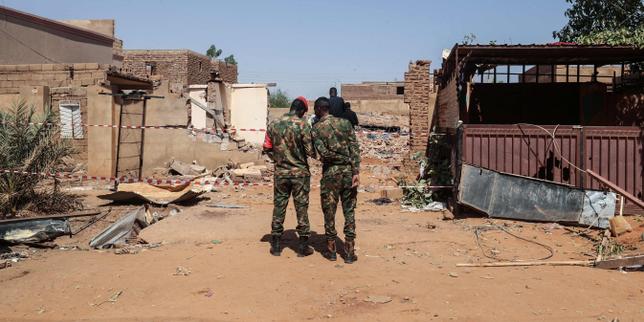
To understand why villagers return to towns lacking running water, grid electricity, or intact clinics, you first have to understand what happened to the physical infrastructure along the frontier. During the escalation between Hezbollah and the Israeli military, border settlements within five kilometers of the frontier bore the brunt of sustained artillery, airstrikes, and systematic ground demolitions.
Engineering assessments conducted by municipal councils and international monitoring bodies documented widespread structural failure across dozens of villages. Entire historic quarters—built from limestone and reinforced concrete over generations—were reduced to pulverized gray mounds.
What Was Lost Beyond Housing
The damage extends far beyond residential walls. Modern rural life in southern Lebanon relies on fragile, localized systems that take decades to capitalize and seconds to sever.
- Agricultural Terraces and Groves: Centuries-old olive and tobacco farms were scorched by white phosphorus and heavy munitions, or rendered inaccessible by unexploded ordnance (UXO). For families whose annual liquidity depends on the autumn olive harvest, losing mature trees means losing income for the next fifteen years until newly planted saplings yield commercial volume.
- Subterranean Water Networks: Deep artesian wells, municipal pumping stations, and asbestos-cement distribution pipes were shattered by bunker-busting munitions and heavy armored tracks. Without pressurized water, concrete cannot even be mixed on-site for basic masonry repairs.
- Solar Microgrids: Because Lebanon’s state utility, Électricité du Liban, has provided minimal power since the 2019 financial collapse, southern villages relied heavily on rooftop photovoltaic arrays and community lithium battery banks. Shrapnel and shockwaves destroyed nearly all exposed panels across the frontline belt.
Why Residents Return Before Clearance Teams Arrive
International humanitarian protocol dictates a strict sequence after active hostilities cease. First come explosive ordnance disposal (EOD) teams to clear unexploded submunitions and booby-traps. Next come structural engineers to condemn unsafe buildings, followed by heavy machinery to haul debris to designated dumping sites. Only then does rebuilding begin.
Southern Lebanese villagers routinely invert this sequence. They move back immediately.
The primary driver is existential fear of permanent displacement. In a region shaped by the 1948 Palestinian Nakba, the 1978 Litani operation, and the 18-year Israeli occupation of southern Lebanon that ended in 2000, local memory treats an empty village as a forfeited village. Residents operate under a blunt, unwritten rule: if you do not stand on your concrete slab, someone else will eventually dictate its borders.
Economic desperation reinforces that instinct. During months of displacement in Beirut, Sidon, or Tyre, families burned through savings paying inflated rents in a dollarized economy. Returning to a damaged house in Nabatieh or Bint Jbeil—even one missing two exterior walls—eliminates a monthly rent bill that most displaced laborers can no longer afford.
The Mechanics of Self-Funded Reconstruction
Walk through a frontline village today and you will see an informal construction economy operating entirely outside formal banking channels. Lebanon’s commercial banks have been effectively insolvent for years, freezing depositor accounts and offering zero mortgage or reconstruction credit.
Villagers fund their return through three main pipelines.
| Funding Source | Mechanism | Primary Limitation |
|---|---|---|
| Diaspora Remittances | Relatives in West Africa, the Gulf, and South America wire cash via money transfer operators. | Uneven distribution; families without expatriate earners are left behind. |
| Informal Compensation | Non-state actors and affiliated charities distribute cash stipends for shelter and furniture. | Covers immediate survival and minor repairs, not full structural rebuilds. |
| Material Salvage | Crews extract twisted steel rebar and intact cinderblocks from collapsed neighbors' homes. | Compromises structural integrity if heat-damaged steel is reused in load-bearing columns. |
The Hidden Hazard of Recycled Rebar
Structural engineers inspecting these rapid rebuilds point to a dangerous shortcut. When concrete buildings collapse under explosive force or intense fire, the steel reinforcement bars inside undergo severe mechanical stress and thermal distortion.
Local laborers routinely hammer this bent rebar straight and tie it into new formwork for poured concrete roofs. While cost-effective in the short term, straightened steel loses significant tensile strength. In a seismically active zone like the Dead Sea Transform fault system—which runs directly beneath southern Lebanon—rebuilding with compromised steel creates a silent structural liability that could fail during even a moderate tremor.
The Political Weight of the "Martyrs" Label
Western coverage often reduces southern border towns to monolithic strongholds, while regional media frequently romanticizes them through the lens of heroic sacrifice. Both frames flatten a complex social reality.
The moniker "Town of Martyrs" reflects a literal demographic toll. Across decades of conflict, small villages with populations under five thousand have buried dozens of local fighters and civilians. Plaques, banners, and funeral posters line the main roads leading into these municipalities, serving as public ledgers of communal loss.
Yet behind the unified public posture lies intense private debate. Residents express frustration over the slow pace of state intervention from Beirut, where caretaker ministries lack the fiscal reserves to fund a multi-billion-dollar reconstruction bill. At the same time, many homeowners quietly wrestle with the realization that rebuilding in the exact same footprint leaves their families exposed to the next cycle of regional escalation.
Navigating the Gray Zone of Aid
International agencies and UN peacekeeping forces (UNIFIL) operate within narrow mandates along the Blue Line. While humanitarian organizations distribute tarpaulins, hygiene kits, and food parcels, major bilateral donors from Europe and the Gulf have historically attached strict political and governance conditions to large-scale reconstruction grants.
Those conditions collide with local realities on the ground. Donors demand transparent municipal tendering, central government oversight, and guarantees that rebuilt infrastructure will remain strictly civilian. Meanwhile, villagers need roofs before winter rains set in. When official aid stalls in diplomatic negotiations, residents turn to whoever delivers cash and cement bags to the village square first.
Environmental Costs Nobody Is Tracking
Beneath the visible rubble lies a slower, less photogenic crisis. Modern warfare leaves behind a toxic chemical signature that persists in soil and groundwater long after headlines move elsewhere.
- Asbestos Dispersion: Older structures built between the 1960s and 1990s contained corrugated asbestos roofing and insulated piping. High-explosive detonations pulverized these materials into breathable microscopic fibers that coat surviving orchards and enter local lungs during dry, windy days.
- Heavy Metal Contamination: Munition casings, propellant residues, and burned electronics leach lead, copper, and white phosphorus derivatives into shallow karst aquifers. Because southern Lebanon sits atop porous limestone geology, surface contaminants migrate rapidly into the underground springs that feed village wells.
- Debris Dumping: Without regulated landfills equipped with protective liners, bulldozers push millions of tons of mixed demolition waste—containing plastics, batteries, paint, and medical waste—into rural valleys and seasonal riverbeds.
Environmental researchers from Lebanese universities have warned that without systematic soil remediation and hazardous waste sorting, agricultural produce grown in newly cleared border fields could carry elevated heavy metal loads for years.
What Defiance Actually Looks Like on the Ground
Defiance in southern Lebanon rarely resembles a staged press conference. It looks like a retired schoolteacher sweeping broken glass off a tiled veranda while an excavator idles fifty meters away. It looks like a baker firing up a diesel-powered oven in a half-collapsed storefront so neighbors do not have to drive forty minutes to buy flatbread.
These micro-actions restore social cohesion faster than any master plan drawn up in a capital city. A functioning bakery, a reopened pharmacy, and a cleared road signal to displaced neighbors that a village is viable again. Once twenty families return, thirty more follow within weeks.
Still, resilience has hard physical limits. Self-funded patching can seal a cracked wall or replace shattered aluminum window frames, but villagers cannot privately pave highways, rebuild regional electrical substations, or clear thousands of unexploded submunitions buried beneath olive groves.
As dusk settles over the border hills, generators hum outside patched-up concrete homes while floodlights from observation posts across the fence sweep the dark valleys below.