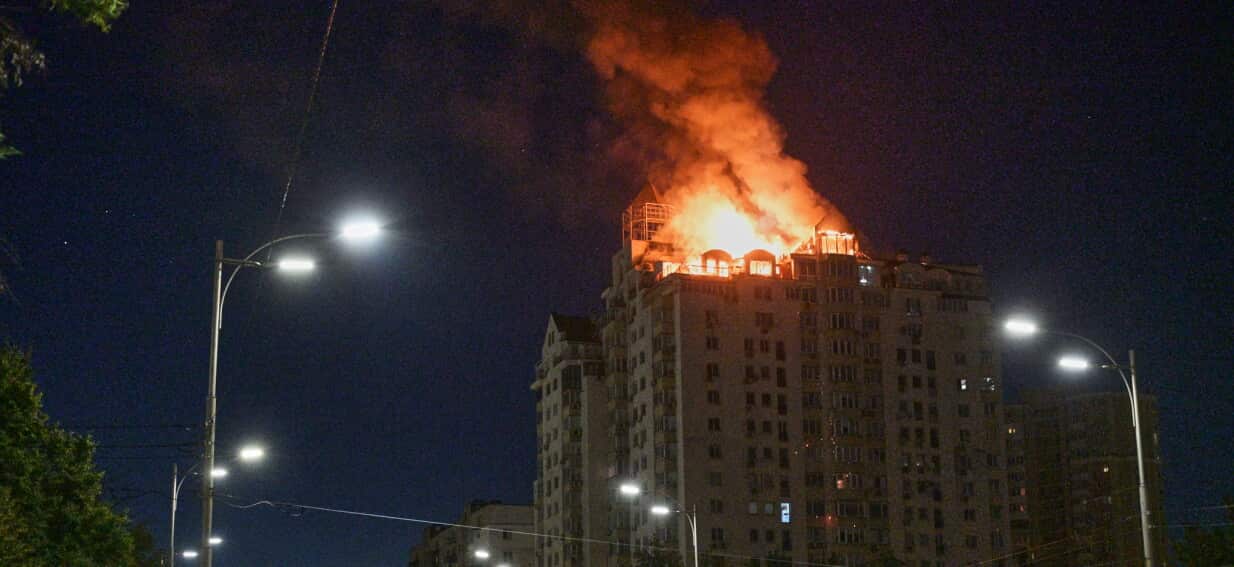
On June 17, 2026, a catastrophic fire erupted at a 500,000-square-foot commercial cold storage warehouse in Boyle Heights, plunging the Los Angeles basin into a prolonged air quality crisis. For more than a week, the facility, operated by logistics giant Lineage, pumped an opaque, toxic plume of soot pollution into the sky, coating neighborhoods from East Los Angeles to the San Gabriel Valley in hazardous particulate matter. While official regulatory alerts warned residents to close their windows, they fundamentally ignored the deeper industrial failures and systemic environmental oversights that turned a localized rooftop accident into an regional public health emergency.
The emergency response has focused heavily on surface-level containment. But a deeper investigation reveals a troubling combination of corporate buck-passing, outdated air-monitoring protocols, and structural vulnerabilities inherent to modern logistics infrastructure. This was not a standard urban fire. It was an industrial chemical event disguised as a warehouse blaze, and the surrounding working-class communities are paying the price with every breath they take.
The Anatomy of an Uncontainable Burn
Firefighters arriving at the South Los Palos Street facility faced an immediate tactical wall. Cold storage warehouses are engineered to do one thing exceptionally well: isolate an internal environment from external heat. They are essentially massive, windowless thermoses constructed with corrugated steel skins lined with thick layers of dense polyurethane or polystyrene foam insulation.
This design presents a nightmare scenario for containment teams. When a fire breaches the outer shell or ignites within the walls, the structural insulation turns into a self-sustaining kiln. The insulation panels trap extreme thermal energy, shielding the core of the fire from high-volume water deluges. Water simply sheets off the metal exterior, while the petroleum-based foam smolders beneath, out of reach.
For days, the Los Angeles Fire Department could only watch as the fire burned deep within the building's infrastructure. The internal temperature remained high enough to melt structural components, causing partial roof collapses that further buried the seats of the fire under twisted metal. This structural configuration explains why a fire in a modern metropolis could not be extinguished quickly, persisting for over nine days and transforming millions of pounds of stored goods into a continuous stream of fine particulate matter.
A Toxic Mix and the Solar Paradox
The environmental impact of this event cannot be measured by standard metrics. Most public statements from air quality regulators focused exclusively on PM 2.5 levels, the concentration of fine particulate matter smaller than 2.5 micrometers. While these sensors registered alarming spikes across the basin, they failed to account for the chemical profile of the soot settling on local homes.
This was not a wildfire burning timber. The payload of the Boyle Heights facility contained a volatile mix of commercial materials.
- Rooftop Solar Arrays: The facility featured an extensive solar panel installation. When commercial solar panels combust, they can release heavy metals, including cadmium telluride and silicon dust, into the immediate atmosphere.
- Commercial Refrigerants: Large-scale cold storage relies on complex cooling systems. Early reports indicated an ammonia leak inside the facility, which required hazardous materials teams to pump thousands of gallons of chemicals offsite to prevent an explosive breach.
- Polyurethane Insulation: The burning of modern foam insulation generates highly toxic gases, including hydrogen cyanide and carbon monoxide, alongside complex organic compounds.
- Decomposing Organic Matter: Inside the dark, unpowered freezer rooms, millions of pounds of meat and frozen food began to rot and burn simultaneously.
Standard urban air quality indices are calibrated for typical traffic and industrial emissions. They tell you how much dust is in the air, but they do not tell you what that dust is made of. Analysis by independent environmental scientists suggests that the soot from this warehouse contains a highly enriched matrix of toxic organics and heavy metals. This creates a dual hazard for residents: the volume of particles is physically damaging to lung tissue, and the chemical composition introduces a long-term toxicological risk that standard monitoring equipment completely misses.
Corporate Blame Shifting and Regulatory Blindspots
As the smoke spread fifty miles east toward the Inland Empire, the corporate entities involved began a familiar dance of liability management. Lineage, which operates the facility as a tenant, issued statements pointing toward the rooftop solar array, suggesting that contractors working on the panels initiated the spark. Conversely, Altus Power, the entity tied to the solar infrastructure, disputed that narrative, leaving the official cause trapped in a bureaucratic loop of ongoing investigations.
This blame-shifting obscures a more critical systemic issue. The regulatory oversight of these massive fulfillment and storage facilities is heavily fragmented. Local building codes focus on immediate fire suppression like interior sprinklers, but they rarely account for the external risks of massive rooftop solar installations interacting with highly flammable wall insulation.
Furthermore, the regional air management district faced severe criticism for its deployment of monitoring assets. While supplementary monitors were eventually placed at nearby elementary schools, they were deployed days after the initial plume had already saturated the neighborhood. For the first seventy-two hours of the crisis, residents were left relying on generalized regional data that diluted the true severity of the pollution occurring at the fence line of the facility.
The Unequal Burden of Industrial Accidents
The geographic reality of the Boyle Heights crisis underscores an ongoing environmental justice issue in Southern California. The logistics infrastructure that feeds the American supply chain is overwhelmingly concentrated in lower-income, predominantly Latino neighborhoods. These areas already contend with higher baseline rates of asthma and cardiovascular illness due to their proximity to the Interstate 5 and Interstate 710 freight corridors.
The immediate aftermath of the fire has made daily life in the neighborhood nearly unbearable. Residents report a pervasive, sickening odor of charred, decomposing protein that triggers immediate nausea. Local sewage systems have seen an influx of rodents fleeing the sub-surface heat and runoff from the fire site, creating a secondary public health hazard on the streets.
+----------------------------------------------------------------------------+
|                       Boyle Heights Fire Impact Summary                     |
+----------------------------------------------------------------------------+
| Core Material Burned    | Polyurethane foam, solar arrays, commercial food |
+-------------------------+--------------------------------------------------+
| Primary Health Threat   | PM 2.5 enriched with heavy metals & toxic organics|
+-------------------------+--------------------------------------------------+
| Secondary Hazard        | Vector displacement (rodents), organic odors     |
+-------------------------+--------------------------------------------------+
| Dispersal Range         | Detected up to 50–60 miles away (Inland Empire)  |
+-------------------------+--------------------------------------------------+
While affluent neighborhoods downwind experienced a light haze, the immediate community faced direct physical infiltration. Fine soot passes easily through the aging window frames and lack of central HVAC systems characteristic of older housing stock in East Los Angeles. Without access to high-efficiency air purifiers, which can cost upwards of a hundred dollars, many families were forced to choose between breathing stifling, toxic indoor air or opening windows to the raw stench of the burn site.
Structural Reform Over Surface Cleanup
Ameliorating this crisis requires looking past the immediate physical cleanup. Mayor Karen Bass issued a directive requiring the removal of all biohazardous food waste within forty-five days, but removing the physical debris does nothing to address the regulatory gaps that allowed this to happen.
The city must implement strict, updated building standards for cold storage facilities. If a building utilizes high-density foam insulation, it must be paired with external, automated fire mitigation systems capable of neutralizing rooftop incidents before they penetrate the outer shell. Furthermore, logistics companies must be legally mandated to fund and maintain real-time, fence-line toxic air monitoring arrays that report directly to the public, ensuring that communities are never again left wondering what chemical compounds are settling on their doorsteps.
Industrial accidents of this scale are often framed as unpredictable anomalies. In reality, they are the predictable consequence of placing high-risk logistics infrastructure within dense residential zones without matching environmental safeguards. The soot over Los Angeles will eventually clear, but the systemic negligence that fueled the fire remains entirely intact.
Boyle Heights Fire Air Quality Report explains how the long-burning commercial structure trapped heat and continuously degraded air quality across local neighborhoods.