Commercial aviation operates on razor-thin margins of error, particularly inside the congested airspace surrounding Ronald Reagan Washington National Airport (DCA). When the Association of Flight Attendants-CWA publicly challenged the proposed construction of a 250-foot triumphal monument at Memorial Circle, they were not merely participating in political theater. They were highlighting a hard physical reality about flight paths, human fatigue, and the inherent risks of dropping massive urban obstacles into tight arrival corridors.
The controversy centers on a presidential vanity project intended to reshape the capital's skyline. Originally framed as a classic stone memorial arch, the project shifted dramatically when planners suggested repurposing the structure into a functional military complex capable of supporting tactical equipment. That shift changed the risk matrix entirely. Pilots navigating the notoriously tight visual approaches into DCA already face strict restrictions, heavy traffic volumes, and complex noise abatement procedures. Adding a quarter-thousand-foot vertical structure directly into this mix introduces an entirely avoidable hazard.
The Geometry of Approach Risk
To understand why aviation professionals are alarmed, one must look at how aircraft arrive at DCA. Flights descending along the Potomac River or executing RNAV procedures operate in restricted airspaces bounded by heavily protected federal zones. The margins are tight. Cabin crews and flight decks work in sync to manage high-workload arrivals where spatial orientation is paramount.
When a structure is erected near final approach paths, it forces flight crews to factor in new physical barriers. Proponents of the project often point out that initial Federal Aviation Administration aeronautical studies issued no-hazard determinations. Yet those early clearances evaluated a static architectural monument, not an active military installation equipped for drones or specialized communication arrays. Changing the operational scope of a structure after initial airspace reviews invalidates the baseline assumptions of those safety assessments.
Sara Nelson, president of the flight attendants' union, put it plainly when addressing the public safety implications. Commercial aviation does not need additional obstacles in active flight corridors, nor should transport crews have to manage unpredictable variables near busy runways.
Bureaucratic Friction and Legal Battles
The pushback against the Memorial Circle structure extends well beyond cabin crews. Veterans' organizations filed federal lawsuits challenging the administrative authority behind the excavation. Historic preservationists have argued that the monument violates long-standing visual sightlines between monumental federal cores.
The friction reveals a profound disconnect between architectural ambition and operational safety. Urban planning in a heavily restricted capital district involves a delicate balance of aesthetics, security, and infrastructure management. When aesthetics override standard airspace protection protocols, the downstream consequences are absorbed entirely by the crews flying the line and the passengers in the cabin.
Consider how complex modern flight management has become. Cockpit automation reduces physical labor, but cognitive workloads remain extraordinarily high during descent phases. Introducing a massive, multifunctional complex right at the doorstep of a major metropolitan hub adds unnecessary cognitive load during critical phases of flight.
The Real Cost of Urban Monumentality
Mega-projects in dense urban centers frequently bypass rigorous operational scrutiny when driven by executive fiat. Fast-tracked approvals from hand-picked commissions bypass the slow, methodical vetting processes traditionally required for massive construction initiatives near civil airports.
The aviation industry does not operate on political timelines. Physics does not negotiate with municipal design committees. A 250-foot obstruction remains a physical hazard regardless of how much historic symbolism or military utility its proponents attach to it.
As legal challenges wind through the courts and questions remain unanswered regarding the true operational scope of the planned complex, the aviation community continues to push back. Safety margins exist for unforeseen emergencies, unexpected weather events, and human error. Eroding those margins for the sake of architectural legacy is a gamble the skies cannot afford.
The dispute over the capital arch is settling into a prolonged war of attrition between executive ambition and institutional aviation oversight, leaving flight crews to monitor an increasingly crowded horizon.
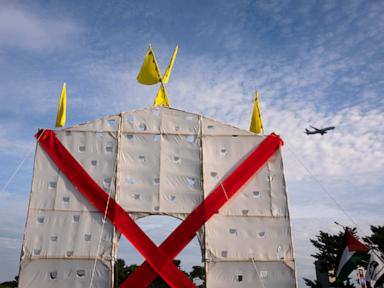
Flight attendants raise safety concerns over President Trump's proposed Arch project
A concise visual summary of why aviation unions are actively pushing back against the Memorial Circle construction plans near DCA.