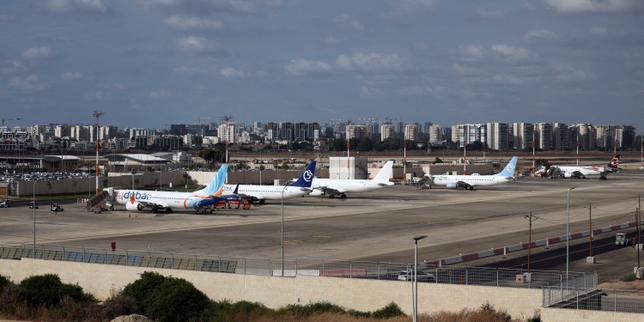
The official confirmation from the United Arab Emirates federal prosecutor that a Flydubai co-pilot plotted a 9/11-style suicide attack on Tel Aviv’s Ben Gurion Airport has shattered the fragile architecture of modern cockpit security. When flight FZ1073 veered toward tragedy on September 30, it did not expose a failure of anti-hijacking doors or physical barricades. It exposed a far more terrifying systemic vulnerability: the rogue insider who already holds the keys to the flight deck.
For over two decades, civil aviation authorities worldwide have focused their countermeasures outward. They hardened cockpit doors, banned pocketknives, and locked out the passenger cabin. Yet, the attack masterminded by Omani co-pilot Hamam Al-Hammami bypassed these multi-million-dollar defenses entirely because the threat was sitting in the left seat.
The Anatomy of an Insider Threat
According to findings released by UAE Attorney-General Hamad Saif Al Shamsi, Al-Hammami had undergone standard background checks and professional screening when he joined Flydubai. Nothing in his file flagged an extremist ideology. Investigators later traced his radicalization pathway to a period spent studying in Australia, a trajectory that went entirely undetected by employer vetting protocols.
Commercial aviation relies heavily on the assumption that licensed professionals are psychologically stable and economically incentivized to protect the aircraft. Standard psychological evaluations during hiring cycles are notoriously easy to game for individuals motivated by ideological extremism. Al-Hammami utilized two previous routine flights to Tel Aviv to reconnoitre the route and the airport geography, treating the cockpit as a staging ground for a calculated mass-casualty operation.
When he initiated the assault using a crash axe from the flight deck emergency kit, he targeted the captain, aiming to incapacitate the sole other authority figure in the room. The ensuing physical struggle—which involved the aircraft plunging thousands of meters before intervention by crew members and passengers—proved that physical fortification inside the cabin can quickly become a trap when the enemy is already inside.
The Blind Spot of International Vetting
The fallout from the Flydubai incident has exposed glaring gaps in cross-border intelligence sharing. Vetting procedures for commercial pilots moving between jurisdictions often rely on self-reporting and basic criminal background checks issued by local law enforcement. They rarely capture low-profile ideological indoctrination occurring online or during university stints abroad.
Airlines scale rapidly across global hubs like Dubai, recruiting talent from diverse international pools. While this globalization fuels the phenomenal growth of Middle Eastern carriers, it creates a complex patchwork of security jurisdictions. When a pilot trained partially in New Zealand and Australia is hired in the Gulf to fly routes into sensitive airspace like Israel, the friction points multiply. Intelligence agencies rarely share localized radicalization flags with commercial HR departments unless a formal, high-priority counterterrorism investigation is already underway.
Furthermore, the geopolitical climate surrounding flights to Israel added a volatile layer to the incident. Passengers on board flight FZ1073 were overwhelmingly Israeli, turning the scheduled route into a high-value symbol for an attacker seeking maximum geopolitical resonance.
Why Traditional Safeguards Fall Short
Aviation security experts have long debated the merits of the "two-person rule," which mandates that at all times, two authorized crew members must be present in the cockpit. While common in North American carriers, many international airlines abandoned or relaxed strict continuous occupancy requirements due to operational fatigue concerns and ergonomic limitations on long-haul flights.
Even with a two-person rule, an active co-pilot seeking to neutralize a captain has a dangerous tactical advantage during critical phases of flight. The suddenness of the assault on FZ1073 left little margin for error. Only the raw intervention of the captain—who managed to block severe blows—alongside the desperate bravery of passengers and crew who forced their way past the fortified door prevented the aircraft from becoming a guided missile.
The resulting diplomatic and security friction has been swift. Israel’s security establishment instituted broad emergency reviews of foreign civil aviation entering its airspace, while carriers across the region face mounting pressure to overhaul how they monitor internal behavioral shifts among flight crews.
The illusion that cockpit doors solved the terrorism equation has evaporated. When the pilot becomes the primary vector of threat, the entire philosophy of airline safety must be rewritten from the ground up.