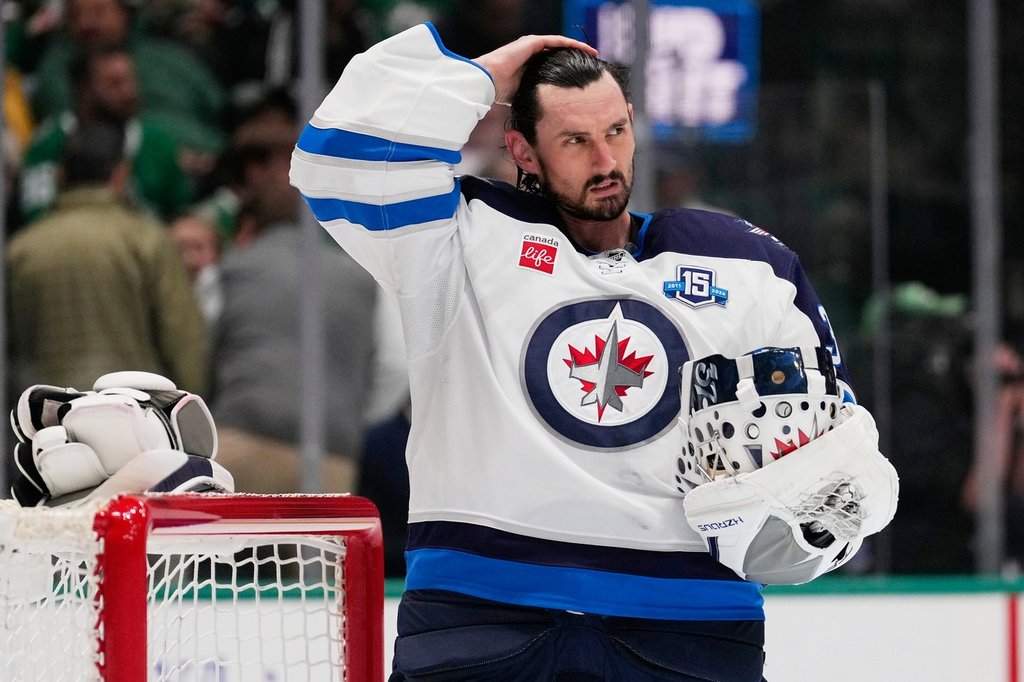
When the Winnipeg Jets officially suspended star goaltender Connor Hellebuyck after he refused to report for the opening of training camp, it confirmed a worst-case scenario that front offices across hockey had spent months whispering about. This was not a standard contract dispute born of salary arbitration or structural bonus arguments. It was a structural fracture between a cornerstone American player and a Canadian small-market franchise, catalyzed by shifting player empowerment and the aftermath of international glory.
For years, the conventional wisdom in professional hockey dictated that elite goaltenders anchored franchises through thick and thin, absorbing the pressure of cold winters and heavy workloads with stoic professionalism. Hellebuyck had defined that archetype. A multi-time Vezina Trophy winner and Hart Trophy recipient, he was the heartbeat of a Winnipeg defense that punched above its weight class in the Central Division. Yet, elite status in the modern National Hockey League buys leverage, and leverage is rarely spent on maintaining status quo.
The roots of this bitter standoff trace back through a turbulent prior campaign and a stellar international run. Hellebuyck endured a statistically uncharacteristic season by his stratospheric standards, battling minor injuries and a porous team defensive structure as Winnipeg missed the postseason. Months later, he backstopped Team USA to a gold medal at the Milano Cortina Olympics, earning tournament MVP-type accolades and reminding the hockey world of his absolute ceiling. Returning from that high-altitude success to the grinding realities of a rebuilding or retooling Canadian market created an untenable friction point. By late August, Hellebuyck made his trade request public, a move that stripped away the polite diplomatic fiction usually maintained by agents and general managers during summer workouts.
When September arrived, the ultimatum became reality. Hellebuyck failed to report, and general manager Kevin Cheveldayoff faced a binary choice: bow to unprecedented player pressure or drop the hammer with a suspension. Winnipeg chose the hammer, freezing a prized asset and turning training camp into a circus of flashbulbs and microphones.
The implications of this standoff extend far beyond Manitoba. Over recent years, NHL front executives have watched player agency evolve closer to the player-empowerment models seen in the National Basketball Association. Stars with full or partial movement clauses increasingly dictate their landing spots long before their contracts expire. When a player of Hellebuyck's caliber decides that a market no longer aligns with his championship window or personal timeline, standard organizational loyalty statutes crumble.
Winnipeg's brass found themselves trapped in a difficult corner. Retaining a disgruntled superstar who has publicly requested an exit toxicates the dressing room, regardless of veteran captain Adam Lowry's public assurances that the room would remain insulated. Conversely, trading a generational netminder under duress guarantees pennies on the dollar compared to an open bidding war involving multiple contending franchises. General managers do not win trades when the entire hockey ecosystem knows the player refuses to wear the sweater.
The suspension served a dual purpose. It protected the organizational hierarchy by signaling that contracts still carry enforceable penalties, while buying time to extract maximum value from interested suitors like the New Jersey Devils and other capitalized contenders. Still, optics matter in hockey towns. For a fanbase that treats the Jets as a badge of civic identity, watching a franchise icon force his way out leaves a bitter residue that no subsequent draft pick or depth roster addition can instantly wash away.
Goaltending is a position built on psychological isolation. A goalie must process chaos, maintain position, and erase mistakes made by four skaters in front of them. That same singular focus often translates into an uncompromising stubbornness off the ice. When Hellebuyck decided his tenure in Winnipeg was finished, no amount of organizational appealing or fan sentiment was going to alter his trajectory.
The resolution eventually arrived via a blockbuster trade sending the American hero to New Jersey, but the architecture of how it happened permanently alters the power balance in Canadian hockey markets. Players observe how predecessors handle discontent. When an elite player successfully navigates a training camp holdout and forces a relocation, the blueprint is updated for the next generation.
Winnipeg must now pivot toward a new reality in the crease, handing the reins to alternative options while management tries to patch the leadership void left by a departed superstar. For Hellebuyck, a fresh start in a major metropolitan market offers the competitive runway he demanded, even if his first emotional return to Canada Life Centre serves as a sharp reminder of the bridge burned behind him.
The Connor Hellebuyck saga stands closed, but the precedent it etches into the league's ledger remains active. Superstars no longer wait for permission to write their final chapters.