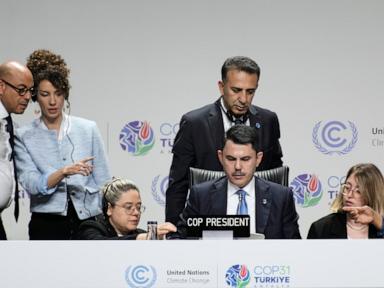
The 31st United Nations Climate Change Conference ended without a binding agreement because wealthy nations and developing economies could not bridge a multi-trillion-dollar gap over adaptation finance and fossil fuel phase-out timelines. Delegates walked away from the negotiating table exhausted, leaving critical enforcement mechanisms unratified and casting serious doubt on the future viability of annual consensus-based climate summits.
This was not a sudden failure. It was the predictable collision of thirty years of diplomatic deferrals meeting hard economic realities. When nearly two hundred nations gather under a rulebook that requires unanimous consent, the slowest actor dictates the pace of the entire room. At COP31, that structural flaw finally buckled under the weight of geopolitical fragmentation, mounting sovereign debt in the Global South, and fierce domestic political pushback against green transition costs in industrialized economies.
The Structural Rot Inside the Consensus Model
To understand why COP31 failed, you have to look at the mechanics of the United Nations Framework Convention on Climate Change. Every word in a final COP cover text must survive the scrutiny of roughly 195 delegations. A single country can hold an entire global accord hostage over a semicolon or a verb tense.
In earlier decades, diplomats masked these divisions with constructive ambiguity. They drafted language soft enough for petro-states to sign without altering their export models, yet aspirational enough for climate-vulnerable island nations to claim moral progress. That linguistic sleight of hand no longer works. The physical impacts of warming have accelerated past the point where vague pledges satisfy domestic constituencies, while the financial costs of decarbonization have grown too large for finance ministries to wave through on goodwill alone.
Consider a hypothetical negotiation room during the final forty-eight hours of a summit. On one side sits a coalition of coastal states demanding immediate, grant-based funding to rebuild battered infrastructure. Across the table sits a treasury official from a major industrial economy whose legislature just slashed foreign aid budgets to manage domestic inflation. Neither negotiator has the political mandate to compromise. When you multiply that friction across dozens of working groups, overtime sessions cease to produce breakthroughs and simply generate exhaustion.
Follow the Money Because the Math Never Worked
Climate diplomacy always comes back to capital flows, and at COP31, the ledger refused to balance. For years, the central friction point has been the transition from the old hundred-billion-dollar annual finance pledge to a new, vastly larger quantified goal capable of supporting developing nations through both mitigation and adaptation.
Developing economies arrived at the talks arguing that trillions, not billions, are required annually to build resilient grids, protect agriculture, and transition away from coal without triggering social unrest. They demanded public money—grants rather than market-rate loans—pointing out that borrowing more to fix a crisis they did not create pushes them deeper into a sovereign debt trap.
Wealthy nations countered with fiscal reality. Facing sluggish growth, high interest rates, and competing spending priorities ranging from defense to aging populations, donor governments insisted that public coffers cannot carry the burden alone. Their proposed fix relied heavily on blended finance, multilateral development bank reforms, and private sector mobilization.
To finance ministers in the Global South, heavy reliance on private capital sounds like a convenient abdication of historical responsibility. Private investors demand predictable returns, currency stability, and de-risked assets—conditions that rarely exist in the rural regions most vulnerable to drought, flooding, and extreme heat. Adaptation projects, such as building seawalls or restoring mangroves, do not generate reliable cash flows the way utility-scale solar farms do. Relying on Wall Street to fund public resilience is a category error, and delegates from vulnerable nations refused to sign a text pretending otherwise.
The Fossil Fuel Language Trap
The second major fault line at COP31 centered on the unfinished business of fossil fuels. Following the historic but heavily qualified call to transition away from fossil fuels at COP28 in Dubai, subsequent summits have turned into trench warfare over implementation.
Energy-exporting nations arrived at COP31 determined to prevent any text that looked like a binding schedule for production cuts. Their argument rests on energy security and economic sovereignty. Global energy demand continues to rise, driven by urbanization, industrial expansion in Asia, and the massive electricity appetite of artificial intelligence data centers. Producer nations argue that choking off supply before alternative baseload power is fully built out simply invites price spikes, inflation, and political instability.
Meanwhile, high-ambition coalitions pushed for explicit language targeting unabated fossil fuels, tighter rules on carbon capture loopholes, and strict accountability for national climate plans. Without clear timelines, they argued, "transitioning away" becomes an empty slogan that allows companies to greenlight new oil and gas fields while claiming compliance with the Paris Agreement.
The resulting deadlock exposed a fundamental contradiction at the heart of the process. You cannot regulate supply through a voluntary diplomatic forum when the world's largest economies continue to subsidize consumption and approve new extraction licenses at home. Delegates spent days arguing over adjectives while global emissions trajectories remained stubbornly flat.
Geopolitics Poisoned the Negotiating Well
Climate talks do not happen in a vacuum, even though UN rules try to isolate them from broader diplomatic conflicts. At COP31, external geopolitical rivalries bled directly into the plenary halls.
Trade disputes over green technology severely undermined trust. Major Western economies have erected steep tariffs and domestic content rules to protect their nascent clean-tech manufacturing sectors from cheaper imports. Developing nations view these policies as protectionism disguised as environmentalism. If wealthy countries demand that the rest of the world decarbonize rapidly, while simultaneously making solar panels, batteries, and electric vehicles more expensive through trade barriers, the moral authority of the entire enterprise collapses.
At the same time, shifting alliances and competing global governance blocs have eroded the old negotiating coalitions. The traditional divide between developed and developing nations—codified in 1992—no longer reflects economic reality. High-income Gulf states and rapidly industrializing manufacturing giants still negotiate under the developing-nation umbrella, shielding them from mandatory donor obligations. Traditional Western donors refuse to expand their commitments unless major emerging emitters step up to the plate as contributors rather than recipients. Neither side blinked.
Why Carbon Markets Failed to Rescue the Summit
Whenever direct public finance stalls, negotiators turn to carbon markets as a pressure valve. The theory behind Article 6 of the Paris Agreement is straightforward: allow countries and companies to buy emissions reductions generated elsewhere, channeling private money into conservation and clean energy projects in developing nations.
In practice, building a credible global carbon market has proven extraordinarily difficult. At COP31, fights over integrity standards, registry rules, and revocation mechanisms prevented carbon trading from serving as a unifying deliverable.
Past scandals involving phantom forest offsets and inflated baseline calculations have left regulators cautious. Environmental watchdogs warned that weak rules would flood the market with junk credits, allowing polluters to keep emitting while buying cheap paper offsets that deliver zero atmospheric benefit. Conversely, host nations argued that overly rigid verification rules create prohibitive compliance costs, pricing smaller countries out of the market entirely. Stuck between the risk of greenwashing and the reality of bureaucratic paralysis, carbon market talks yielded technical footnotes rather than a functioning financial lifeline.
The Case for Smaller Coalitions Over Mega Summits
The collapse at COP31 has revived a blunt question among veteran observers: are massive annual UN summits still the right vehicle for climate action?
Critics of the current format point out that the conferences have morphed into bloated trade shows. Tens of thousands of lobbyists, corporate executives, consultants, and activists descend on a host city, turning a diplomatic negotiation into a media circus where actual negotiators are outnumbered and exhausted. The sheer scale of the event encourages performative announcements over hard policy work.
Proponents of reform argue that real progress happens in smaller, sectoral clubs. When a handful of major steel-producing nations agree on shared green procurement standards, or when maritime shipping regulators set binding fuel rules, emissions actually drop. Bilateral clean-energy investment partnerships, regional grid interconnections, and domestic industrial policies move capital faster than a 195-nation consensus document ever could.
Yet abandoning the UN process carries steep risks. For small island states and least-developed countries, the COP process is the only diplomatic forum where they hold a formal veto and sit on equal legal footing with superpowers. Dismantling the universal forum in favor of exclusive clubs of major economies would strip the most vulnerable nations of their primary platform for legal and financial redress. The system is broken, yet the alternative looks dangerously like climate imperialism.
What the Failure Means for National Climate Plans
The immediate casualty of the COP31 breakdown is momentum behind the next round of Nationally Determined Contributions (NDCs). Under the Paris Agreement's ratchet mechanism, countries are required to submit progressively more ambitious domestic climate targets every five years.
Without a strong, unified signal from COP31, finance and energy ministries in capitals around the world have little diplomatic cover to push through tough domestic reforms. When an international summit ends in acrimony, domestic opponents of climate policy seize on the failure as proof that unilateral action is economic self-harm. Why impose carbon taxes or shutter coal plants at home if your neighbors and competitors walked away from the negotiating table without binding commitments?
Investors notice this hesitation immediately. Capital allocation in the energy sector runs on twenty-to-thirty-year horizons. Policy uncertainty raises the cost of capital for renewable infrastructure, particularly in emerging markets where sovereign risk is already elevated. By failing to produce a clear roadmap on finance and fossil fuel transitions, delegates inadvertently raised the price of the green transition for everyone.
The Quiet Rise of Adaptation Realism
Beneath the public disappointment at COP31 lies a quieter, more sobering shift in how governments approach climate policy. For decades, international diplomacy treated mitigation—cutting emissions—as the primary goal, while treating adaptation—preparing for physical impacts—as a secondary distraction or a defeatist admission.
That hierarchy has inverted. With global temperatures consistently testing threshold limits and extreme weather events regularly wiping out percentage points of national GDP, governments are reallocating political capital toward survival and resilience.
At COP31, the most intense negotiations were not about abstract 2050 net-zero targets. They were about water scarcity, crop failure, sovereign insurance pools, and grid hardening. Delegates from vulnerable nations made it clear that decarbonization schedules mean very little to a country facing imminent coastal inundation or agricultural collapse. However, because adaptation projects are hyper-local and difficult to standardize into global metrics, the UN negotiating framework struggled to turn those urgent pleas into bankable agreements.
Accountability Without Enforcement
A persistent misconception among the public is that COP agreements function like international criminal law, complete with courts, fines, and police powers. They do not. The Paris architecture was deliberately designed as a bottom-up system built on transparency and peer pressure rather than top-down enforcement.
The gamble was that public shaming and market signals would compel nations to meet their voluntary pledges. COP31 demonstrated the limits of peer pressure when economic self-interest pulls in the opposite direction. Without border carbon adjustments, trade penalties, or conditional access to development finance, voluntary pledges remain vulnerable to every election cycle and energy price shock.
Some blocs, notably the European Union with its Carbon Border Adjustment Mechanism, are already moving past voluntary diplomacy toward unilateral trade enforcement. By taxing the embedded carbon in imported steel, cement, and aluminum, major markets are attempting to export their climate regulations through supply chains. While effective at forcing industrial compliance, these unilateral measures breed deep resentment among trading partners, further poisoning the cooperative spirit required for UN summits to succeed.
The Road Beyond the Wreckage
The delegates leaving COP31 did not abandon the fight against climate change, nor did the failure erase the rapid deployment of solar, wind, and battery storage happening across global energy markets. Economics, rather than diplomacy, is now the primary driver of clean energy adoption in much of the world.
What died in the negotiating halls was the illusion that an annual diplomatic ritual can paper over deep structural divides in global finance and geopolitics. Until wealthy nations reconcile their fiscal constraints with the survival needs of the Global South, and until major economies align their trade policies with their climate rhetoric, future summits will continue to stall on the exact same rocks.