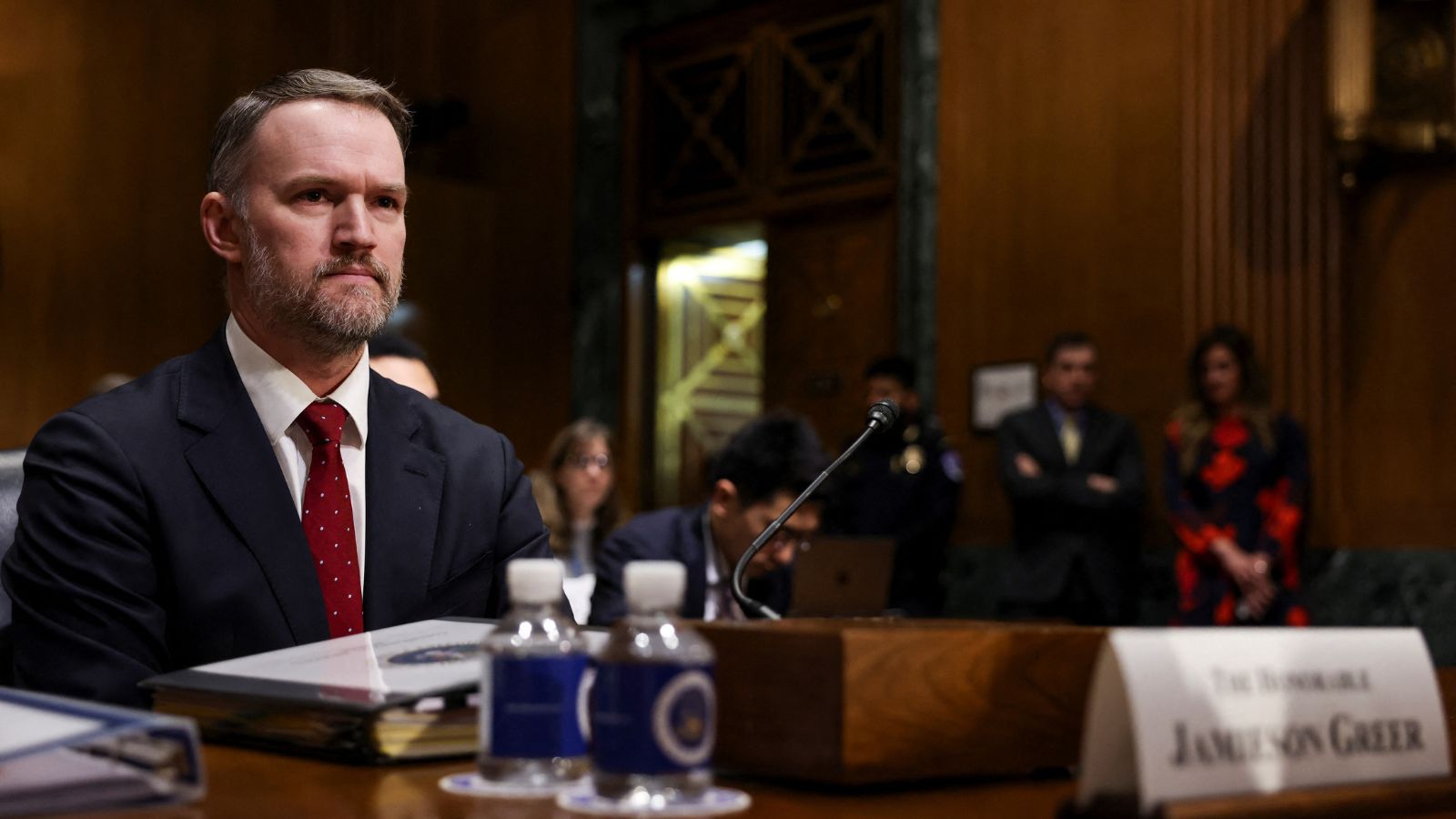
U.S. lawmakers are demanding urgent answers from British banking titan Barclays over its systematic failure to scrutinize former chief executive Jes Staley's extensive ties to the late convicted sex offender Jeffrey Epstein. In a blistering letter sent to Barclays Chair Nigel Higgins, Senator Elizabeth Warren and Representative Ro Khanna pressed for details on how the bank's board hired and protected Staley without performing basic due diligence into his decades-long relationship with Epstein. The inquiry cuts to the core of institutional accountability, exposing how top-tier financial firms repeatedly prioritize executive ambition over basic governance standards.
The inquiry arrives at a pivotal moment for international banking. While corporate boards routinely subject junior employees to background checks and rigorous vetting, executive suites operate under a starkly different set of rules.
The Governance Vacuum at the Top of Global Banking
Corporate boards love to talk about risk management. They build compliance departments, mandate yearly ethics tests, and monitor employee emails. Yet, when a star executive enters the boardroom, those checks frequently vanish.
Jes Staley built his career at JPMorgan Chase, where he managed high-net-worth clients and eventually directed the investment bank. During those three decades, Jeffrey Epstein remained a core asset management client. Staley maintained a personal and professional relationship with Epstein that stretched far beyond standard client care, visiting Epstein's private island and exchanging hundreds of emails.
When Barclays recruited Staley in 2015 to take over as group chief executive, the board had a duty to investigate his background thoroughly. Instead, directors took his word without independent verification. When regulators later asked about Staley's relationship with Epstein, Barclays board members accepted Staley's claim that contact had ceased long before he joined the British bank.
They did not demand receipts. They did not commission an independent audit. They simply took his word.
This failure was not an isolated oversight. It represents a widespread culture of deference inside global boardrooms, where high-earning executives receive the benefit of the doubt while corporate reputation hangs in the balance.
How Barclays Board Took a Wall Street Veteran at His Word
When a corporate board hires a chief executive, the vetting process is supposed to be exhaustive. Background checks, asset tracing, and investigative interviews are standard operating procedure for major corporations.
Yet in Staley's case, Barclays relied on personal assurances rather than objective facts. Nigel Higgins, who chaired the Barclays board during the regulatory probe, admitted in court proceedings that he never asked Staley for details about his last contact with Epstein. The bank subsequently vouched for Staley in formal correspondence with the UK Financial Conduct Authority, claiming his ties to Epstein were minimal and distant.
"It appears that neither you nor any other member of the board conducted any deeper due diligence to verify Staley's claims and simply took him at his word," lawmakers written in the letter to Barclays' leadership.
The financial consequences of that blind trust were severe. Staley was eventually forced to step down in late 2021 after UK regulators uncovered evidence contradicting his statements. The Financial Conduct Authority banned Staley from the UK banking industry and fined him heavily. He forfeited millions in compensation. Yet Barclays maintained that it was merely a victim of Staley's deception, claiming new information had emerged that was unavailable during its initial internal inquiries.
That defense falls apart under examination. The information was not hidden in an impenetrable vault; it was sitting in email archives and travel logs that any competent forensic investigation could have unearthed within days.
| Executive Vetting Stages | Standard Corporate Practice | What Barclays Board Executed |
|---|---|---|
| Initial Background Screening | Comprehensive forensic audit and background review | Standard executive review without deep-dive character probe |
| Verification of High-Risk Ties | Independent third-party vetting of controversial associates | Reliance on informal oral assurances from executive |
| Regulatory Disclosures | Documented audit trail provided to government watchdogs | Letter vouching for executive based on unverified statements |
| Crisis Escalation Protocol | Immediate suspension pending objective forensic audit | Delayed action until regulatory body forced leadership change |
Paper Trails and Omissions across the Atlantic
The scrutiny from Capitol Hill highlights a growing rift between American lawmakers and transatlantic banking regulators over how financial misconduct is handled. While British watchdogs focused on whether Staley misled regulators, U.S. congressional committees are looking at the broader infrastructure that enabled Epstein to move money through major institutions for decades.
Department of Justice filings revealed that Epstein named Staley as an executor of his estate in multiple wills drafted between 2012 and 2014. Staley claimed in court that he turned down Epstein's request to manage the estate. However, legal documents continuously listed his name alongside other high-profile figures.
2000: Staley meets Epstein at JPMorgan Chase
 └─► 2008: Epstein convicted of child sex offense; JPMorgan retains account
      └─► 2012-2014: Epstein names Staley executor in estate documents
           └─► 2015: Barclays hires Staley without independent probe into Epstein ties
                └─► 2021: UK regulators force Staley resignation after uncovering emails
                     └─► 2026: U.S. lawmakers launch probe into Barclays oversight failures
Why did JPMorgan Chase keep Epstein as a client for five years after his 2008 conviction in Florida? Why did Barclays fail to ask basic questions when hiring the man who oversaw JPMorgan's private wealth operations during that exact period?
The answers point to a systemic preference for short-term revenue over long-term legal exposure. High-net-worth clients bring hundreds of millions in deposits, lucrative management fees, and introductions to elite political and business networks. For decades, those assets shielded both clients and executives from the scrutiny applied to ordinary customers.
The Price of Executive Immunity in Modern Wealth Management
Wealth management operates on access. Private bankers build personal relationships with ultra-wealthy individuals to secure assets, pitch deals, and drive revenue. That business model incentivizes executives to overlook red flags that would trigger immediate account closures in retail banking.
Compliance officers inside major institutions repeatedly raised internal concerns about Epstein's transactions. They filed internal red flags regarding large cash withdrawals and payments to young women. Yet senior executives routinely overruled compliance staff to keep profitable accounts active.
This institutional dynamic creates a double standard. A low-level employee who omits personal conflicts of interest on a compliance form faces termination and industry blacklisting. A chief executive who maintains ties with a convicted offender receives an £18 million pay package and a seats-of-power board appointment.
True accountability requires structural reforms rather than temporary outrage:
- Mandatory Independent Vetting: Executive hires at systemically important financial institutions must undergo external, non-affiliated forensic background checks before appointment.
- Personal Liability for Board Oversight: Board members who sign off on regulatory declarations without verifying facts must face individual financial penalties.
- Clawback Enforcement: Financial institutions must automatically claw back all executive compensation when an officer is found to have misled regulators or boards regarding severe ethical breaches.
Systemic Oversight Failures Beyond Individual Misconduct
Focusing exclusively on Jes Staley ignores the broader institutional framework that enabled his career trajectory. Barclays did not fail because one man lied; it failed because its board chose comfort over conflict.
When directors prioritize executive convenience over investigative rigor, they compromise the integrity of the financial system itself. The letter from Capitol Hill gives Barclays two weeks to provide full documentation regarding its hiring protocols, internal communications, and oversight records.
If board members continue to hide behind claims of being "misled," regulators must hold individual directors personally accountable for corporate negligence. Until corporate leadership faces real financial and legal consequences for turning a blind eye to executive misconduct, boardrooms will continue to operate as safe harbors for high-earning liabilities.