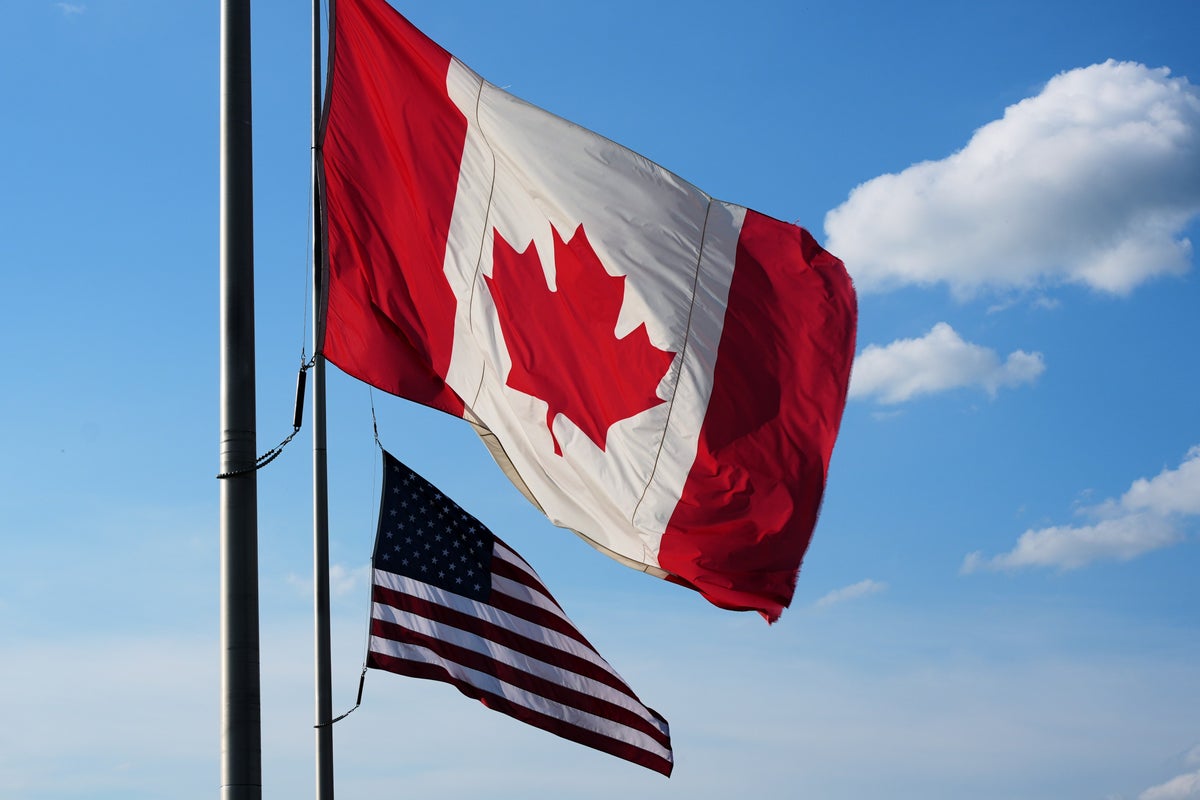
The parking lots lining the border belt from Blaine to Bangor share a common architectural feature this season: vast, echoing expanses of empty asphalt. For decades, the northern frontier operated as a frictionless economic corridor where millions of Canadian travelers crossed into the United States annually to stock up on groceries, fill hotel rooms, and anchor regional hospitality sectors. That routine has fractured. National statistics confirm that Canadian visits to the United States plummeted by a staggering 25 percent, wiping out billions in expected revenue and leaving local merchants staring at ledgers drenched in red ink.
When American tourism boards respond with multi-million-dollar marketing blitzes inviting Canadians back with sunny imagery and polite discounts, the campaigns hit a wall of absolute apathy. Travelers are not missing the memo; they are actively rejecting it. To understand why state-level promotional dollars are evaporating into thin air, one must look past the cheerful brochures and examine the convergence of macroeconomic headwinds, shifting political sentiments, and a structural re-routing of international leisure.
The Anatomy of a Grassroots Boycott
Discontent of this magnitude does not materialize overnight. When cross-border traffic begins to crater at a velocity not witnessed outside of major global crises, economists look for foundational shifts. The current cooling of Canadian tourism is not merely a temporary reaction to unfavorable exchange rates or high airfares, though both have played their part. It represents an intentional consumer realignment.
Data compiled by federal statistical agencies reveals that while total Canadian spending abroad actually rose, the capital bypassed the United States entirely. Canadians redirected billions of dollars toward European and Asian destinations or kept their vacation budgets at home. This was a deliberate choice. Friction at the border, sparked by escalating trade disputes, aggressive tariff impositions, and hostile political rhetoric directed at Canada, transformed a friendly neighbor into an unappealing destination.
Consider the plight of small business owners in border states who rely on repeat Canadian clientele for their survival. Grocery stores, campgrounds, and family-run motels report drops in revenue that rival or exceed the darkest months of global travel restrictions. When a grocery merchant in New Hampshire notes that thin margins are turning into vanishingly zero margins because local neighbors refuse to cross the line, marketing slogans about hospitality sound hollow.
Why Regional Marketing Campaigns Fail
Destination marketing organizations operate under the comforting illusion that consumer behavior can be bought back with the right creative asset. If web traffic dips, the reflex is to pump more cash into digital ads, highlight scenic vistas, or offer promotional gas cards. This strategy assumes that the barrier to entry is financial.
It is not. The barrier is emotional and political.
When a national government implements punitive trade penalties, threatens economic annexation, and treats a primary trade partner with open antagonism, the public notices. Tourism is fundamentally an act of trust. Visitors want to feel safe, welcome, and respected. When polling indicates that a vast majority of Canadian travelers view ongoing trade warfare and political posturing as personal slights, a banner ad for a shopping outlet in Washington state or a weekend package in Florida loses all persuasive power.
Furthermore, the structure of modern travel has evolved. During the prolonged downturn in stateside visits, Canadians discovered alternative pathways. They found that European cities offered comparable or superior vacation value without the underlying tension of crossing an increasingly testy southern border. Once a consumer breaks a generational habit of frequenting a neighboring country, winning them back requires more than a discount code. It requires an entirely different geopolitical climate.
The Regional Fallout
The economic damage is distributed unevenly, punishing states that depend heavily on regional vehicle traffic rather than long-haul international flights. While major coastal hubs absorb shifts in global tourism more easily, northern tier communities face existential threats.
States like Maine, North Dakota, and Washington are witnessing structural decay in micro-economies built on day-trippers. Campgrounds that once booked out months in advance by loyal Canadian families now sit vacant through peak summer weekends. Gas stations and outlet malls designed to capture weekend overflow are downsizing staff or closing their doors permanently.
The response from local chambers of commerce has often been frustration mixed with disbelief. Yet, treating this decline as a cyclical blip misses the core reality of modern consumer activism. Everyday citizens are utilizing their disposable income as a voting ballot. Until the macro-level friction dissipates, no amount of creative copywriting will convince travelers to pack up the station wagon and head south.
The asphalt remains clear. The toll booths remain quiet. The market has spoken, and it refuses to listen to pitch decks promising a return to normal.