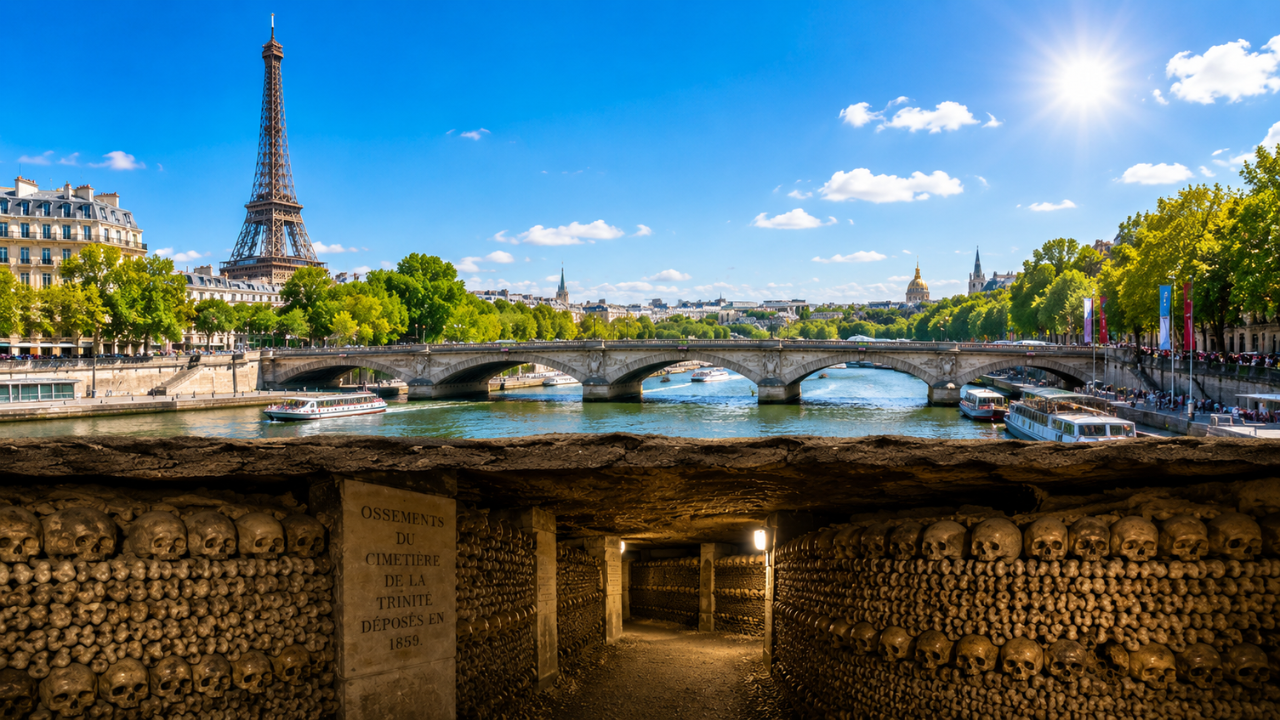
Six million skeletons pack the limestone quarries beneath the French capital, creating a massive subterranean ossuary that draws hundreds of thousands of tourists every year. But the public walkway represents less than one percent of a vast, fragile network of tunnels that spans over 180 miles. This sprawling labyrinth is currently facing unprecedented structural instability, illegal trespassing epidemics, and severe bureaucratic neglect. While the surface world marvels at the macabre history, the actual infrastructure supporting Paris from below is quietly fracturing.
The creation of this underground network was born out of sheer desperation. By the late 18th century, Paris was suffocating under the stench of its own dead. The Holy Innocents’ Cemetery, the city’s largest burial ground, had become a public health disaster. Mass graves were overflowing, bodies were improperly buried, and the putrid fluids of decomposition were seeping into neighborhood basements and contaminating local water wells. If you liked this post, you might want to read: this related article.
In 1780, a cellar wall collapsed under the weight of a mass grave, spilling corpses into a residential home. The government had to act. They turned to the ancient, abandoned limestone quarries that had provided the stone to build Notre-Dame and the Louvre. Over a period of several decades, workers conducted nighttime transfers of millions of human remains, packing bones tightly into the dark tunnels.
The Myth of the Romantic Underworld
Popular culture has painted the unmapped sections of these quarries as a playground for counter-culture rebels, known locally as cataphiles. Movies and urban legends depict a vibrant, secret society throwing parties, painting murals, and navigating the darkness with expert precision. For another perspective on this development, refer to the latest coverage from National Geographic Travel.
The reality on the ground is far less glamorous. It is dangerous, damp, and increasingly toxic.
The air quality in the deep, unventilated tunnels often plummets without warning. Pockets of carbon dioxide pool in low-lying corridors, capable of suffocating an explorer within minutes. The ground is treacherous, filled with sudden drop-offs, flooded chambers containing freezing water, and unstable ceilings prone to localized cave-ins.
The influx of casual trespassers has also taken a severe toll on the historical integrity of the tunnels. Armed with spray paint and modern trash, amateur explorers frequently deface centuries-old masonry work and structural pillars. The romanticized view of an lawless underground paradise ignores the physical degradation happening every day.
The Massive Structural Crisis Hidden from Sight
The true danger of the Paris underground is not the ghosts of the dead, but the weight of the living. Paris is a dense, heavy metropolis built directly on top of a Swiss-cheese foundation of ancient stone quarries.
When miners extracted the limestone centuries ago, they did not anticipate the weight of modern skyscrapers, subway systems, and heavy traffic. The responsibility of keeping the city from collapsing into its own basement falls on a small, underfunded municipal agency called the Inspection Générale des Carrières.
+------------------------------------+----------------------------------------+
| Structural Threat                  | Physical Impact                        |
+------------------------------------+----------------------------------------+
| Groundwater Seepage                | Erodes foundational limestone pillars  |
| Modern Metro Vibrations            | Triggers micro-fractures in stone      |
| Illegal Excavation by Trespassers  | Weakens structural support walls       |
| Heavy Surface Construction         | Increases downward pressure load       |
+------------------------------------+----------------------------------------+
Every year, water from the Seine and broken city mains infiltrates the lower levels. Limestone absorbs water like a sponge. When the stone becomes saturated, its load-bearing capacity drops drastically. Combine that with the continuous micro-vibrations from the Paris Métro lines rumbling overhead, and you have a recipe for structural failure.
Engineers must constantly inject concrete into unstable voids beneath residential streets to prevent catastrophic sinkholes. It is a game of structural whack-a-mole, and the city is losing ground.
The Black Market Economy of Human Remains
The open secrets of the catacombs extend beyond illegal entry. A disturbing underground trade thrives on the theft and sale of historical artifacts and human bones.
Despite heavy security at the official museum entrance and regular police patrols in the off-limits areas, bones disappear from the ossuary piles. Skulls and femurs are smuggled out in backpacks to be sold on digital black markets or traded within insular collector circles.
The specialized police unit tasked with patrolling the tunnels face an impossible mission. A tiny squad cannot effectively secure hundreds of miles of pitch-black, intersecting tunnels with thousands of hidden access points through manholes, basement walls, and metro shafts. The penalties for illegal entry or artifact theft are minor fines, which act as a poor deterrent against the high prices these macabre relics command online.
Tourism is Choking the Official Site
The official Paris Catacombs museum accommodates only a tiny fraction of the people who wish to visit. Strict safety regulations limit the capacity of the official circuit to just 200 visitors at any given time. This restriction creates a permanent bottleneck, driving up ticket prices and fueling a secondary market of unauthorized tour operators who promise to bypass the lines by taking tourists through illegal entry points.
This massive commercial pressure creates a strange paradox. The city uses the catacombs as a major cultural marketing tool to draw international revenue, yet the broader underground network receives only a fraction of the funding required for comprehensive stabilization and preservation. The tourist revenue generated by the official site goes into general municipal coffers rather than being directly reinvested into securing the hundreds of miles of failing tunnels outside the tourist zone.
The Cost of Preservation Versus Progress
As Paris continues to modernize, the underground network represents a massive financial liability. Upgrading public transit lines, installing new utility conduits, and building deeper foundations for modern architecture all collide directly with the fragile historical space below.
City planners frequently face a harsh choice. They must either spend millions of euros to reinforce ancient tunnels or completely concrete them over, erasing centuries of history in the name of public safety and urban development.
Many unmapped sectors have already been completely filled with liquid concrete, destroying unexamined archaeological data forever. This tension between historical preservation and modern urban necessity shows no signs of slowing down. The city cannot afford to let its streets collapse, but it also cannot afford to properly preserve every mile of its subterranean heritage.
The future of the Paris underworld is bleak. Without a massive reallocation of municipal funds, increased law enforcement resources, and a coordinated structural stabilization effort, the tunnels will continue to deteriorate. The historical site will eventually be reduced to isolated, concrete-reinforced pockets, while the rest of the vast network collapses under the weight of the modern city above. Property owners across the southern districts of Paris must prepare for increased risks of localized subsidence, as the ancient limestone pillars finally give way to time, water, and neglect.