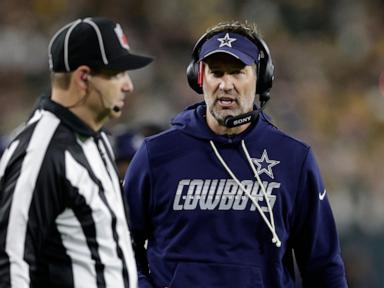
The Dallas Cowboys are stacking flat, inconsistent performances ten weeks into the 2026 season, leaving head coach Brian Schottenheimer at 4–6 and staring down a second straight year without a playoff berth. That sub-.500 mark follows a 7–9–1 debut campaign in 2025, giving Schottenheimer an 11–15–1 head coaching record and turning every Sunday into a survival test rather than a statement of identity.
Watch Dallas long enough this fall and the frustration stops feeling like bad luck. It feels structural. A team can score 40 points against San Francisco and still lose by six, surrender 33 points in overtime to Arizona, and commit 14 penalties for 153 yards in a game it barely survives against Indianapolis. Calling those outings merely "uninspired" lets the front office off too easy. They look like a roster and a sideline out of sync under bright lights.
Why Schottenheimer Cannot Escape the Roller Coaster
Schottenheimer has been candid about the problem, calling consistency the single biggest battle of the 2026 season. He is right about the symptom. Through ten games, Dallas has not strung together two consecutive wins. Every spark—a road win in Philadelphia, a 508-yard offensive explosion in Indianapolis—gets undercut within days by sloppy execution, blown leads, or defensive leaks.
Yet diagnosis is not the same as cure. When a head coach repeatedly points to "little things," "details," and "execution" after losses to Green Bay, Tampa Bay, and Arizona, the critique eventually turns inward. After 26 years on NFL staffs, Schottenheimer brings deep institutional familiarity and a steady, accountable tone at the podium. Still, steady press conferences do not tighten coverage on third-and-long or stop pre-snap penalties from wiping out promising drives.
At 11–15–1 overall, Schottenheimer's margin for error has shrunk to almost nothing in a franchise where postseason absences carry heavy political weight.
There is a fair counter-argument worth making before writing off the head coach. The offense has held up its end far more often than the scoreboard suggests. Entering Week 11, Dallas sits 5th in the NFL in scoring at 28.6 points per game and 8th in total yardage at 368.3 yards per contest. On many Sundays, Schottenheimer and offensive coordinator Klayton Adams have moved the ball well enough to win.
The Defensive Rot Sinking the Season
You cannot outscore a defense that surrenders 393.8 yards and 28.2 points per game every single week. Through ten weeks, the Cowboys defense ranks at the bottom of the league in total yardage allowed and 30th in scoring defense, turning high-scoring afternoons into track meets that Dallas keeps losing.
The second half against the San Francisco 49ers captured the whole mess. Dallas led 17–16 at halftime, only to give up 29 points and 340 yards after the break in a 46–40 defeat. Schottenheimer called the second-half display "unacceptable," and rightly so. When a defense allows opposing offenses to dictate tempo and field position all afternoon, the offense is forced into high-variance catch-up football that breeds turnovers and rushed decisions.
| Metric | 2026 Dallas Offense | 2026 Dallas Defense | What It Means for Schottenheimer |
|---|---|---|---|
| Points Per Game | 28.6 (5th in NFL) | 28.2 (30th in NFL) | Shootouts masks unit imbalance |
| Total Yards Per Game | 368.3 (8th in NFL) | 393.8 (32nd in NFL) | Defense loses yardage battle nightly |
| Rushing Yards Allowed | 102.8 per game (1,028 total) | 154.1 per game (1,541 total) | Opponents control clock and fourth quarters |
| Penalties | 79 for 702 yards | 96 for 797 yards | Self-inflicted wounds stall momentum |
Bringing in Mike Pettine in mid-October as a senior defensive assistant and shifting play-calling responsibilities while keeping Christian Parker in place as defensive coordinator shows the staff knows the status quo failed. Schottenheimer publicly backed Parker's long-term upside while admitting a different perspective was needed in the moment. That distinction sounds diplomatic in Frisco. In practice, midseason shake-ups rarely fix deep personnel and tackling flaws overnight.
Overlooked Factors Behind the Flatness
Most postgame hot takes blame play-calling or effort. Two quieter forces deserve equal scrutiny.
Discipline and Fourth-Quarter Finishing
Sloppy habits have repeatedly handed momentum back to opponents. Against Indianapolis, 14 penalties for 153 yards turned a dominant yardage edge into a white-knuckle 27–23 escape. Against Arizona, Dallas led coming out of halftime and let the game slip into overtime before losing 33–30. Finishing games requires situational restraint—staying on schedule on first down, tackling cleanly in space, and keeping flags in pockets.
Front-Office Reality in Dallas
Every Cowboys head coach operates inside a unique power structure where owner and general manager Jerry Jones shapes the roster and the narrative. Schottenheimer has been blunt about the stakes: missing the postseason after a 7–9–1 season and a sluggish 4–6 start makes the year a failure. Yet a head coach can only coach the depth chart and scheme around the roster he has. When run defense and penalty control lag all autumn, blame rarely settles on just one headset.
What Has to Change Before December
The NFC East has not run away from Dallas, which keeps postseason math alive heading into the final stretch against teams like Tennessee, Philadelphia, and Seattle. Still, hope means nothing if Dallas cannot stop beating itself. Schottenheimer has to cut the pre-snap and procedural penalties, lean on balanced drives that protect the defense, and demand four quarters of physicality rather than three quarters of promise followed by a collapse. Starting with Sunday's matchup against the Tennessee Titans, back-to-back wins are no longer a bonus—they are the price of keeping his seat from catching fire.