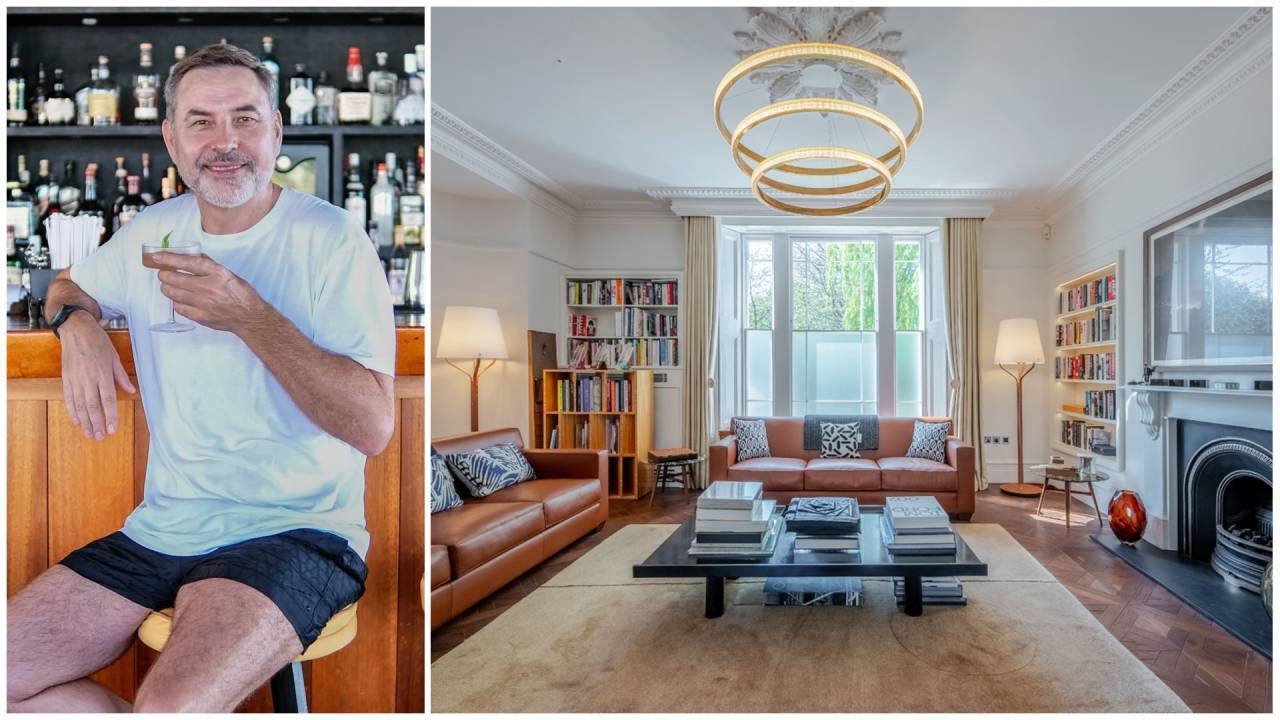
David Walliams listed his four-bedroom London townhouse overlooking Regent’s Park for £10.5 million—a £1.45 million price cut from an earlier asking figure near £12 million—just as a joint investigation by The Guardian and ITV News published sexual misconduct allegations involving young women and teenage fans. Within days of the reporting going public, the 4,527-square-foot Primrose Hill property was quietly pulled from property portals. Walliams, 55, bought the house for £8.45 million in 2013 according to HM Land Registry records, and its turbulent listing now sits at the center of an institutional reckoning across British publishing, media law, and prime real estate.
Property listings in NW1 rarely become front-page news unless the timing exposes something deeper about liquidity, reputation, and legal exposure. Most celebrity real estate coverage treats a high-value listing as simple lifestyle curiosity. That framing misses the financial and legal mechanics driving the move. When a public figure faces coordinated investigative reporting, high-profile High Court battles, and the collapse of a lucrative commercial partnership, a residential asset worth eight figures stops being merely a home. It becomes an illiquid liability, a potential source of legal war-chest capital, and an uncomfortable magnet for press scrutiny.
The Architecture of a Prime London Asset
To understand why the £10.5 million valuation matters, look at the numbers behind the bricks. HM Land Registry filings confirm that Walliams acquired the four-bedroom residence near Regent’s Park and Primrose Hill in 2013 for £8.45 million. Spanning 4,527 square feet, the townhouse sits in one of North London’s most insulated postcodes, a neighborhood favored by media executives, actors, and financiers who pay a steep premium for Georgian and Victorian proportions paired with direct park access.
On paper, a jump from £8.45 million in 2013 to an initial asking price approaching £12 million suggests healthy appreciation. Look closer at the prime central and north-west London housing market over that thirteen-year span, however, and the picture changes. Stamp duty hikes introduced for high-value properties, rising borrowing costs, and sluggish foreign buyer demand have flattened real-terms growth across London’s £10 million-plus tier. Once you factor in transaction taxes, agent fees, maintenance on a 4,527-square-foot period building, and inflation since 2013, slashing the asking price by £1.45 million down to £10.5 million leaves remarkably thin net gains.
Then came the withdrawal. Days after the investigation broke, the listing vanished from Rightmove. Veteran prime-property brokers recognize this pattern immediately. High-net-worth sellers pull a listing during an acute reputational storm for three practical reasons:
- Preventing distressed-sale discounts: Buyers in the £10 million bracket read the front pages. If a seller appears forced to liquidate to cover legal expenses or relocate quickly, prospective purchasers aggressively undercut the asking price.
- Eliminating security and privacy breaches: Active property listings publish detailed floor plans, garden layouts, and entry points online. During intense media stakeouts, publicly accessible schematics become a security headache.
- Shifting to off-market channels: Discreet "pocket listings" allow agents to quietly circulate a property to vetted family offices and cash buyers without public price-drop tracking.
The High Court Battle Behind the Headlines
The real story behind the timing of the sale lies in the months of unseen legal maneuvering that preceded publication. Walliams did not wake up to a surprise headline. Earlier in the year, his legal team went to the High Court in London seeking an injunction to block ITN and The Guardian from publishing the allegations against him. For months, reporting restrictions kept his identity shielded behind legal anonymity while judges weighed privacy rights against public-interest journalism.
High Court privacy injunctions in the United Kingdom are extraordinarily expensive to pursue. Retaining top media silks, instructing specialist defamation and privacy firms, and preparing evidence for contested hearings routinely runs into hundreds of thousands of pounds, with the losing party often facing substantial adverse cost orders. When the High Court dismissed the bid to halt publication, Walliams declined to pursue a further appeal, clearing the legal barrier that had kept his name out of the press.
The resulting joint investigation by The Guardian and ITV News detailed accounts from multiple women who alleged that Walliams used his celebrity status and position of authority to pursue teenage fans—some as young as 15 or 16—and young women for sexual relationships. In a written response to the journalists investigating the claims, Walliams strongly denied breaking the law or acting as a sexual predator.
"Looking back, I realise that at times I behaved thoughtlessly towards other people I had casual sexual relationships with. I realise I did not always take people's feelings properly into account. That is something I regret. And whilst a power imbalance is inevitable when one party is famous, abusing that power is something else entirely and it is something that I never did."
That distinction—acknowledging a power imbalance while denying legal wrongdoing or abuse—forms the core of his defense. Yet in the commercial entertainment sector, legal liability and career viability operate on entirely different standards. A performer does not need to be charged with a crime for blue-chip corporate partners to sever ties.
Publishing’s Quiet Severance and the NDA Reckoning
Long before the Primrose Hill townhouse hit the market at £10.5 million, the commercial foundation of Walliams’ post-television empire had already fractured. For more than a decade, his children’s books were a juggernaut for HarperCollins UK, generating massive sales volumes that rivaled established literary franchises. When HarperCollins previously terminated its publishing relationship with him, the company offered sparse public explanation for what industry insiders viewed as a seismic commercial decision.
Subsequent reporting clarified what happened behind closed doors. The publisher ended the relationship after internal concerns were raised over several years regarding his conduct, including allegations involving an inappropriate sexual relationship with a junior female employee and the pursuit of another. Even more damaging for the publishing giant were allegations from critics and former insiders that corporate lawyers had used non-disclosure agreements and legal pressure to contain complaints rather than confront a bestselling moneymaker.
Former HarperCollins UK chief executive Victoria Barnsley publicly condemned the alleged handling of internal complaints, stating it was unacceptable for female staff members to be pushed out or paid off while a star author remained protected. Zelda Perkins, the former Miramax executive who famously broke her own non-disclosure agreement to expose Harvey Weinstein and has advised UK lawmakers on statutory reform, highlighted the psychological toll of corporate silencing mechanisms.
HarperCollins UK responded by stating it was shocked by the reporting concerning teenage girls, noting it had already terminated its relationship with Walliams and took staff safety seriously. Still, the episode collided directly with a broader political shift in Westminster. Prime Minister Andy Burnham pointed to the fallout surrounding Walliams alongside the criminal conviction of Russell Brand as a watershed moment, accelerating legislative reforms designed to strip non-disclosure agreements of their power to silence victims of workplace harassment or crime. The government also signaled plans to consult on a staggered age of consent following scrutiny of relationships between men in their thirties and 16-year-old girls.
Why Reputational Collapse Changes Celebrity Cash Flow
Observers outside the media business often assume that a celebrity who has sold tens of millions of books and fronted prime-time television shows sits on an inexhaustible pile of liquid cash. That assumption rarely survives contact with an accountant’s ledger. High-earning entertainers typically structure their wealth around ongoing royalties, active television contracts, live tour guarantees, and illiquid residential real estate.
When a scandal hits, the cash-flow tap shuts off abruptly while fixed overheads remain stubbornly high. Consider the financial pressures converging at once:
- Loss of front-list advances: Children’s publishing operates on multi-book advances and promotional cycles. Losing a major publishing house eliminates future seven-figure advances overnight, even if backlist titles linger in circulation.
- Television and brand attrition: Following his earlier exit from Britain's Got Talent, television commissioning editors and corporate sponsors treat ongoing reputational controversy as an uninsurable risk.
- High fixed carrying costs: A 4,527-square-foot London townhouse carries heavy annual council tax, insurance, security, and upkeep bills, alongside ongoing legal retainers that show no sign of diminishing.
In that environment, putting a £10.5 million property on the market is a textbook liquidity maneuver. Downsizing frees up millions in tied-up equity, reduces annual burn rates, and removes a high-profile London address from public view. Pulling the listing from Rightmove days later does not mean the financial logic disappeared; it simply indicates that selling in the full glare of a breaking news cycle destroys negotiating power.
Separating Confirmed Facts from Tabloid Noise
Coverage of the townhouse listing has occasionally blurred real estate speculation with investigative reporting. Separating verified public records from rumor is essential to understanding where the story actually stands.
| Detail | Verified Status | Source Context |
|---|---|---|
| Purchase Price & Year | £8.45 million in 2013 | Confirmed via HM Land Registry records |
| Property Specs | Four-bedroom townhouse, 4,527 sq ft | Located near Regent's Park / Primrose Hill |
| Asking Price Reduction | Listed at £10.5m, down from nearly £12m | Represents a £1.45 million price cut |
| Listing Status | Removed from public portals | Pulled within days of the November 2026 investigation |
| Criminal Charges | None reported | Walliams denies breaking any law; allegations are civil/journalistic |
Notice the final row in that breakdown. Unlike criminal prosecutions where assets can be frozen by court order, no criminal charges have been brought against Walliams, and he maintains that all relationships were consensual and lawful. The decision to list—and subsequently withdraw—the Primrose Hill home is entirely private and commercial, driven by personal calculation rather than state intervention.
Yet the intersection of that quiet property withdrawal with sweeping legislative reform on non-disclosure agreements marks a permanent shift in how British institutions handle power imbalances. For decades, wealth, High Court injunctions, and corporate NDAs worked together as an effective shield, allowing powerful figures to manage fallout quietly behind closed doors. Those doors are closing fast, leaving even a £10.5 million sanctuary overlooking Regent's Park exposed to the harsh light of public accountability.