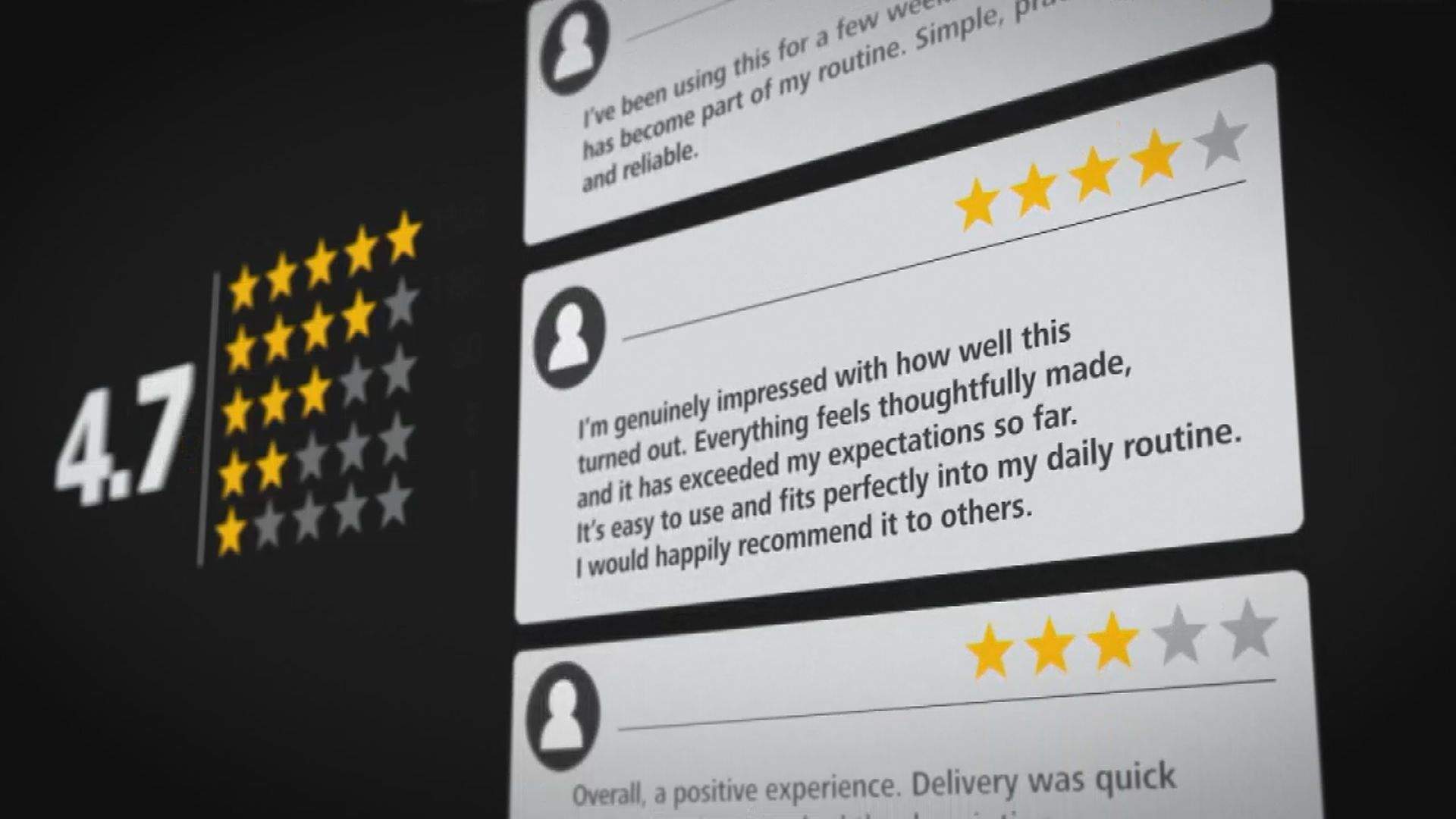
Fake online reviews are no longer a nuisance managed by a polite customer service reply; they have evolved into a sophisticated shadow industry that distorts consumer trust, rigs search algorithms, and forces honest merchants into an expensive war of attrition. Every day, organized review brokers and automated bot networks manufacture synthetic consensus on major platforms, costing businesses billions in lost revenue and reputational damage. For small operators and enterprise brands alike, the star rating sitting next to their name has become both their most valuable asset and their single greatest point of vulnerability.
Walk into any local coffee shop, independent contracting firm, or mid-sized e-commerce warehouse, and you will find owners checking their dashboards with the nervous energy of day traders. They know a single coordinated wave of one-star ratings can tank their conversion rates overnight. Worse, they know the platforms hosting these attacks rarely move fast enough to stop the bleeding.
The Anatomy of a Modern Review Attack
Ten years ago, spotting a fake review was easy. The grammar was broken, the profile picture was a stock photo of a sunset, and the reviewer had somehow visited a tire shop in Ohio, a dentist in Florida, and a bakery in Seattle within forty-eight hours. Those amateur hour days are over.
Today, the manipulation of online reputation operates through structured, decentralized marketplaces. Much of this activity takes place in plain sight inside private messaging groups on Telegram, Discord, and encrypted forums. Here, reputation brokers act as middlemen between desperate or malicious clients and thousands of gig workers paid pennies per post.
Consider a hypothetical scenario involving a regional HVAC company. Suppose a newly launched competitor wants to capture local search traffic quickly. Instead of spending fifty thousand dollars on traditional advertising, they hire a broker for a fraction of that cost. The broker distributes instructions to hundreds of real human accounts with established digital footprints. Some workers are paid to leave glowing five-star reviews with specific local keywords for the new company, while others are paid to leave plausible, detailed one-star complaints on the established competitor's profile.
Because these accounts belong to real people using residential IP addresses and aged profiles, automated spam filters frequently miss them. The attacks are calibrated to look like organic dissatisfaction—mentioning a missed appointment window, an unexplained fee, or a rude technician. When a potential customer searches for emergency air conditioning repair, they do not see a spam attack; they see a pattern of carelessness. They click on the competitor instead.
How Search Algorithms Reward the Lie
The financial damage of fake online reviews goes far beyond human psychology. Modern consumers are conditioned to treat anything below a 4.2-star average as a warning sign, yet the invisible harm happens inside the ranking algorithms before a shopper even reads a single word.
Major discovery platforms—from Google Business Profiles to Amazon and Yelp—rely heavily on review velocity, keyword density, and recency to determine who wins the top spots on a search results page. When a business receives a steady drip of five-star reviews containing phrases like "best emergency plumber" or "fast shipping," the algorithm interprets those signals as proof of relevance and quality. It rewards the listing with prime visibility.
Conversely, a sudden drop in average rating or a spike in negative sentiment triggers algorithmic demotion. A business that spent a decade building local authority can find itself pushed off the first page of search results in a matter of weeks. Once visibility drops, organic traffic dries up. To survive, the legitimate business must buy paid ads just to appear in front of customers who used to find them for free. It is a hidden tax levied on honesty.
The Extortion Racket Nobody Wants to Admit Exists
There is a darker tier to this underground economy that goes beyond passive market distortion. Across the hospitality, home services, and e-commerce sectors, business owners increasingly face direct review extortion.
The playbook is brutally efficient. A business wakes up to twenty or thirty one-star reviews posted within a few hours. Shortly after, the owner receives an email, a text message, or a direct message on social media from an anonymous account. The message offers a simple transaction: pay a fee—usually in cryptocurrency or gift cards—and the negative reviews will vanish. Refuse, and another wave of one-star ratings will follow.
For a restaurant operating on razor-thin margins, this presents an impossible choice. Reporting the extortion to the hosting platform triggers a bureaucratic ticketing process that can drag on for weeks. During that time, Friday night reservations plummet. Paying the ransom validates the criminal business model and marks the business as an easy target for future shakedowns, yet refusing can mean missing payroll.
Why Tech Platforms Struggle to Clean Their Own Houses
If the problem is so widespread, why haven't trillion-dollar technology companies eradicated it? The uncomfortable truth is that detection is technically difficult, and enforcement runs into structural conflicts of interest.
Every major platform invests heavily in machine learning models designed to catch anomalous behavior. These systems analyze device fingerprints, location history, typing cadence, and account networks. They block millions of fake submissions every year before they ever go live. However, detection engineers are locked in a perpetual cat-and-mouse game. Every time a platform updates its classifier to catch a specific pattern, review brokers adjust their tactics within days.
Furthermore, platforms must balance aggressive filtering against the risk of false positives. If an algorithm becomes too strict, it begins deleting legitimate reviews from real customers who happen to leave a brief comment or use a public Wi-Fi network. Small businesses rely heavily on genuine positive reviews to grow; if those disappear silently into a spam filter, owners revolt.
There is also a quieter economic reality at play. Platforms thrive on engagement, high review counts, and merchant ad spend. While no reputable tech company wants its ecosystem overrun by fraud, aggressive manual moderation requires massive human labor costs. Relying on automated systems that catch the obvious junk while leaving gray-area manipulation untouched is far cheaper than hiring armies of human investigators to adjudicate every disputed one-star rating.
The Regulatory Crackdown and Its Limits
Governments have finally begun treating fake online reviews as a serious consumer protection crisis rather than a minor internet annoyance. In the United States, the Federal Trade Commission finalized rules explicitly banning the buying, selling, and suppression of fake reviews, attaching steep civil penalties to each violation. Similar regulatory frameworks have gained teeth across the United Kingdom and the European Union.
On paper, these laws give regulators the power to bankrupt review brokers and fine businesses that inflate their ratings. In practice, enforcement remains an uphill battle.
The internet ignores national borders. A business in Chicago can hire a broker operating out of a jurisdiction with weak cybercrime enforcement, who then subcontracts the actual posting to gig workers scattered across four continents. By the time a regulator traces the shell companies and encrypted payment rails, the broker has already shut down one storefront and opened three more under different names.
Regulatory fines also tend to target high-profile corporate offenders rather than the thousands of hyper-local skirmishes happening daily. A massive fine against a national brand makes headlines and serves as a deterrent, yet it offers little immediate relief to an independent auto mechanic watching his livelihood get sabotaged by a rival down the street.
What Businesses Actually Get Wrong About Defense
When confronted with fake online reviews, most business owners make predictable mistakes that worsen their situation.
The most common error is emotional engagement. Outraged by an obvious lie, an owner writes a furious, defensive public response accusing the reviewer of fraud or threatening legal action. To a future customer scanning the page, that response does not look like righteous indignation; it looks unhinged. Shoppers rarely know the backstory, and an aggressive owner is just as off-putting as a bad review.
The second mistake is fighting fire with fire. Exhausted by slow platform support, some desperate owners hire reputation management agencies that quietly buy positive reviews to dilute the fake negative ones. Beyond violating platform terms of service and breaking federal law, this strategy exposes the business to catastrophic risk. If the platform eventually detects the purchased five-star reviews, it will not just delete them—it may suspend the entire business profile, erasing years of legitimate customer feedback overnight.
Effective defense requires treating reputation management as an ongoing operational discipline rather than an emergency response.
Building an Audit Trail Before Trouble Hits
Platforms rarely remove a disputed review simply because a business owner claims it is fake. They require evidence that the post violates specific community guidelines, such as conflict of interest, off-topic ranting, or spam patterns. Businesses that maintain clean internal records—matching customer names, transaction timestamps, and service logs—can present clear, factual documentation when escalating disputes through official channels.
Diluting Risk Through High-Volume Authentic Feedback
A profile with fifteen reviews is fragile; two fake one-star posts will cripple its average. A profile with five hundred authentic reviews is resilient; the same attack barely moves the needle. Businesses that systematically ask every satisfied customer for feedback immediately after a positive interaction build a statistical moat that makes coordinated sabotage prohibitively expensive for competitors.
Diversifying Trust Signals Beyond Third-Party Gatekeepers
Relying entirely on a single third-party platform for customer acquisition is a dangerous single point of failure. Smart operators capture customer testimonials directly on their own domains, build email lists, and cultivate direct referral networks so that an algorithmic hiccup or a targeted smear campaign on one site cannot sever their revenue stream.
The Eroding Baseline of Digital Trust
Perhaps the most corrosive consequence of the fake review economy is not the individual business that closes its doors, nor the consumer who wastes money on a substandard product. It is the slow death of public trust.
When shoppers assume every five-star rating is bought and every one-star rant is sabotage, the entire feedback mechanism loses its value. Consumers begin ignoring star averages altogether, retreating into closed group chats, private forums, and word-of-mouth recommendations from people they know personally.
For decades, the promise of the open web was that transparency would level the playing field, allowing a tiny, honest business to outshine a massive corporation purely on the strength of customer satisfaction. That promise only holds if the scoreboard is real. Until platforms face genuine financial liability for hosting fraudulent consensus, the burden of proving honesty falls entirely on the businesses trying to survive it.


