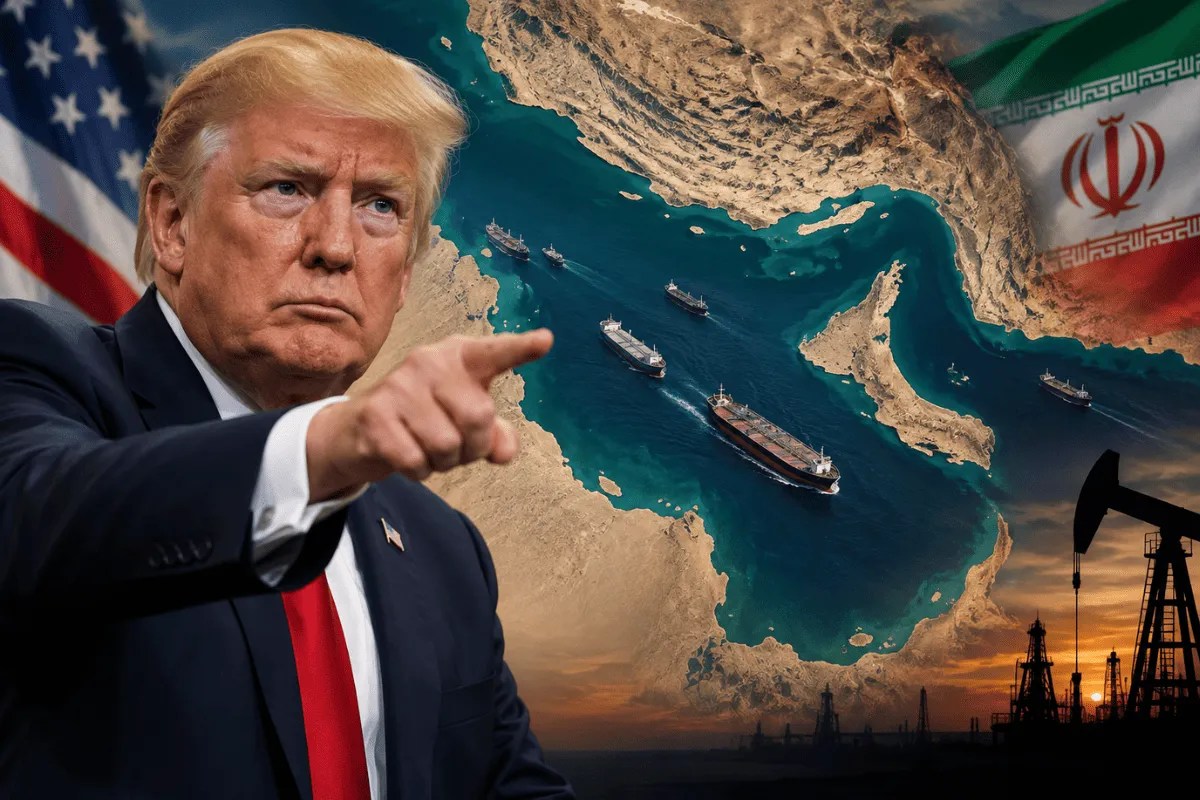
United States President Donald Trump ordered federal agencies to purge Canadian-origin products from the General Services Administration's multi-billion-dollar contracting portfolios, escalating an economic conflict that has fundamentally broken decades of cross-border supply chain integration. The directive targets the Multiple Award Schedules, a catalog system worth more than 50 billion dollars annually that federal departments use to purchase commercial goods and services.
This sudden exclusion arrived hours after Canada implemented retaliatory tariffs reaching up to 50 percent on approximately 28 billion dollars worth of American goods. Those counter-measures, championed by Prime Minister Mark Carney, struck nearly 700 U.S. commodities ranging from industrial steel and aluminum to household essentials. The tit-for-tat escalation has transformed what began as a disagreement over trade balances into an institutional separation of two economies that spent the last thirty years knitting themselves together.
The mechanics of public sector purchasing dictate the velocity of this shock. Federal procurement is not a spot market where buyers change vendors on a whim. The Multiple Award Schedules function as long-term pre-approved supplier lists where prices, terms, and compliance standards are locked in advance.
When the White House commands the General Services Administration and the Office of the United States Trade Representative to strip Canadian items from these schedules, compliance officers cannot simply adjust an Excel spreadsheet. Entire vendor verification pipelines freeze.
Consider a hypothetical mid-tier manufacturing contractor based in Michigan that supplies specialized electronic housing units to both the Department of Defense and commercial buyers. If that component incorporates sub-assemblies machined across the border in Ontario—a routine practice under decades of integrated continental manufacturing—that product instantly becomes ineligible for federal acquisition lists. Contracting officers must find domestic alternatives or halt procurement until supply chains are entirely re-routed. The administrative friction costs time, capital, and institutional memory.
The stated justification from the Oval Office rests on a lack of reciprocity. The administration points to Ottawa's federal "Buy Canadian" policies and provincial procurement restrictions which prioritize domestic suppliers and local content for major public works and strategic economic sectors. Washington argues that while Canadian firms enjoy broad access to state and federal bidding opportunities across the United States, American small businesses face structural roadblocks when attempting to sell into Canadian public markets.
"No reciprocity, no access," became the guiding mantra for an administration willing to leverage the massive purchasing power of the American state to force structural concessions.
Yet this approach ignores the complex reality of deeply embedded supply chains. Modern industrial production does not respect national boundaries. A heavy vehicle or an aerospace component crossing the border multiple times during its fabrication process defies simple labeling as purely American or strictly Canadian. By penalizing origin at the procurement stage, the policy creates severe compliance burdens for domestic companies that rely on northern inputs to remain competitive on price and delivery timelines.
Ottawa's counter-strategy under Prime Minister Carney signals an explicit pivot away from reliance on American markets. The deployment of dollar-for-dollar tariffs targeting U.S. agricultural equipment, dairy, plastics, and electronics aims to inflict localized pain on American congressional districts tied to export economies. At the same time, Canadian leadership is actively accelerating trade diversification efforts toward Europe and the Pacific, attempting to build insulation against future shocks emanating from Washington.
The political calculus on both sides points toward prolonged friction rather than a swift negotiated settlement. In Washington, trade hawks view these aggressive moves as long-overdue corrections to unbalanced trade frameworks. In Ottawa, standing up to American economic pressure has become a defining test of national sovereignty. As import bans on specific categories of alcohol and industrial goods loom later this month, the structural decoupling of two historic allies accelerates into uncharted territory.