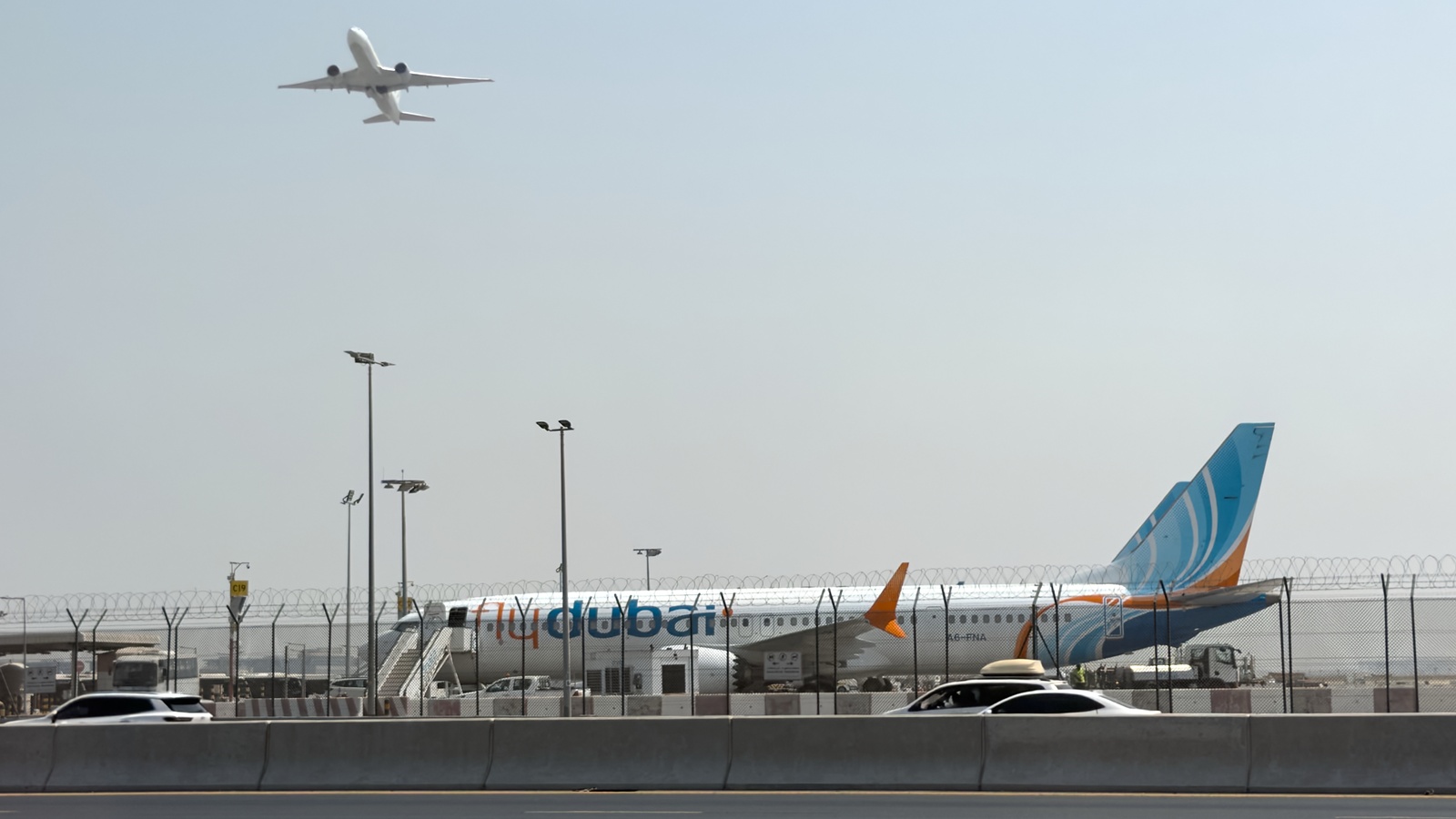
Commercial aviation is built entirely on a brittle architecture of trust. When a passenger steps onto an aircraft, they surrender absolute control of their survival to two individuals locked behind a reinforced steel door. On September 30, 2026, that foundational premise fractured at 34,000 feet. Flydubai Flight 1073, traveling from Dubai International Airport to Ben Gurion Airport near Tel Aviv, became the center of a terrifying mid-air security crisis when an internal cockpit attack transformed a routine commercial service into a near-catastrophe.
The incident exposed dangerous vulnerabilities in modern flight deck protocols, triggering immediate route suspensions, high-stakes diplomatic disputes, and a profound re-evaluation of aviation security across the Middle East. If you found value in this piece, you might want to read: this related article.
The Anatomy of a High-Altitude Breach
Flight 1073, operated using a Boeing 737 MAX 8 carrying over 170 passengers—the majority of whom were Israeli citizens—was cruising peacefully over airspace near the Saudi-Jordanian border. Roughly an hour before its scheduled arrival,
Mid Air Security Failures Expose the Vulnerabilities of Middle Eastern Aviation
travel, news For another look on this story, refer to the latest coverage from Travel + Leisure.
Aviation security operates on a fragile consensus. Passengers surrender their belts, liquids, and privacy at the security checkpoint, trusting that the sealed tube of an aircraft cabin remains an impenetrable sanctuary once airborne. That consensus shattered following a violent mid-air stabbing and subsequent security scares on recent Flydubai flights connecting Dubai and Tel Aviv. When a routine commercial flight transforms into a crime scene thousands of feet above the earth, the illusion of total protection evaporates instantly.
The normalization of direct commercial air corridors between the United Arab Emirates and Israel was hailed as a diplomatic triumph. Economic ties flourished, tourism surged, and thousands of travelers crossed a historic political divide on a weekly basis. Yet, security protocols did not mature at the same velocity as commercial demand. The integration of regional carriers into high-traffic routes demands an overhaul of threat assessment, cabin defense mechanisms, and screening harmonization between jurisdictions with starkly different security profiles.
The Anatomy of an Airborne Emergency
Commercial aircraft are uniquely hostile environments for handling violent actors. Space is constrained, exits are restricted, and the psychological contagion of panic can turn a localized altercation into a catastrophic loss of control. When an assailant initiates a physical attack inside a pressurized cabin, the response time of law enforcement is measured in hours, not minutes. Flight crews are trained primarily in service and standard safety evacuations, not tactical hand-to-hand neutralization of armed individuals.
The incident involving a mid-air stabbing aboard a Flydubai flight forced aviation authorities to confront an uncomfortable reality. Weapons or improvised sharp objects bypassed screening checkpoints or were fashioned from readily available cabin materials. Security checkpoints at major international hubs utilize advanced imaging and explosive detection systems, yet detecting every potential weapon without grinding passenger throughput to a halt remains an unsolved engineering challenge.
Furthermore, diversion protocols introduce an entirely separate set of logistical and geopolitical complications. When a flight is forced to divert mid-route due to an active security threat, pilots must navigate airspace permissions, fuel constraints, and foreign station readiness on short notice. A diversion is not merely a change in heading; it is an emergency negotiation involving air traffic control centers across multiple sovereign borders, each with distinct protocols for managing hijacked or compromised aircraft.
Structural Blind Spots in Regional Aviation Security
The expansion of regional aviation hubs has outpaced the standardization of security protocols. While international bodies like the International Civil Aviation Organization set baseline standards, individual national civil aviation authorities retain sovereign control over specific screening mandates and intelligence-sharing agreements.
Intelligence sharing between disparate security apparatuses often moves at the speed of bureaucracy rather than the speed of modern transit. A passenger flagged in one jurisdiction may clear automated security gates in another due to fragmented watchlists and incompatible database architectures. Closing these gaps requires unprecedented cooperation between intelligence agencies that historically viewed one another with deep suspicion.
Airlines face an impossible economic equation. Increasing security theater through redundant screening slows operations and inflates ticket prices, while cutting corners invites tragedy. The airline industry operates on razor-thin profit margins, meaning that voluntary investments in advanced security technology or specialized onboard tactical personnel are rarely prioritized unless mandated by regulatory decree.
The Psychological Aftermath and the Future of Flight
Travelers absorb these incidents through the lens of personal risk. Passenger confidence is a non-renewable resource once severely depleted. When flights between major economic centers become synonymous with security alerts and mid-air violence, business travel volume shifts, and leisure tourists reconsider their itineraries.
Aviation security cannot rely solely on reactive measures implemented after a crisis occurs. Hardening the cabin environment requires a multi-layered defense strategy starting long before a passenger steps onto the tarmac.
The path forward demands a complete re-evaluation of how international carriers manage threat mitigation. Biometric screening integration, behavioral analysis training for ground and flight crews, and standardized emergency response protocols across partnering nations are no longer optional upgrades. They are the baseline requirements for maintaining public trust in global mobility.
The skies connecting Dubai and Tel Aviv represent a bridge between cultures and economies. Securing that bridge requires acknowledging that the old playbook is obsolete, and the cost of complacency is measured in human lives.


