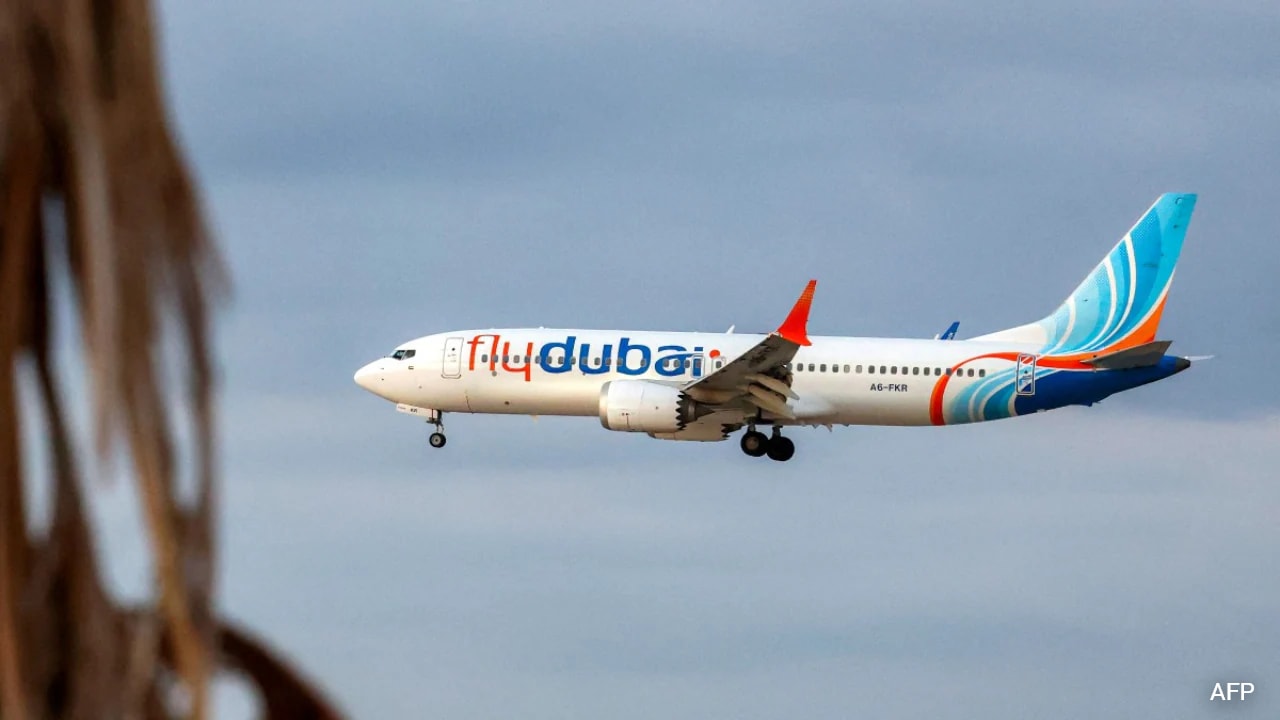
When an aluminum tube carrying hundreds of souls drops 16,000 feet in thirty seconds, the laws of physics stop feeling abstract. They become a violent, physical reality.
Flight tracking data and subsequent simulations of Flydubai flight FZ1073 laid bare a terrifying operational anomaly over the Middle East. The aircraft experienced descent rates peaking near catastrophic levels, plunging thousands of feet per minute. Aviation instructors reviewing the telemetry did not mince words. They likened the trajectory to a vertical roller coaster, an environment where unbelted occupants are violently separated from their seats, loose cabin service items turn into airborne projectiles, and the structural limits of a Boeing 737 are pushed to the absolute edge of their design envelope. In similar updates, read about: Why Israel Ordering Security Reviews After the flydubai Attack Misses the Entire Point.
Yet, focusing solely on the sensory terror of the descent misses the mechanical and human narrative of what actually happened in the air.
The Anatomy of a Sudden Drop
Commercial airliners are remarkably resilient machines. They are engineered to withstand structural loads far exceeding normal operational parameters. However, a descent rate of over 30,000 feet per minute—as suggested by initial radar replays during the height of the chaotic fluctuations—places immense stress on the airframe. Condé Nast Traveler has also covered this critical issue in great detail.
When a commercial jetliner enters a steep nose-down attitude, the primary danger is not just the proximity of the ground. It is the onset of aerodynamic overspeed and structural breakup. As gravity pulls the nose down, air density increases rapidly at lower altitudes. If the recovery is initiated too aggressively, the resulting G-forces can snap wings or shear the tail assembly. Conversely, a delayed recovery guarantees ground impact.
Flight FZ1073 fluctuated wildly between sudden climbs and rapid descents. These altitude excursions point directly to a fierce struggle for control rather than a standard mechanical failure or routine atmospheric turbulence. Modern twin-engine jets do not pitch up and down across tens of thousands of feet on autopilot without external interference or catastrophic control input.
Behind the Flight Deck Door
Initial reports from aviation authorities and subsequent investigative leaks revealed a chilling human element behind the telemetry charts. The extreme flight profile was allegedly precipitated by an onboard security breach within the flight deck.
For decades, commercial aviation security has focused heavily on external threats. Reinforced cockpit doors, introduced globally after the security failures of 2001, were designed specifically to keep malicious actors out. But these heavy, locked doors created an unintended operational vulnerability. They locked the pilots inside together, isolating them from the cabin. When a threat originates from inside that secure barrier, standard defensive protocols fracture.
Reports indicated a violent altercation between the flight crew members, resulting in severe injuries to the captain. As the aircraft pitched downward, the physical struggle inside the flight deck translated directly into erratic control column movements. An unpiloted or actively contested aircraft will quickly depart from controlled flight.
The descent felt like a vertical roller coaster because, aerodynamically, it essentially was one. Control inputs were erratic, shifting from extreme negative G-forces where passengers lift off their seat cushions to heavy positive G-forces as the airframe fought to recover.
The Mechanics of Human Intervention
What saved flight FZ1073 from becoming a smoking crater in the desert was a rare convergence of passenger intervention, backup crew presence, and raw survival instinct.
In a standard emergency, passengers are told to remain seated and brace. They are passive observers of their own fate. On FZ1073, the emergency breached the cabin barrier. Reports confirmed that off-duty flight crew members traveling as passengers, alongside brave travelers who managed to breach the flight deck, played a direct role in subduing the threat and stabilizing the aircraft.
Consider the physical reality of moving through the cabin during a high-speed descent. Walking down the aisle of an airliner experiencing heavy turbulence is difficult. Moving through that same cabin while the plane is plunging vertically requires superhuman effort. Every step fights against the downward acceleration of the hull. The sheer physical strength required to reach the cockpit door, assist the injured captain, and help neutralize the attacker underlines an extraordinary level of situational bravery.
Once the flight deck was secured and the surviving pilot—aided by backup crew members in the cabin—regained control of the flight surfaces, the primary objective shifted to energy management. Bleeding off excess speed, leveling out the altitude, and nursing a damaged aircraft toward a safe diversion airport requires meticulous precision. The aircraft ultimately stabilized around 15,000 feet before executing a successful landing.
Systemic Vulnerabilities in Modern Aviation
The incident raises uncomfortable questions for regulatory bodies and airline operators across the globe. The two-person cockpit rule, widely adopted to ensure that the flight deck is never occupied by a single individual, is supposed to act as an unbreachable safeguard. If one pilot becomes incapacitated or acts maliciously, the other can intervene.
What happens when both occupants are compromised, or when a co-pilot turns weapon against colleague?
Airlines pride themselves on rigorous psychological screening and security checks. Yet, predicting acute behavioral anomalies or sudden psychological breaks remains an inexact science. No background check can completely forecast a mid-flight crisis.
Furthermore, the physical design of cockpit doors must be re-evaluated. While security against hijacking from the passenger cabin remains paramount, emergency override mechanisms must balance security with accessibility. If a captain is incapacitated inside and the door jams or is defended from within, rescue from the passenger cabin becomes a nightmare of brute force. On FZ1073, the captain's desperate attempt to reach the door release mechanism while severely wounded was the narrow margin between survival and disaster.
The Reality of Air Travel Safety
For the flying public, stories of mid-flight plunges and cockpit struggles trigger deep-seated anxieties. Statistically, commercial aviation remains the safest mode of transportation ever devised. Millions of flights take off and land without incident.
However, safety is not a static destination. It is an evolutionary process written in blood and regulatory corrections. Every major aviation disaster or near-miss forces a rewrite of the rulebook. The lessons drawn from the telemetry of flight FZ1073 will echo through airline training centers for years. Crew resource management protocols will adjust. Security frameworks will adapt.
The passengers who disembarked in Tabuk walked away with more than just frayed nerves. They carried the visceral memory of a flight that defied every statistical expectation of a normal journey. They lived through a scenario that aviation safety experts spend their entire careers trying to prevent.
The vertical roller coaster ended on the tarmac, but the debate over how to secure the modern flight deck from internal threats has only just begun.