When federal aviation authorities issue a nationwide ground stop due to communications issues, the entire American airspace grinds to a halt because air traffic controllers lose the primary digital and voice channels required to keep aircraft safely separated. For travelers, this triggers immediate cancellations, cascading delays across regional hubs, and a sudden invocation of "extraordinary circumstances" by carriers looking to shield their balance sheets from statutory passenger compensation. Beneath the terminal chaos lies a far more troubling reality—a multibillion-dollar aviation network held together by aging telecommunications architecture, single points of failure, and decades of deferred infrastructure modernization.
The Anatomy of a Nationwide Ground Stop
Airspace does not shut down easily. Every day, tens of thousands of commercial, cargo, and private flights crisscross the continental United States, managed through a layered web of Air Route Traffic Control Centers, terminal radar approach facilities, and local airport towers. To keep steel tubes moving at five hundred miles per hour from colliding, controllers rely on continuous, low-latency data streams and redundant voice circuits.
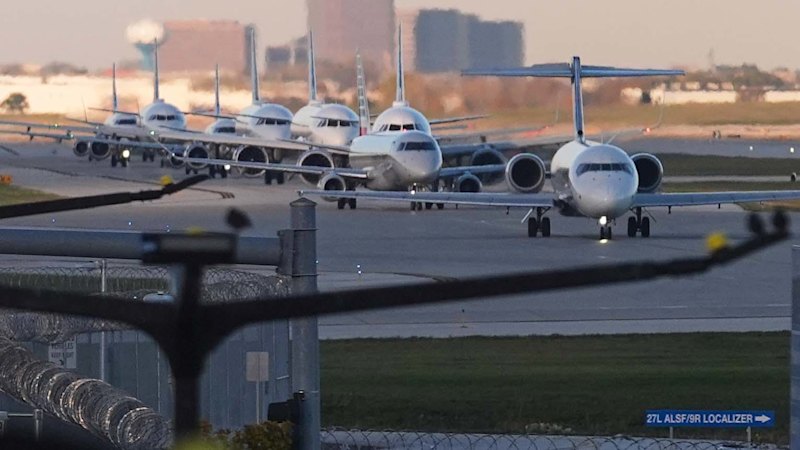
When a critical communications failure strikes, the Federal Aviation Administration does not gamble with workarounds. The protocol is absolute. A ground stop prevents any aircraft bound for affected airspace from taking off, effectively freezing the network on the tarmac where planes are safest. While aircraft already airborne are safely guided to their destinations or diverted using backup frequencies and procedural separation, the spigot on the ground is turned completely off.
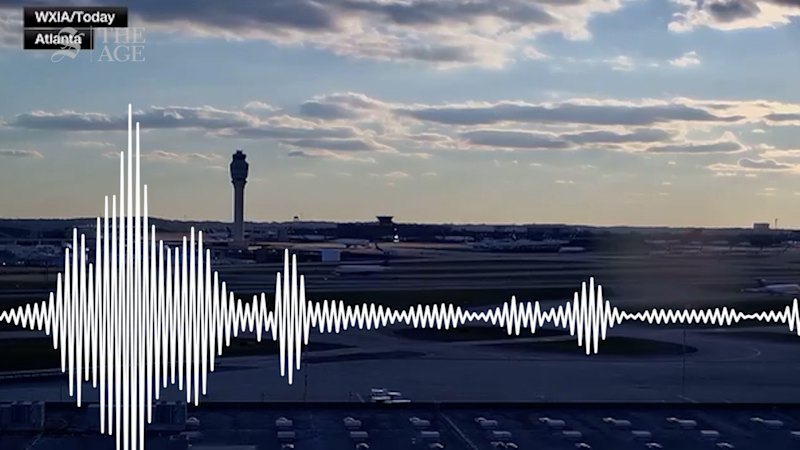
The term "communications issues" serves as a broad umbrella for the public, yet inside aviation operations centers, it points to specific, high-stakes failures. It can mean a severed fiber-optic trunk line operated by a commercial telecom provider, a software crash in the Notice to Air Missions database, or a breakdown in the voice switching systems that connect controllers to pilots and adjacent sectors. Because regional centers hand off aircraft sequentially from one sector to the next, an outage in a single major hub—such as Chicago, Atlanta, or New York—acts like a clot in a main artery. Within minutes, congestion backs up across time zones, forcing a nationwide halt even if local towers in unaffected states still have working radios.
Why "Extraordinary Circumstances" Matters to Your Wallet
The moment a ground stop is announced, a quiet financial battle begins between airlines and passengers. Under international frameworks like the European Union's EC 261 regulation and the UK's equivalent rules, as well as specific carrier commitments in North America, airlines owe passengers substantial financial compensation for severe delays and cancellations—unless the disruption stems from extraordinary circumstances outside the airline's control.
An air traffic control communications blackout is the textbook definition of an external systemic failure. Airlines neither own the FAA's radar networks nor maintain the federal telecommunications backbone. Consequently, carriers rapidly classify these groundings as extraordinary events, legally absolving themselves of paying out hundreds of dollars per ticket in punitive delay compensation.
However, industry veterans recognize a critical distinction that frequently gets blurred at the gate. While the initial ground stop is undeniably outside an airline's control, the secondary chaos that unfolds over the subsequent forty-eight hours often exposes internal corporate vulnerabilities.
Consider a hypothetical example to see how this plays out in practice. Suppose a federal communications outage halts departures for three hours on a Tuesday morning. By Tuesday afternoon, the FAA clears the airspace and lifts the restrictions. Yet on Wednesday evening, thousands of passengers are still stranded in terminals across the country. Why? Because the airline's crew scheduling software crashed under the weight of re-routing pilots, or because the carrier had zero reserve flight attendants stationed at secondary hubs to replace crews whose legally mandated rest clocks expired during the morning delay.
In these scenarios, the boundary between external infrastructure failure and internal airline mismanagement becomes razor-thin. Consumer advocates argue that once airspace reopens, protracted meltdowns caused by brittle airline IT systems or razor-thin staffing margins should no longer hide behind the shield of extraordinary circumstances. Airlines counter that a nationwide freeze scrambles aircraft and crew positioning so severely that recovery is mathematically impossible without multi-day cancellations. For the stranded traveler sleeping on terminal carpet, the legal distinction matters less than the immediate result—they are stuck, and the airline is rarely writing a check for the inconvenience.
The Aging Backbone of American Airspace
To understand why a modern superpower periodically grounds its entire commercial fleet over communications glitches, you have to look inside the equipment rooms of the nation's air traffic facilities. For decades, the FAA has operated some of the most reliable—and most antiquated—technology in the federal government.
Much of the core infrastructure managing US skies was designed in an era before cloud computing, commercial broadband, or modern cybersecurity threats. While the agency has spent billions on its Next Generation Air Transportation System—known as NextGen—to transition from ground-based radar to satellite-based navigation, the underlying telecommunications pipes have struggled to keep pace.
Legacy Copper and Telecom Bottlenecks
A surprising amount of air traffic communications still relies on legacy time-division multiplexing circuits and aging copper wiring leased from commercial telecommunications giants. As telecom carriers aggressively retire older copper networks in favor of modern internet-protocol fiber, the FAA has been forced into a massive, multi-year migration to modernize its enterprise network services.
Transitions of this scale introduce acute operational risk. Running parallel systems—keeping legacy circuits alive while bringing new IP-based networks online—creates complex handoff points where software bugs, configuration errors, or physical line cuts can cascade unpredictably. Furthermore, physical redundancy is often an illusion. Two separate telecom providers might sell backup circuits to an aviation facility, yet both data streams may physically travel through the exact same underground conduit beneath a highway. When a backhoe strikes that single trench, both primary and backup lines go dark simultaneously.
The Staffing and Maintenance Squeeze
Hardware is only half the equation. Maintaining, upgrading, and troubleshooting these systems requires an army of specialized electronics technicians and air traffic controllers. Over the past decade, hiring freezes, government shutdowns, and training bottlenecks at the FAA Academy in Oklahoma City have left critical facilities operating with chronic staffing deficits.
When experienced technicians retire, institutional knowledge walks out the door with them. Younger engineers trained on modern software architectures suddenly find themselves tasked with diagnosing faults in decades-old hardware switches where documentation is sparse and replacement parts must be salvaged or custom-manufactured. Under these conditions, routine maintenance windows shrink, and minor anomalies are far more likely to escalate into system-wide outages.
The Hidden Vulnerability of Centralized Databases
Beyond voice radios and radar feeds, modern aviation runs on massive streams of pre-flight data. Every commercial flight requires a legal dispatch release containing weather forecasts, weight-and-balance calculations, fuel loads, and critical safety alerts regarding closed runways, unlit towers, or military airspace restrictions.
These safety alerts are distributed through centralized federal databases. When a database experiences a corrupted file, a server synchronization failure, or a botched software update, the entire pre-flight pipeline freezes. Pilots cannot legally depart without verified safety notices, even if the skies are clear and every radio frequency is crystal clear.
Centralization brings efficiency, allowing a single update to reach every dispatch center in seconds. Yet centralization also concentrates risk. Instead of an outage affecting one regional airport, a failure in a primary data center—and a simultaneous failure in its disaster-recovery backup—brings the entire national airspace system to its knees. Redundancy only works when backup systems are genuinely independent and regularly tested under full operational load, a standard that sprawling federal IT bureaucracies have repeatedly struggled to meet.
What Aviation Insiders Know About System Resilience
If you speak off the record with senior air traffic controllers, airline dispatchers, and aviation safety engineers, a consistent theme emerges. The system does not fail because people are careless; it fails because the margin for error has been squeezed out of every layer of the industry.
Airlines operate on a hub-and-spoke model optimized for maximum aircraft utilization. Planes spend minimal time on the ground between flights, and schedules are tightly banked so hundreds of passengers can connect within narrow forty-five-minute windows. This hyper-efficiency keeps ticket prices relatively low during normal operations, yet it leaves zero shock absorption when an external shock hits.
When the FAA issues a ground stop, the shockwave hits a system already running at ninety-nine percent capacity. Gates remain occupied by planes that cannot push back, forcing arriving flights to sit on taxiways until crews time out. Ramp workers fall behind on baggage transfers, and de-icing queues or weather fronts move in while aircraft sit idle. Even a brief thirty-minute communications blackout can trigger a twelve-hour operational hangover because there is no slack left in the schedule to absorb the delay.
Navigating the Fallout as a Traveler
Knowing how the aviation system breaks down gives you a distinct advantage when you are standing in a terminal watching departure boards turn red. Standard customer service queues at airport gates are the worst place to be during a nationwide ground stop, as gate agents have limited authority and are overwhelmed by hundreds of anxious travelers simultaneously.
- Bypass the gate desk immediately. The moment a ground stop is announced, open your airline's mobile app, call the carrier's international reservation line, or use direct messaging tools on social media platforms. Remote reservation agents have access to the exact same inventory as gate agents without the physical line.
- Identify alternative routings before you speak to an agent. Use flight tracking apps to see which hubs are moving and which are frozen. Presenting a specific flight number and routing to an agent cuts rebooking time from ten minutes to thirty seconds.
- Understand your rebooking rights versus compensation rights. While "extraordinary circumstances" blocks cash payouts for inconvenience in most jurisdictions, airlines are still legally obligated under US Department of Transportation rules to refund your ticket in full if your flight is canceled or significantly delayed and you choose not to travel—regardless of whether the FAA caused the outage.
- Keep every receipt for out-of-pocket expenses. Even when airlines deny upfront hotel vouchers by citing air traffic control failures, submitting itemized receipts for meals and lodging to customer relations after the dust settles often yields travel credits or partial reimbursements, particularly if you hold frequent flyer status or booked with a premium travel credit card offering trip delay insurance.
The Inevitable Next Outage
Modernizing the telecommunications nervous system of American aviation is not a project that can be completed over a fiscal quarter. Replacing legacy hardware, migrating thousands of circuits to secure fiber networks, and training the next generation of technicians will take years of sustained, uninterrupted congressional funding—something Washington has historically struggled to deliver.
Until that overhaul is complete, the millions of passengers boarding flights each day are flying through an airspace governed by brilliant human controllers working on fragile, aging digital foundations. When the next communications glitch hits and the ground stops roll across the departure boards, airlines will once again reach for the phrase "extraordinary circumstances"—even though in an industry running on decades-old wires, systemic disruption has become entirely ordinary.