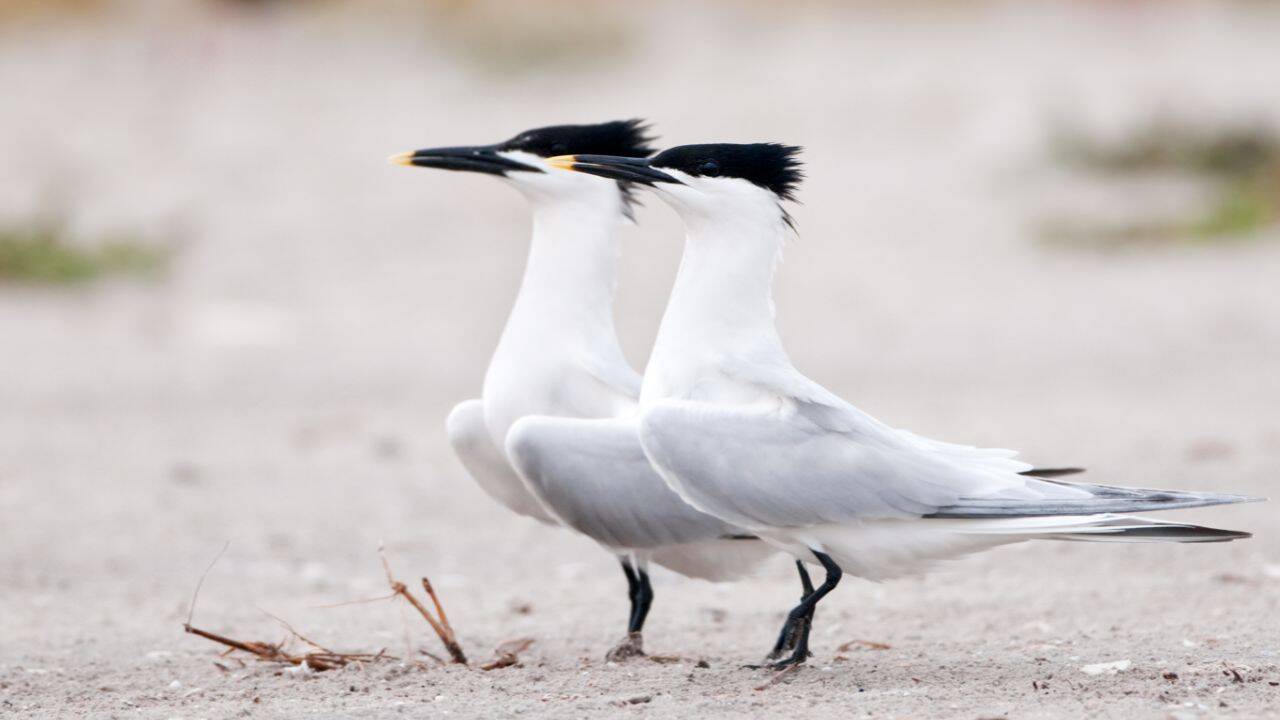
Three years after avian influenza devastated coastal seabird populations across the United Kingdom, 756 Sandwich terns have returned to breed at their historic coastal sanctuary. While conservationists celebrate this figure as a milestone in ecological resilience, the numbers mask a much darker reality. The 2022 outbreak of highly pathogenic avian influenza (HPAI) did not simply thin the herd; it dismantled decades of careful population growth in a matter of weeks, leaving behind a fractured demographic structure that makes this apparent recovery dangerously fragile.
The Anatomy of the 2022 Collapse
To understand what the return of 756 birds actually means, you have to look at the baseline before the virus arrived. Prior to the summer of 2022, UK coastal colonies—most notably key strongholds along the Northumberland coast, such as Coquet Island and the Farne Islands, as well as reserves in Norfolk—supported thousands of breeding pairs. Sandwich terns (Thalasseus sandvicensis) are colonial nesters. They rely on density as a primary defense mechanism against aerial predators like gulls and skuas. When thousands of birds pack tightly onto narrow shingle banks and sandy islands, collective mobbing behavior keeps predators at bay.
In 2022, that exact evolutionary advantage turned into a biological trap.
The H5N1 strain of avian influenza swept through these dense colonies during the peak of the breeding season. Because the birds nest within pecking distance of one another, transmission rates were catastrophic. Wardens who had spent years monitoring steady, incremental population gains suddenly found themselves walking beaches in full protective gear, collecting hundreds of carcasses daily. In some sites, adult mortality exceeded fifty percent within a single month. Chick mortality approached one hundred percent, as orphaned nestlings starved or succumbed to the virus before they could fledge.
Why 756 Birds Is Both a Triumph and a Warning
When 756 Sandwich terns touch down on the shingle three breeding seasons later, the headlines naturally frame it as a comeback story. In the context of a total collapse, any sustained breeding presence is statistically significant. It proves that the breeding habitat remains viable and that surviving adults retained their site fidelity—the biological drive to return to the exact location where they previously nested or hatched.
However, veteran ornithologists look past the raw headcount and examine the age structure of the flock. Sandwich terns are long-lived seabirds, often surviving well past twenty years in the wild, and they do not typically breed until they are three or four years old.
This biological timeline reveals the hidden vulnerability of the current 756-bird cohort. The birds returning in 2025 are largely the survivors of the 2022 adult population, alongside a small trickle of birds hatched in 2021 that were safely out at sea off the coast of West Africa during the worst of the outbreak. Because almost the entire 2022 generation of chicks was wiped out, there is a missing rung on the demographic ladder. There are virtually no three-year-old first-time breeders entering the colony to replace older birds that die of natural causes.
A colony of 756 birds is also operating far below the optimal density threshold required for maximum predator deterrence. Smaller groups are easier for herring gulls, great black-backed gulls, and nocturnal mammalian predators like foxes to pick off around the edges. Without the sheer mass of a multi-thousand-bird colony, every single nest faces higher baseline risk.
What Actually Drove the Survival Rate
The return of these birds was not an accident of nature, nor was it purely the result of the virus burning itself out. Behind the scenes, reserve managers and wildlife agencies had to rewrite their operational playbooks in real time.
Rapid Carcass Removal Protocols
During the height of the 2022 crisis, conservation bodies faced a difficult regulatory and logistical dilemma. Standard protocol dictates minimizing human disturbance in seabird colonies during breeding season, as flushing adults off nests exposes eggs and chicks to predators and the elements. Yet leaving infected carcasses on the ground allowed scavengers to spread the virus further and kept viral loads dangerously high in the soil and water. Teams ultimately intervened, conducting targeted, biosecure sweeps to remove dead birds. By reducing the environmental reservoir of the virus, they likely prevented the total eradication of the remaining adult breeders.
Acquired Herd Immunity
Blood sampling and monitoring across European seabird populations following the 2022 and 2023 outbreaks revealed a critical physiological shift: surviving birds developed antibodies to H5N1. While the duration and strength of this immunity remain subjects of active virological research, the presence of antibodies explains why the same density-dependent transmission did not trigger a repeat mass-mortality event when the birds reconvened. The 756 terns currently occupying the colony are, by definition, the individuals whose immune systems withstood the initial shock.
Habitat Isolation and Predator Fencing
Returning survivors cannot rebuild a population if their eggs are eaten before they hatch. In the interim years between the outbreak and the current breeding season, site managers doubled down on physical interventions. Electric fencing was upgraded to exclude badgers and foxes, while decoys and acoustic lures were deployed at the start of the spring migration to encourage scattered survivors to cluster together rather than dispersing into smaller, less defensible sub-colonies.
The Overlooked Threat of Marine Food Web Disruption
Focusing exclusively on avian influenza creates a dangerous blind spot. Even if H5N1 never returns to the colony at 2022 levels, the 756 returning Sandwich terns face an entirely different set of structural pressures out at sea.
Sandwich terns are plunge-divers with a highly specialized diet. During the breeding season, they depend almost entirely on small, energy-dense surface fish—specifically sandeels and sprats—caught within a relatively short flight radius of their nests. Unlike gulls, they cannot switch to scavenging terrestrial waste if marine prey becomes scarce.
Warming sea temperatures in the North Sea have pushed sandeel populations further north and deeper into the water column, out of reach of surface-diving terns. At the same time, commercial industrial fishing pressure has historically depleted these exact forage fish stocks. While recent policy shifts in the UK have moved toward closing sandeel fisheries in English waters to protect seabird populations, the ecological lag time means food availability remains volatile. If a marine heatwave coincides with the chick-rearing window in June and July, starvation will achieve what the virus failed to finish.
Offshore Wind Infrastructure and Flight Corridors
Another factor rarely mentioned in celebratory comeback coverage is the rapid industrialization of the North Sea. The UK is aggressively expanding offshore wind capacity to meet energy targets, placing massive turbine arrays directly across the historic foraging and migration corridors of coastal seabirds.
Sandwich terns fly at altitudes that frequently intersect with turbine rotor sweep zones, particularly when commuting between coastal colonies and offshore sandbanks. While adult terns generally exhibit some avoidance behavior around stationary structures, poor weather, fog, and the sheer scale of cumulative wind farm developments increase collision mortality. For a thriving colony of 5,000 pairs, losing a few dozen adults to turbine strikes is a statistically absorbable loss. For a recovering nucleus of 756 birds, the loss of even twenty experienced breeders represents a severe blow to the colony's reproductive capacity.
The Illusion of Safety in Numbers
Conservation journalism often falls into the trap of treating wildlife recovery as a linear upward trend once the immediate crisis passes. The reality of seabird population dynamics is far messier.
A hypothetical scenario illustrates the math of this vulnerability. Imagine a colony of 756 birds, roughly 378 breeding pairs. In a good year, each pair might successfully fledge one chick. That adds 378 juveniles to the global population. However, first-year mortality for juvenile terns migrating down the Atlantic coast to West Africa is naturally high—often exceeding fifty percent due to storms, predation, and food scarcity. Of those 378 fledglings, perhaps 150 survive to adulthood. They will not return to breed for another three to four years. Meanwhile, natural adult mortality claims roughly ten percent of the existing breeding flock annually. The colony is running on a razor-thin demographic margin where two consecutive bad weather seasons or a localized food shortage could wipe out five years of gains.
Furthermore, H5N1 has not disappeared. The virus has transitioned from a seasonal anomaly primarily affecting domestic poultry into an endemic threat circulating year-round in wild bird populations globally. Genetic mutations occur constantly. A slight shift in the viral surface proteins could bypass the acquired immunity currently protecting those 756 adults, turning the shingle bank back into a quarantine zone overnight.
What Real Conservation Looks Like Now
The return of 756 Sandwich terns proves that coastal ecosystems possess a stubborn capacity to heal when given the slightest margin to do so. It validates the grueling, unglamorous work of seasonal wardens who spend months living in basic coastal huts, counting eggs, maintaining fences, and monitoring tide lines.
Yet treating this milestone as the end of the crisis would be a profound mistake. True recovery requires moving beyond passive protection—simply putting a fence around a beach and hoping for the best—toward aggressive, integrated marine management. It means enforcing permanent bans on industrial forage fishing near breeding sanctuaries, routing offshore energy infrastructure away from high-density foraging zones, and maintaining permanent biosecurity surveillance across coastal reserves. Until those systemic pressures are resolved, the 756 terns nesting on the coast are not a symbol of victory; they are a fragile foothold on the edge of a changing sea.


