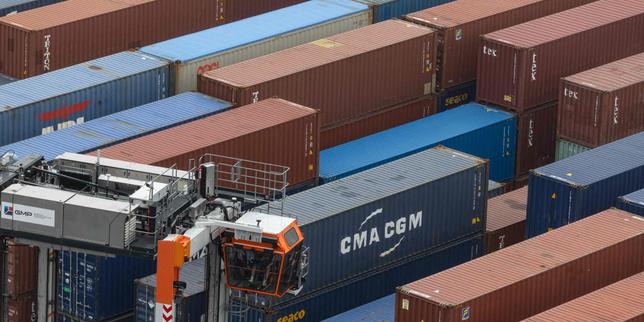
The structural erosion of French competitiveness hit another clear milestone as the national customs agency registered a massive monthly trade deficit of nearly 7 billion euros for May. While policymakers routinely brush off these figures as temporary fluctuations driven by volatile energy markets, the reality is far more severe. France is suffering from a deep-seated industrial decline that has steadily severed its ability to balance its import and export sheets. This is not a short-term blip. It is a systemic failure of national economic strategy that has been compounding for over two decades.
The persistent gap between what France buys from the world and what it manages to sell abroad highlights a fundamental vulnerability. When a nation consistently runs massive deficits, it borrows from the future to fund current consumption. For France, the May figures are part of an ongoing pattern where high manufacturing costs, heavy taxation, and a rigid labor framework prevent domestic firms from competing effectively on the global stage.
The Energy Myth and the Structural Reality
Government officials frequently point to the energy bill as the primary culprit behind the trade imbalance. It is a convenient narrative. If the deficit is merely the result of soaring oil and gas prices, then the problem lies with external global markets rather than internal domestic policy.
That narrative is incomplete. It ignores a much more troubling trend in manufactured goods.
France has witnessed a steady decline in its industrial base. Decades of outsourcing have left the country dependent on foreign producers for basic consumer items, electronics, and automotive components. When domestic demand rises, it automatically triggers a surge in imports because local factories no longer exist to satisfy that demand. The industrial sector now accounts for roughly 10% of French GDP, a stark contrast to nearly 20% in Germany. This structural hollowing out means that even if energy prices dropped to zero tomorrow, France would still face a significant trade deficit because its productive capacity has shrunk too far.
The Cost Competitiveness Trap
French enterprises face a punishing mix of high social charges and production taxes that their immediate European neighbors do not share. These fiscal burdens force companies to raise their export prices just to maintain thin profit margins.
Consider the mechanics of setting a price for a machine tool exported to Asia. A French manufacturer must factor in some of the highest non-wage labor costs in the Eurozone. To cover these expenses, the final invoice price increases. If a German or Italian competitor can offer a similar machine with identical specifications for 15% less, the buyer will choose the cheaper option. The French firm loses the contract, the export fails to materialize, and the trade deficit expands.
To survive, many French brands have chosen to move production abroad. They retain their corporate headquarters in Paris but manufacture their goods in Eastern Europe, North Africa, or Asia. While this strategy keeps individual companies profitable, it does nothing to help the national trade balance. The value created by manufacturing those goods is logged in the country where the factory sits, not in France.
Aerospace and Luxury Can No Longer Carry the Burden
For years, the French trade balance relied heavily on two powerhouse sectors to offset weakness elsewhere: aerospace and luxury goods. Airbus deliveries and shipments of high-end fashion, wines, and spirits traditionally injected billions of euros into the export column.
That crutch is fracturing.
The aerospace sector faces serious supply chain constraints and production bottlenecks that limit its ability to scale up deliveries rapidly. Building a modern commercial airliner requires thousands of specialized parts sourced globally. Delays at a single sub-contractor can stall the entire assembly line, pushing scheduled exports back by months.
Meanwhile, the luxury sector is highly sensitive to shifting global macroeconomic conditions. When the Chinese real estate market stumbles or US consumer confidence dips, appetite for premium Bordeaux wines and designer handbags softens immediately. Relying on a handful of high-end brands to bankroll the nation's import habits is a high-risk gamble. A balanced economy requires a broad, diversified mix of mid-tier manufacturing firms, the very segment that France has lost.
The Import Paradox of the Green Transition
The push toward a decarbonized economy was supposed to revitalize domestic manufacturing through new green technologies. Instead, it is currently exacerbating the trade gap.
The transition requires massive quantities of solar panels, wind turbine components, and electric vehicle batteries. France produces very few of these items domestically. As the state subsidizes retrofits and clean energy infrastructure, billions of euros leave the country to pay for equipment manufactured in Asia.
[Typical Structural Flow of French Trade Flows]
Domestic Subsidies -> Import of Foreign Green Tech -> Widening Trade Deficit
This dynamic creates an import paradox. The faster the nation attempts to meet its environmental targets under current conditions, the wider the trade deficit grows. Without a pre-existing domestic supply chain for green technology, environmental initiatives act as an unintended stimulus package for foreign factories.
The Eurozone Divergence
Operating within a single currency zone eliminates the traditional mechanism used to correct trade imbalances. Historically, a country with a chronic trade deficit would see its currency depreciate. This depreciation would automatically make its exports cheaper abroad and make imports more expensive at home, naturally forcing a rebalancing.
The Euro prevents this adjustment. France shares a currency with Germany, a nation with a massive structurally built export surplus. The value of the Euro reflects the average economic reality of the entire bloc, meaning it remains too strong for French competitiveness while being relatively weak for German industry.
Locked into this framework, France cannot devalue its way to competitiveness. The only path forward is internal devaluation, which means slashing corporate costs, freezing wages, and aggressively streamlining regulations to force productivity gains. This path is politically toxic and faces fierce resistance from labor unions and the public.
The Path to Reindustrialization Demands Harsh Choices
Fixing a 7 billion euro monthly shortfall cannot be achieved through minor adjustments or superficial marketing campaigns celebrating French craftsmanship. It requires a fundamental overhaul of the economic environment.
First, the government must aggressively reduce production taxes, which are distinct from corporate income taxes and are levied on businesses regardless of whether they make a profit. These taxes penalize capital-intensive manufacturing operations before they even sell a single product. Reducing them would immediately lower the entry barrier for building new factories on French soil.
Second, the labor market requires deeper flexibility. Manufacturing facilities operate on global timelines and demand rapid shifts in production volume. If the regulatory burden of expanding or contracting a workforce remains too high, international investors will simply build their next facility elsewhere.
The May trade figures are a stark reminder that time is running out. True economic sovereignty cannot exist when a country depends on foreign producers for its everyday survival, paying for those goods with mounting national debt. The current trajectory is unsustainable, and ignoring the structural roots of the deficit will only guarantee deeper crises ahead.